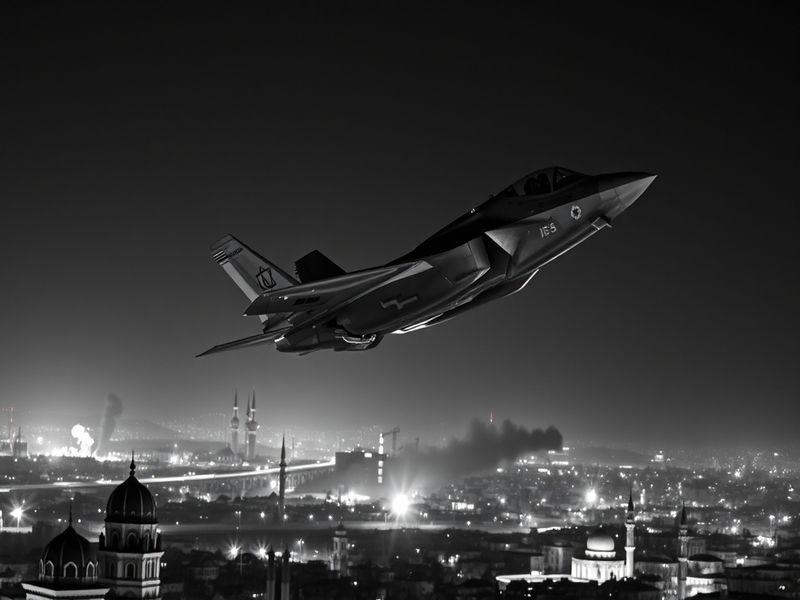
Israel Iran War: Current Crisis and Global Impact Analysis
The conflict between Israel and Iran has shifted from a shadow war to direct confrontations that now threaten regional stability. Recent years have seen a dramatic escalation in hostilities, with both nations engaging in unprecedented military exchanges. This article examines the origins, current state, and potential consequences of this dangerous confrontation.
The Historical Roots of the Conflict
The Israel-Iran rivalry traces back to the 1979 Iranian Revolution. The new Islamic Republic immediately declared Israel an enemy, rejecting its existence and supporting militant groups opposed to the Jewish state. This ideological opposition was compounded by geopolitical competition across the Middle East.
Israel’s strategic doctrine has long focused on preventing Iran from acquiring nuclear weapons. The Mossad’s 2010 Stuxnet cyberattack against Iran’s nuclear facilities marked the beginning of Israel’s aggressive approach to countering Tehran’s nuclear ambitions. Meanwhile, Iran has developed an extensive network of proxy forces throughout the region, including Hezbollah in Lebanon, Hamas in Gaza, and various militias in Syria and Iraq.
Key Milestones in the Shadow War
The conflict has evolved through several distinct phases:
- 2000s: Assassinations of Iranian nuclear scientists and sabotage of nuclear facilities
- 2010s: Cyber warfare campaigns and targeted strikes against Iranian military assets
- 2018: Israel’s dramatic raid on Iran’s nuclear archive in Tehran
- 2020: The assassination of Iranian General Qasem Soleimani by a U.S. drone strike
- 2023-2024: Direct missile and drone attacks between the two nations
The Current Crisis: Direct Confrontation
The situation escalated dramatically in April 2024 when Iran launched more than 300 missiles and drones at Israeli territory. This unprecedented attack followed Israel’s strike on Iran’s consulate in Damascus, which killed several high-ranking Iranian military officials. The Iranian response marked the first direct military confrontation between the two nations.
Israel’s defense systems, bolstered by support from the United States and regional allies, managed to intercept most of the incoming projectiles. However, the attack demonstrated Iran’s growing military capabilities and willingness to engage in direct confrontation rather than relying solely on proxies. The incident has raised serious concerns about the potential for further escalation.
International Responses and Alliances
The international community has reacted with alarm to the recent escalations. The United States has reaffirmed its “ironclad” commitment to Israel’s security while urging restraint. European nations have called for de-escalation but have struggled to mediate between the two sides.
Arab states, traditionally wary of Iran’s regional ambitions, have adopted a more nuanced position. While some Gulf states have expressed support for Israel’s right to defend itself, others have called for immediate ceasefire negotiations. The war in Gaza has further complicated regional dynamics, with some Arab nations seeing Israel’s actions against Iran as potentially destabilizing.
Russia and China have taken more balanced approaches, condemning military escalation while criticizing Western support for Israel. Their stance reflects growing geopolitical competition in the Middle East and the broader standoff between global powers.
Potential Scenarios and Future Implications
The current trajectory suggests several possible outcomes, each with profound regional and global implications:
- Controlled Escalation: Both sides may seek to contain the conflict through backchannel negotiations, avoiding all-out war while maintaining pressure through proxy forces.
- Limited Direct Conflict: Further direct exchanges could occur, but with carefully calibrated responses to prevent full-scale war.
- Regional War: A miscalculation or significant escalation could draw in other regional actors, potentially triggering a broader conflict.
- Diplomatic Breakthrough: Under significant pressure, both sides might agree to negotiations, possibly with international mediation.
The most immediate concern is the risk of miscalculation. Both Israel and Iran have shown remarkable restraint in the past, but the current level of direct confrontation increases the chances of accidental escalation. The region’s complex web of alliances and enmities means that even localized conflicts can quickly spiral out of control.
Economic and Humanitarian Consequences
The potential economic impact of a full-scale Israel-Iran war would be severe and far-reaching. Global oil markets would likely experience significant volatility, with prices potentially spiking to levels not seen since the 1973 oil crisis. The Strait of Hormuz, through which about 20% of the world’s oil passes, would become a potential flashpoint.
Israel’s economy, while more resilient than in past decades, would face severe challenges. The country’s tech sector, a major driver of growth, could suffer disruptions to supply chains and international investment. The tourism industry, already struggling since October 7, would likely face further setbacks.
On the humanitarian front, the civilian populations of both countries would bear the brunt of any escalation. Israel’s missile defense systems, while effective, cannot guarantee complete protection against large-scale attacks. Iran’s infrastructure, already weakened by years of sanctions and mismanagement, would be particularly vulnerable.
The humanitarian crisis in Gaza has already drawn international condemnation. Further escalation in the Israel-Iran conflict could lead to mass displacement and severe food and medical shortages throughout the region.
Long-Term Geopolitical Shifts
A prolonged conflict between Israel and Iran would reshape Middle Eastern geopolitics in fundamental ways. The Abraham Accords, which normalized relations between Israel and several Arab states, might face serious challenges if public opinion turns decisively against Israel’s military actions.
Iran’s position within the region could be strengthened if it successfully presents itself as the defender against Israeli aggression. This could lead to increased support for Tehran’s regional ambitions, particularly among Shia populations across the Middle East.
For Israel, the conflict reinforces the need for a more integrated regional security architecture. The recent normalization agreements with Arab states may prove crucial in managing the current crisis, but Israel’s long-term strategic position remains precarious.
The United States faces difficult choices in navigating this conflict. While maintaining support for Israel remains a cornerstone of American policy in the region, the risks of direct confrontation with Iran could draw Washington deeper into another Middle Eastern quagmire.
Conclusion: A Dangerous New Era
The Israel-Iran conflict has entered a dangerous new phase where direct military confrontation has replaced the previous strategy of proxy warfare. This development fundamentally changes the calculus for both nations and the broader international community. The risk of miscalculation and unintended escalation has never been higher.
Both sides appear to be engaged in a delicate balancing act, seeking to demonstrate strength while avoiding actions that could trigger all-out war. However, the history of the Middle East shows that rational calculations often give way to emotional responses in times of crisis.
The international community must urgently work to prevent further escalation while addressing the underlying security concerns that have fueled this conflict for decades. The alternatives—a regional war, a nuclear crisis, or prolonged instability—would have devastating consequences for millions of people across the Middle East and beyond.
As the situation continues to evolve, one thing is clear: the Israel-Iran conflict has entered uncharted territory, and the path forward will require unprecedented diplomatic creativity and restraint from all parties involved.
For more analysis on regional conflicts, visit our News section. For deeper insights into Middle Eastern geopolitics, explore our Analysis category.