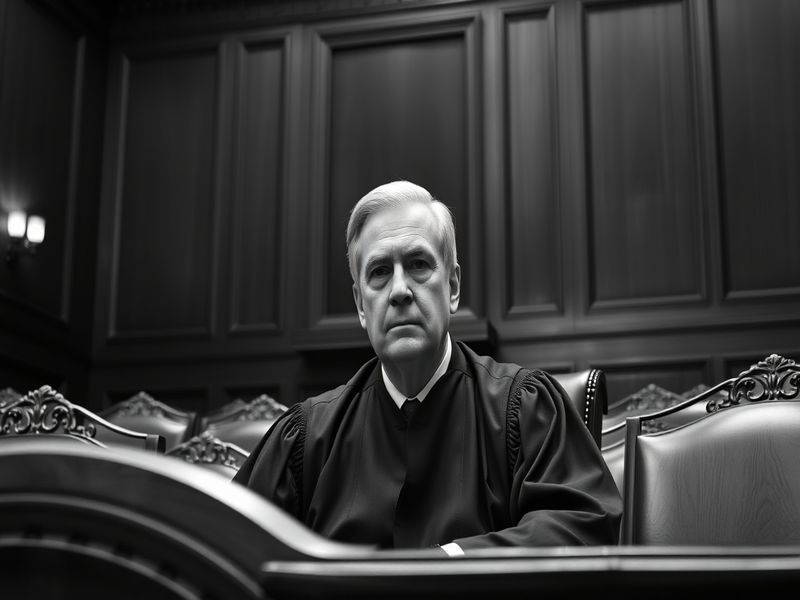
samuel alito
“`html
Samuel Alito: A Justice Shaping America’s Legal Landscape
Samuel Alito has served as an associate justice on the United States Supreme Court since 2006. Appointed by President George W. Bush, Alito’s tenure has been marked by a consistent conservative judicial philosophy, influencing landmark decisions across areas such as abortion rights, religious freedoms, and executive authority. His rulings often reflect a textualist and originalist approach, interpreting the Constitution based on its historical meaning rather than evolving societal norms.
Born in Trenton, New Jersey, in 1950, Alito’s early life was shaped by his Italian-American heritage and Catholic upbringing. These influences are frequently cited in discussions of his judicial leanings, particularly in cases involving religious expression and moral issues. Before ascending to the Supreme Court, Alito built a reputation as a formidable legal mind during his time as a federal prosecutor, an appeals court judge, and a deputy assistant attorney general in the Reagan administration.
Globally, Alito’s impact extends beyond U.S. borders, as his opinions often resonate in international legal debates. Scholars and activists around the world analyze his dissents and concurrences for clues about the direction of American jurisprudence, particularly in areas where U.S. law intersects with global human rights standards. For those interested in legal analysis beyond Supreme Court rulings, Dave’s Locker Analysis regularly covers evolving judicial trends and their broader implications.
Key Legal Philosophies and Influences
Alito’s judicial philosophy is rooted in textualism and originalism—principles that prioritize the plain meaning of legal texts and the original public understanding of constitutional provisions. This approach often leads him to side with limitations on federal power and skepticism of expansive interpretations of individual rights unless explicitly supported by historical precedent.
His opinions frequently emphasize judicial restraint, a doctrine that urges courts to defer to legislative bodies unless a law clearly violates the Constitution. Critics argue this stance can sometimes lead to outcomes that restrict civil liberties, particularly in cases involving privacy, voting rights, and discrimination. For example, in Dobbs v. Jackson Women’s Health Organization (2022), Alito authored the majority opinion overturning Roe v. Wade, asserting that the constitutional right to abortion was not deeply rooted in U.S. history and tradition.
The decision sparked global debate, with international observers noting how Alito’s reasoning reflected a broader trend among conservative jurists to revisit longstanding precedents perceived as judicial activism. His dissent in Obergefell v. Hodges (2015), which legalized same-sex marriage nationwide, further underscored his commitment to a strict reading of constitutional text—leading to comparisons with legal movements in Europe and Latin America where courts grapple with similar questions of tradition versus evolving rights.
Religious Liberty and the Separation of Church and State
Alito has emerged as a leading voice in cases involving religious liberty, often siding with plaintiffs who argue that government policies infringe on their faith. His concurrence in Kennedy v. Bremerton School District (2022) supported a high school football coach’s right to pray on the 50-yard line after games, asserting that the Establishment Clause permits private religious expression in public spaces so long as it is not coercive.
This stance has drawn both praise and criticism. Supporters view it as a defense of First Amendment rights, while opponents warn it blurs the line between personal belief and state endorsement of religion. Internationally, the debate mirrors ongoing tensions in countries like France, where secularism (laïcité) is strictly enforced, and Poland, where religious symbols remain prominent in public institutions.
Alito’s opinions in this area also reflect a broader cultural moment in which religious identity is increasingly central to political and legal discourse. His views often align with those of the Catholic Church on issues such as abortion, LGBTQ+ rights, and education, resonating with conservative religious communities in the U.S. and abroad.
Controversies and Public Perception
Alito’s career has not been without controversy. In 2020, a leak to the press revealed that he and Justice Clarence Thomas had attended a private dinner hosted by a conservative legal activist, raising concerns about judicial ethics and potential conflicts of interest. Though no formal violations were found, the incident fueled debates about transparency in the Court and the influence of outside groups on its decisions.
Another flashpoint came in 2022, when a draft opinion of Dobbs was leaked to Politico, revealing Alito’s majority opinion months before its official release. The leak, unprecedented in Supreme Court history, sparked protests and threats against justices, highlighting the polarized climate surrounding contentious social issues. Alito responded by condemning the leak as an attempt to intimidate the Court and influence its rulings through public pressure.
Globally, such controversies are not unique to the U.S. In countries like Brazil and India, supreme courts have faced similar scrutiny over their handling of divisive social issues. The scrutiny reflects a broader trend in which courts, once seen as neutral arbiters, are increasingly drawn into the cultural and political fray. For deeper analysis on how judicial independence is evolving worldwide, explore Dave’s Locker News for ongoing coverage of legal and political developments.
The public’s perception of Alito often hinges on ideological alignment. Supporters praise his commitment to constitutional principles and resistance to judicial overreach. Detractors, however, accuse him of advancing a narrow, socially conservative agenda that undermines progressive legal gains. Polls consistently show deep divisions along partisan lines, with Democrats far more likely to view his rulings negatively.
Legacy and Future Impact
As one of the longest-serving conservative justices in modern history, Alito’s influence on the Supreme Court is likely to endure long after his retirement. His opinions have shaped the trajectory of American law, particularly in areas where the Court’s conservative majority has rolled back precedents on abortion, gun rights, and regulatory authority. With the Court now featuring a 6-3 conservative supermajority, Alito’s textualist approach will continue to define the boundaries of constitutional interpretation for years to come.
Looking ahead, several key questions loom over Alito’s legacy. Will his rulings on religious liberty set a new standard for how courts balance faith and governance? How will his textualist framework adapt—or resist adaptation—to issues like artificial intelligence, digital privacy, and climate change, areas the Constitution’s framers could scarcely have imagined? These questions are not just academic; they reflect the enduring tension between tradition and progress in law.
Internationally, Alito’s legacy also serves as a case study in how individual justices can shape global legal discourse. Countries grappling with similar constitutional challenges often look to the U.S. Supreme Court for guidance, even as they adapt principles to their own legal traditions. Whether through dissenting opinions that travel across borders or majority rulings that inspire emulation or backlash, Alito’s work underscores the interconnected nature of modern jurisprudence.
As the U.S. continues to navigate debates over democracy, rights, and the role of the judiciary, Alito’s voice will remain a defining one. His commitment to a fixed interpretation of the Constitution ensures that his legacy will be both celebrated and contested, shaping the nation’s legal fabric for generations to come.
—
METADATA
{
“title”: “Samuel Alito: The Supreme Court Justice Reshaping American Law”,
“metaDescription”: “Explore Samuel Alito’s 17-year legacy on the Supreme Court, his conservative judicial philosophy, and global impact on law and rights.”,
“categories”: [“Politics”, “Analysis”],
“tags”: [“Samuel Alito”, “Supreme Court”, “judicial philosophy”, “Dobbs v. Jackson”, “religious liberty”],
“imageDescription”: “A formal portrait of Supreme Court Justice Samuel Alito in judicial robes, seated in a courtroom with a neutral expression. The setting is the Supreme Court building, emphasizing authority and tradition, with soft natural lighting creating a dignified mood.”
}
—END METADATA—
“`