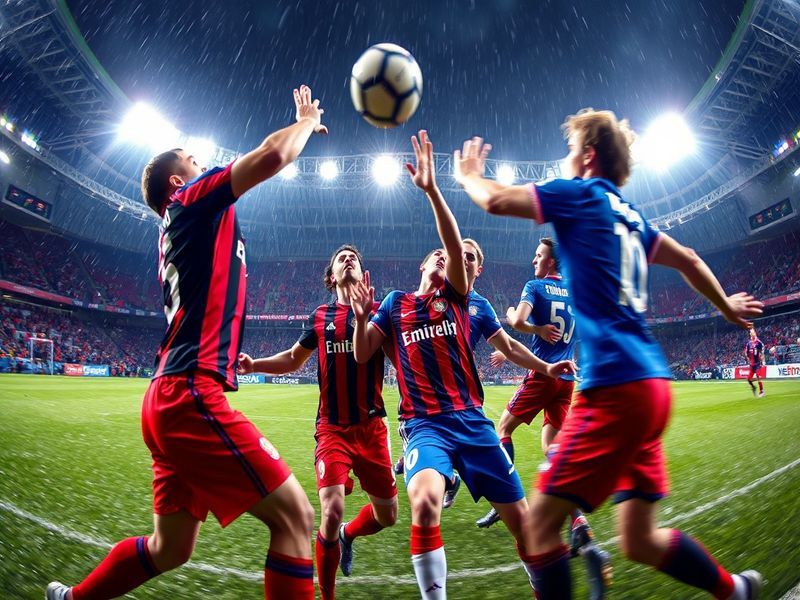
The Bundesliga has long been a league of contrasts, where David and Goliath narratives play out with remarkable regularity. When SC Freiburg faces Bayern Munich, the football world witnesses more than just a match—it sees a collision between two distinct visions of the game. Freiburg, the plucky underdog from the Black Forest, represents a philosophy rooted in youth development, tactical innovation, and community-driven ambition. Bayern, the Bavarian behemoth, embodies the relentless pursuit of dominance through financial power and elite recruitment. Their encounters are not merely fixtures on the calendar; they are cultural touchstones that reflect broader trends in European football.
The Philosophies Behind the Teams
SC Freiburg’s rise to prominence in the Bundesliga is a testament to the club’s adherence to a long-term vision. Founded in 1904, Freiburg has spent much of its history in the lower leagues, but the past two decades have seen them carve out a reputation as a nurturing ground for talent and a breeding ground for progressive football. The club’s philosophy is built on three pillars: youth development, tactical flexibility, and financial prudence. Unlike many European clubs that chase immediate success through expensive signings, Freiburg invests heavily in its academy, producing players like Christian Streich, who later became a managerial icon at the club.
Bayern Munich, on the other hand, operates at the opposite end of the spectrum. As Germany’s most successful club, Bayern’s approach is defined by ambition, financial muscle, and a hunger for trophies. The club’s model relies on assembling squads of world-class talent, often poaching young stars from rival clubs before they reach their peak. This strategy has cemented Bayern’s status as a global brand, but it has also sparked debates about the sustainability of such an approach in an era where financial fair play regulations are tightening. The clash between Freiburg’s model and Bayern’s reflects a broader tension in modern football: the balance between tradition and commercialization.
A History of David vs Goliath Battles
The fixture between SC Freiburg and Bayern Munich is one of the most intriguing in the Bundesliga. Historically, Bayern has dominated, with Freiburg often relegated to the role of spoiler. Yet, these matches have produced some of the most memorable moments in recent Bundesliga history. In the 2019-20 season, Freiburg stunned Bayern with a 2-1 victory at the Allianz Arena, a result that exposed vulnerabilities in Hansi Flick’s otherwise unstoppable side. That match was a microcosm of Freiburg’s ability to frustrate Bayern’s attacking might with disciplined defending and quick transitions.
The rivalry also carries a regional significance. Freiburg, located in the southwestern corner of Germany near the French and Swiss borders, is a symbol of local identity. The city’s progressive culture and environmental consciousness contrast sharply with Munich’s affluent, corporate image. These cultural differences often play out on the pitch, where Freiburg’s players embody a scrappy, underdog mentality, while Bayern’s stars perform with the confidence of global superstars.
Key Moments in SC Freiburg vs Bayern Munich History
- 2019-20 Season: Freiburg defeats Bayern 2-1 in Munich, a result that helps spark Bayern’s eventual title-winning campaign.
- 2020-21 Season: Bayern wins 4-1 in Freiburg, but the match is remembered for Leroy Sané’s scintillating performance.
- 2022-23 Season: Freiburg holds Bayern to a 1-1 draw in Freiburg, showcasing their defensive resilience.
- 2023-24 Season: Bayern edges out a 2-1 victory in Munich, but Freiburg’s young talents like Vincenzo Grifo and Roland Sallai impress.
The Tactical Battlefield
When SC Freiburg faces Bayern Munich, the tactical battle is as compelling as the on-pitch action. Freiburg, under managers like Christian Streich and now Sascha Hildmann, has built a reputation for playing an aggressive, high-pressing style. The club’s teams are often characterized by quick transitions, fluid positional play, and a willingness to take risks. This approach is a direct contrast to Bayern’s more structured, possession-based system, which relies on the technical brilliance of players like Jamal Musiala and Serge Gnabry to unlock defenses.
Bayern’s tactical identity has evolved under recent managers like Julian Nagelsmann and Thomas Tuchel. Nagelsmann’s high-pressing system, which he implemented at Bayern after leaving Leipzig, was designed to overwhelm opponents with rapid transitions and positional interchange. Tuchel, meanwhile, favored a more pragmatic approach, prioritizing defensive solidity while still exploiting Bayern’s attacking talent. Freiburg, however, thrives in chaotic situations, and their ability to disrupt Bayern’s rhythm often determines the outcome of these matches.
The midfield battle is particularly crucial. Bayern’s midfield, anchored by Joshua Kimmich and Leon Goretzka, is one of the most dynamic in Europe. Kimmich’s ability to dictate play and Goretzka’s box-to-box energy provide Bayern with both defensive cover and attacking impetus. Freiburg, meanwhile, relies on players like Florian Kath and Maximilian Eggestein to control the tempo and transition quickly into attack. The contrast between Bayern’s structured control and Freiburg’s fluid chaos makes these matches a tactical chess game.
The Global Perspective: What These Matches Mean for Football
The SC Freiburg vs Bayern Munich rivalry is more than a local derby; it is a microcosm of global football’s evolving dynamics. Freiburg’s success story resonates in an era where financial disparities between clubs continue to widen. The club’s ability to compete with Bayern—despite operating with a fraction of their budget—has made it a model for other mid-sized clubs across Europe. In countries like France, the Netherlands, and even outside Europe, Freiburg’s model is studied as a blueprint for sustainable success.
Bayern, meanwhile, represents the commercialization of football. The club’s global fanbase, lucrative sponsorship deals, and star-studded squad make it a symbol of football’s transformation into a billion-dollar industry. Yet, Bayern’s dominance has also drawn criticism. Some argue that their financial power stifles competition in the Bundesliga, making it difficult for other clubs to bridge the gap. Matches against Freiburg, therefore, take on added significance, as they offer a rare opportunity for Bayern’s rivals to challenge their supremacy.
Culturally, the rivalry highlights the diversity within German football. Freiburg’s progressive, community-oriented ethos contrasts with Bayern’s corporate, results-driven approach. This clash of values is reflective of broader societal trends in Germany, where debates about sustainability, social responsibility, and economic inequality are increasingly prominent. Football, as the country’s most popular sport, often mirrors these conversations, and matches between Freiburg and Bayern serve as a stage for these cultural dialogues.
Conclusion: Why These Matches Matter Beyond the Scoreboard
The SC Freiburg vs Bayern Munich rivalry is a reminder that football is not just about trophies and titles. It is about identity, philosophy, and the soul of the game. Freiburg’s journey from regional obscurity to Bundesliga contender is a story of ambition and resilience, while Bayern’s relentless pursuit of excellence represents the pinnacle of modern football’s commercial ambitions. When these two teams meet, the result is more than just three points; it is a clash of ideologies that resonates far beyond the pitch.
For fans of the game, these matches offer a chance to appreciate the diversity of football. They highlight the beauty of underdog stories and the relentless drive of footballing giants. In an era where football is increasingly dominated by a handful of superclubs, Freiburg’s ability to challenge Bayern is a breath of fresh air—a reminder that the sport is still capable of producing narratives that transcend mere competition.
As the Bundesliga continues to evolve, the Freiburg vs Bayern fixture will remain a must-watch event. It is a testament to the power of football to unite, inspire, and challenge the status quo. Whether you are a fan of tactical battles, underdog stories, or simply the sheer unpredictability of the sport, these matches deliver on every level.
For those looking to explore more about the broader trends in European football, visit our Sports section, where we delve into the cultural and tactical shifts shaping the game today.