Billy Graham: A Lifetime of Evangelism
William Franklin Graham Jr. stood as one of the most influential religious figures of the 20th and early 21st centuries. Born in 1918 in Charlotte, North Carolina, Graham transformed from a modest Southern upbringing into a global evangelist whose ministry reached millions across continents. His sermons, broadcast on radio and television, bridged cultural divides and made Christian teachings accessible to diverse audiences. Over seven decades, Graham preached to an estimated 215 million people in more than 185 countries, earning him the moniker “America’s Pastor.” His impact extended beyond pulpit ministry into politics, civil rights, and international diplomacy.
Graham’s early life reflected the rhythms of rural American Christianity. Raised on a dairy farm during the Great Depression, he initially pursued a secular path in agriculture before a transformative spiritual experience in 1934 at a revival meeting led by evangelist Mordecai Ham. This encounter redirected his life’s trajectory. After graduating from Wheaton College in Illinois, Graham began his ministry in 1943 as the founding pastor of the First Baptist Church in Western Springs, Illinois. His charismatic preaching style and media savvy soon set him apart from contemporaries in the evangelical movement.
A Ministry Built on Media and Mass Communication
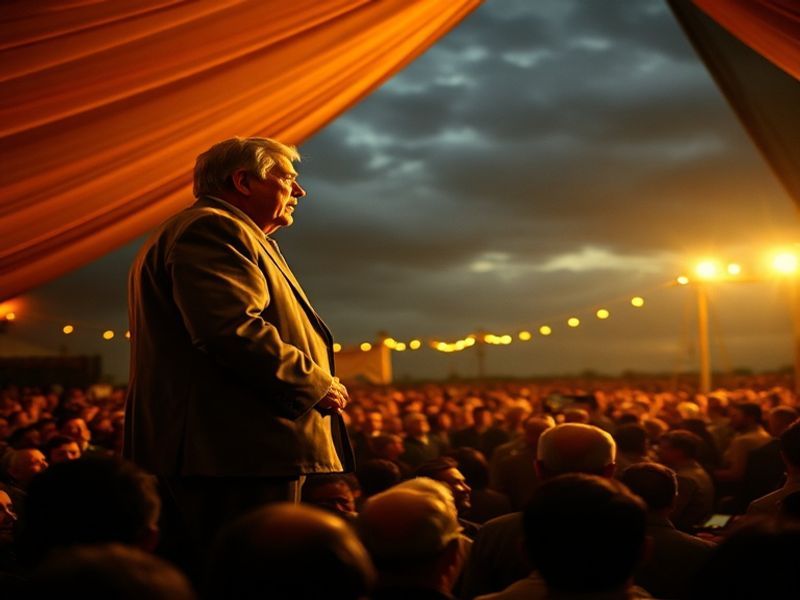
Graham understood the power of mass media long before digital platforms dominated public discourse. In 1949, his Los Angeles crusade, held under a circus tent, drew national attention and solidified his reputation. The event was broadcast nationwide on radio, marking the beginning of his strategic use of media to spread the Gospel. By 1950, he founded the Billy Graham Evangelistic Association (BGEA), which became the operational hub for his expanding outreach. The weekly radio program “Hour of Decision,” launched in 1950, reached listeners in over 150 countries by the mid-1950s.
Television became another cornerstone of Graham’s ministry. His 1957 New York City crusade, held in Madison Square Garden, was one of the first religious events to be televised nationally. This exposure catapulted him into mainstream American culture. Graham’s ability to communicate complex theological ideas in accessible language made his sermons relatable to both religious and secular audiences. His 1970s series “The Jesus Generation” and the 1980s “People of the Living Word” further cemented his status as a cultural commentator on faith and morality.
Beyond broadcasting, Graham pioneered innovative outreach methods. He organized massive stadium events known as “crusades,” which combined rousing music, personal testimonies, and evangelistic preaching. These gatherings often featured celebrities and musicians, blending pop culture with Christian witness. His 1973 crusade in Seoul, South Korea, drew over 1.1 million people, illustrating his ability to transcend national and linguistic barriers. Graham’s media strategies were not just tools; they were integral to his theology of evangelism, which emphasized reaching people where they were.
Diplomacy and Influence in a Divided World
Graham’s influence extended into the realm of international diplomacy, where he served as an unofficial ambassador of faith. His relationships with world leaders—from U.S. presidents to Soviet officials—demonstrated his unique position as a spiritual counselor across political spectra. In 1954, he became the first Protestant evangelist to preach behind the Iron Curtain, delivering sermons in Eastern Europe despite intense scrutiny from communist authorities. His 1982 visit to the Soviet Union, where he met with Mikhail Gorbachev, was a landmark moment in Cold War religious diplomacy.
Graham’s role in the civil rights movement also reflected his commitment to social justice. In 1957, he integrated his New York crusade, inviting Dr. Martin Luther King Jr. to deliver a prayer at the event. This decision was controversial among conservative white evangelicals but underscored Graham’s belief that the Gospel transcended racial divisions. His friendship with King continued for years, though their approaches to activism differed. Graham’s advocacy for racial reconciliation was pragmatic; he believed that spiritual unity would naturally lead to social change.
The list below highlights key diplomatic engagements in Graham’s career, showcasing his global reach:
- 1954: First major crusade in London, attended by Queen Elizabeth II and Prime Minister Winston Churchill.
- 1960: Meeting with Pope John XXIII, marking a rare ecumenical gesture between evangelicals and Catholics.
- 1973: Preaching to 1.1 million people in Seoul, South Korea, during a period of political tension.
- 1982: Historic visit to the Soviet Union, where he met with Soviet leader Yuri Andropov.
- 1992: Addressing the United Nations General Assembly, emphasizing global spiritual unity.
Legacy and Controversies: A Complex Figure
Graham’s legacy is both revered and scrutinized. Supporters celebrate him as a unifier who brought Christian teachings to millions. His 1995 crusade in San Juan, Puerto Rico, drew over 200,000 people, demonstrating his enduring appeal. He counseled every sitting U.S. president from Harry Truman to Barack Obama, often serving as a moral compass in times of national crisis. His role in the 1993 National Prayer Breakfast, where he delivered a message on forgiveness to the nation after the Los Angeles riots, remains a touchstone in discussions of faith and public life.
However, Graham’s legacy is not without controversy. Critics argue that his close ties to political leaders—particularly his support for anti-communist and conservative causes—sometimes blurred the line between evangelism and partisanship. His friendship with Richard Nixon, for example, later became a source of regret. The 2002 release of Nixon-era White House tapes revealed Graham making disparaging remarks about Jews, which he later acknowledged as a moral failing. In his final years, Graham distanced himself from partisan politics, emphasizing instead the primacy of spiritual renewal.
Another critique focuses on Graham’s approach to theology. While his preaching emphasized salvation through Jesus Christ, some theologians argued that his message lacked depth in addressing systemic injustices. His refusal to engage with liberation theology or contextual theology in the Global South drew criticism from progressive Christians. Yet Graham’s defenders point out that his mission was not to address political systems but to call individuals to personal faith. This tension between personal salvation and social transformation remains a defining debate within evangelicalism.
A Lasting Impact on Global Christianity
Billy Graham’s death in 2018 at the age of 99 marked the end of an era in Christian evangelism. His funeral at the Billy Graham Library in Charlotte drew global leaders, including former presidents George W. Bush and Bill Clinton, who delivered eulogies. Graham’s final message, delivered via video at the 2013 Festival of Faith in London, urged Christians to prioritize love and unity over division. His life’s work demonstrated how one individual could shape the spiritual landscape of multiple generations.
Today, Graham’s influence persists through the Billy Graham Evangelistic Association, which continues to organize crusades and distribute evangelistic materials worldwide. His son, Franklin Graham, has taken over leadership of the organization, though he has faced criticism for his more overtly political stances. Meanwhile, Graham’s archives at Wheaton College serve as a resource for scholars studying the intersection of religion, media, and politics in the modern era. His sermons, preserved in print and digital formats, remain widely studied and shared.
Graham’s life also offers lessons for contemporary evangelicals navigating a rapidly changing cultural landscape. His ability to adapt to new media while maintaining a consistent message of hope resonates in an era of digital evangelism. Platforms like Christian podcasts and streaming services continue to draw inspiration from his pioneering use of broadcast media. Similarly, his emphasis on personal witness over institutional power remains relevant as younger generations seek authentic expressions of faith.
For those interested in exploring the intersection of faith and culture further, Entertainment features often examine how religious themes appear in modern media. From films to music, the legacy of figures like Graham continues to inspire creative works that challenge and uplift audiences worldwide.
Billy Graham’s story is ultimately one of persistence, adaptability, and unwavering conviction. In an era marked by religious pluralism and political polarization, his life reminds us of the power of a single voice to bridge divides and inspire change. Whether through a pulpit, a radio broadcast, or a diplomatic meeting, Graham demonstrated that faith, when communicated with authenticity and courage, can transcend boundaries.