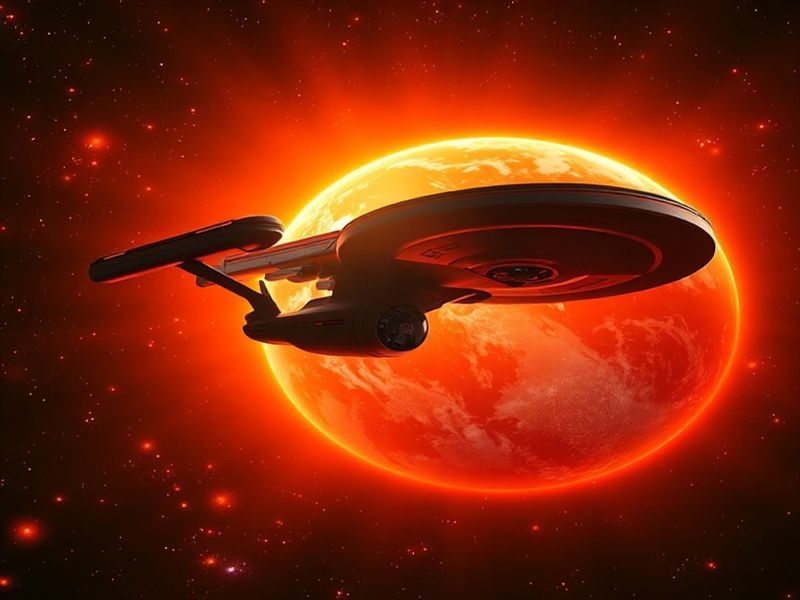
When Star Trek: The Next Generation premiered in 1987, it wasn’t just another science fiction series launching into syndication. It was a reinvention of a cultural touchstone, a bold attempt to expand the universe created by Gene Roddenberry while maintaining the optimism and intellectual curiosity that defined the original.
The show introduced a new crew aboard the USS Enterprise-D, led by Captain Jean-Luc Picard, a character who became synonymous with diplomacy, intellect, and quiet leadership. Unlike the action-driven adventures of the original series, TNG leaned into slower, more deliberate storytelling—exploring philosophy, ethics, and human nature through the lens of a 24th-century society. This shift wasn’t without risk, but it paid off in ways that would cement Star Trek as more than just a franchise. It became a framework for discussing the future itself.
The Evolution of Starfleet and Humanity’s Future
Star Trek: The Next Generation didn’t just continue the story of the original series; it redefined what Star Trek could be. The show’s setting—100 years after the original—allowed for a more mature exploration of human evolution, both technologically and socially.
One of the series’ most significant contributions was its portrayal of a post-scarcity society. By the 24th century, humanity had largely overcome poverty, war, and disease. Resources were abundant, and technology had advanced to the point where basic needs were no longer a concern. This allowed the show to focus on higher ideals: exploration, diplomacy, and the pursuit of knowledge. Episodes like The Neutral Zone (Season 1) contrasted the struggles of the late 20th century with the utopian society of the future, highlighting how far humanity had come—and how much further it could go.
The show also introduced complex alien cultures that challenged the Federation’s ideals. The Borg, the Cardassians, and the Ferengi each served as mirrors to human society, reflecting our own flaws and virtues. The Borg, in particular, became one of the most iconic villains in sci-fi history—not because they were mindless drones, but because they represented the terrifying inevitability of assimilation and the loss of individuality.
The Characters That Defined a Generation
The heart of Star Trek: The Next Generation was its ensemble cast, a group of characters who felt as real as they did heroic. Captain Picard, played with effortless gravitas by Patrick Stewart, embodied the ideal of a leader—wise, compassionate, and unyielding in his principles. His famous line, “Make it so”, became shorthand for decisive yet thoughtful leadership.
Data, the android officer played by Brent Spiner, served as the show’s philosophical core. His quest to understand humanity raised questions about identity, emotion, and what it means to be alive. Episodes like The Measure of a Man (Season 2) forced viewers to confront whether Data had rights—and by extension, whether any artificial being could be considered sentient.
The supporting cast was equally vital. Commander William Riker (Jonathan Frakes) brought charm and occasional recklessness, while Counselor Deanna Troi (Marina Sirtis) provided emotional depth, often serving as the crew’s moral compass. Even minor characters like Geordi La Forge (LeVar Burton) and Worf (Michael Dorn) became fan favorites, each bringing unique perspectives to the Enterprise’s mission.
Key Themes and Episodes That Resonated
Star Trek: The Next Generation tackled some of the most pressing questions of its time—and ours. Below are a few standout themes and episodes that defined the series:
- The Nature of Humanity: Episodes like Darmok (Season 5) and The Offspring (Season 3) explored what it means to be human, both biologically and emotionally.
- Ethics and Morality: The Measure of a Man and Chain of Command (Season 6) delved into the ethical dilemmas of AI, war, and deception.
- Diplomacy Over Conflict: Unlike many sci-fi series, TNG often resolved conflicts through negotiation rather than violence, as seen in The Icarus Factor (Season 3).
- Exploration of the Unknown: The Holodeck episodes, such as Our Man Bashir (Season 4), showcased the crew’s creativity and curiosity, even when trapped in a simulation.
Why Star Trek: The Next Generation Still Matters Today
More than three decades after its finale, Star Trek: The Next Generation remains relevant because it asks questions that still haunt modern society. What does it mean to be human in an age of artificial intelligence? Can diplomacy ever replace conflict in international relations? How do we balance progress with ethical responsibility?
The show’s optimism about the future feels increasingly radical in today’s polarized world. While TNG envisioned a world where humanity had moved beyond war and scarcity, we’re still grappling with those very issues. Yet, the series’ enduring appeal lies in its belief that humanity is capable of growth. The Federation’s motto—“To boldly go where no one has gone before”—isn’t just about exploration. It’s about progress.
This optimism isn’t naive. The show never shied away from darkness—episodes like The Best of Both Worlds (Season 3/4) delivered some of the most harrowing moments in sci-fi. But even in its bleakest hours, TNG held onto the idea that solutions could be found. That faith in humanity’s potential is what makes the series timeless.
The Franchise’s Lasting Influence
Star Trek: The Next Generation didn’t just survive its initial run; it thrived. The show spawned four feature films, directly influenced later series like Deep Space Nine and Voyager, and continues to inspire new generations of fans. Its impact extends beyond television—into literature, gaming, and even real-world technology. Concepts like the Holodeck have inspired virtual reality developers, while the show’s focus on multiculturalism and diversity paved the way for more inclusive storytelling.
For those who grew up watching TNG, the series wasn’t just entertainment. It was a guiding philosophy. It taught lessons about leadership, ethics, and curiosity that extended far beyond the screen. Even today, quotes from Picard and Data are used in business leadership seminars and academic discussions alike.
If the original Star Trek was about the future of space exploration, then The Next Generation was about the future of humanity itself. It asked us to look ahead—not with fear, but with hope. And in an era where uncertainty often dominates the conversation, that message feels more important than ever.
For fans looking to dive deeper into the world of Star Trek, Dave’s Locker offers curated collections of episodes, behind-the-scenes insights, and discussions on the franchise’s broader cultural impact. Check out our Star Trek Episodes Collection for a guided tour of the series’ best moments.