Walter Reed Medical Center and the Global Conversation Around Presidential Health
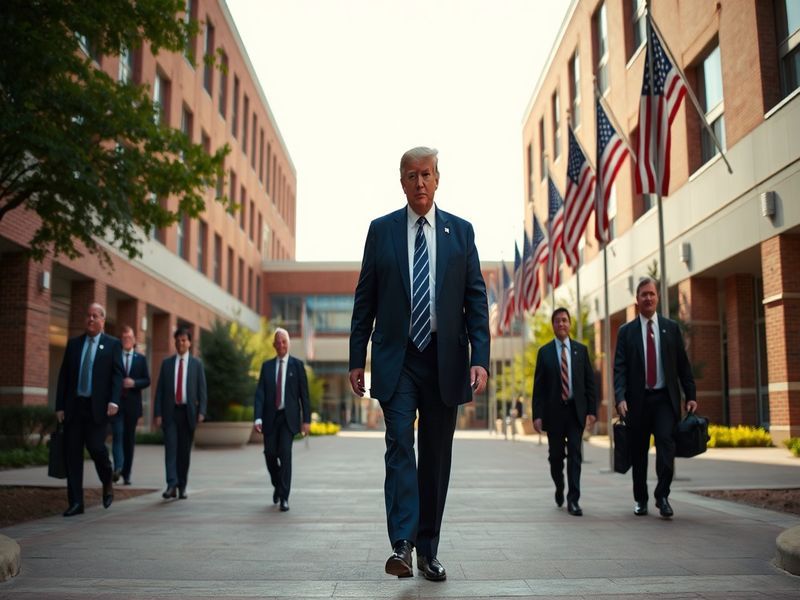
When Donald Trump visited Walter Reed National Military Medical Center in 2017, the brief but heavily scrutinized trip became more than a routine presidential visit. It entered the public consciousness as a moment where medical transparency collided with political symbolism. The center, renowned for its cutting-edge care and historical significance, has long served as a benchmark for military and veteran health services globally. Yet its association with Trump’s medical evaluations sparked discussions that transcended U.S. borders, touching on themes of leadership, secrecy, and public trust in institutions.
Walter Reed’s reputation as one of the world’s most advanced military hospitals adds weight to any high-profile visit. Established in 1909 and named after a pioneering Army surgeon, the facility has evolved into a global leader in trauma care, rehabilitation, and leadership medicine. Its proximity to the White House makes it a natural choice for presidential medical assessments—a fact that has drawn international attention during moments of political transition or uncertainty. The center’s role in treating wounded service members from multiple conflicts also gives it moral authority, elevating any visit into a broader conversation about service, sacrifice, and national duty.
Medical Transparency in the Age of Global Scrutiny
Trump’s 2017 visit to Walter Reed was not just a logistical stop—it was a carefully staged moment meant to project strength and stability. Yet it occurred against a backdrop of growing skepticism about the transparency of presidential health worldwide. In an era where social media amplifies every rumor and conspiracy theory, the public’s demand for verified information has intensified. This trend is not unique to the United States. Leaders in countries such as Russia, China, and the United Kingdom have faced scrutiny over their health, often leading to misinformation and political instability.
Walter Reed’s role in this dynamic is paradoxical. On one hand, it represents institutional credibility—its medical reports are trusted by Congress and the public. On the other, its involvement in presidential evaluations raises questions about objectivity, especially when health disclosures are timed to coincide with political events. The center’s medical team, while bound by patient confidentiality, operates within a system where perceived impartiality is critical. This tension between medical ethics and political messaging has fueled debates about whether such visits should be routine or reserved for times of genuine medical need.
Around the world, similar institutions grapple with this balance. In the United Kingdom, the Royal London Hospital has occasionally treated high-profile politicians, though such cases are rare and typically shrouded in discretion. Japan’s National Center for Global Health and Medicine has provided care for senior officials, but details are rarely disclosed unless medically necessary. The contrast with Walter Reed’s public-facing role highlights a cultural difference: in the U.S., the expectation of transparency often clashes with the tradition of confidentiality in leadership health matters.
The Global Symbolism of Walter Reed in Leadership Health
Walter Reed’s association with Trump’s presidency extended its influence far beyond American soil. International media outlets dissected every detail of his 2017 visit—from the length of his stay to the presence of advanced medical equipment in the background. Analysts in Europe and Asia framed the event as a signal of stability, suggesting that the U.S. was projecting confidence during a period of domestic turbulence. Yet others viewed it as a performative gesture, one designed to counter narratives of instability rather than address genuine health concerns.
This dual interpretation reflects a broader global phenomenon: the way health disclosures by leaders are weaponized in political narratives. In 2020, for example, Russian President Vladimir Putin’s extended absence from public view fueled speculation about his health, which was only addressed after weeks of silence. Similarly, when British Prime Minister Boris Johnson was hospitalized with COVID-19, the incident became a global talking point, symbolizing both vulnerability and resilience. In each case, the institution providing care—whether a hospital, a private clinic, or an undisclosed location—became part of the story, shaping public perception in ways that extend far beyond the individual patient.
Walter Reed, with its storied history and high-profile patient list, occupies a unique position in this narrative. It is not merely a medical facility; it is a symbol of American military and political strength. Its involvement in presidential care thus carries weight that resonates internationally, reinforcing the idea that leadership health is not just a personal matter but a matter of global stability.
Cultural Perceptions of Health and Power
The intersection of Walter Reed, Trump, and global perceptions of health reveals deeper cultural attitudes toward power and illness. In many Western societies, there is an unspoken expectation that leaders should appear physically and mentally robust, even if this expectation is unrealistic. The idea that a president might be vulnerable to illness or injury can be unsettling, leading to efforts to conceal or downplay such realities. This phenomenon is not limited to the U.S. In Japan, for instance, the concept of tatemae—publicly presenting a facade of strength—often supersedes the acknowledgment of personal struggles, even among leaders.
In contrast, some cultures embrace a more holistic view of leadership, where vulnerability is not seen as a weakness but as part of the human experience. Scandinavian countries, for example, have historically been more transparent about the health of their leaders, framing illness as a natural part of life rather than a political liability. This cultural divide highlights a key tension in global perceptions of power: the extent to which health disclosures are shaped by societal expectations rather than medical necessity.
Walter Reed’s role in Trump’s medical evaluations thus becomes a microcosm of these broader cultural attitudes. Its presence during the visit reinforced the idea that health is a controllable aspect of leadership, something to be managed and projected rather than openly discussed. Yet the very fact that such visits are scrutinized so closely suggests that the public is increasingly aware of the performative nature of these displays. The center’s involvement in presidential care is no longer just a medical event—it is a cultural one, reflecting and shaping how societies view health, power, and transparency.
Lessons from Walter Reed’s Global Influence
As the world becomes more interconnected, the lessons from Walter Reed’s involvement in presidential health extend beyond the U.S. The center’s experiences offer insights into how institutions can navigate the demands of transparency, political symbolism, and ethical responsibility. One of the most critical takeaways is the need for clear guidelines on when and how such visits should occur. Routine health evaluations, even for world leaders, should be conducted with the same rigor and confidentiality as any other patient, regardless of the public’s interest.
Another lesson lies in the importance of cultural context. The way health disclosures are framed and received varies widely across societies, and institutions like Walter Reed must adapt their practices to reflect these differences. In some cultures, a leader’s absence due to illness is seen as a sign of strength—a testament to their dedication to duty. In others, it is perceived as a vulnerability that could undermine stability. Understanding these nuances is essential for medical institutions operating in a globalized world.
Ultimately, Walter Reed’s association with Trump’s presidency serves as a reminder that health care is never just about medicine. It is about power, perception, and the stories societies tell themselves about leadership. As long as these institutions remain in the spotlight, their role will continue to shape—and be shaped by—the global conversation around health and authority.
The next time a world leader visits a medical facility like Walter Reed, the world will watch not just for the health updates, but for what those updates reveal about the intersection of medicine, politics, and culture. In that moment, the hospital becomes more than a place of healing—it becomes a stage for the world’s most pressing narratives.