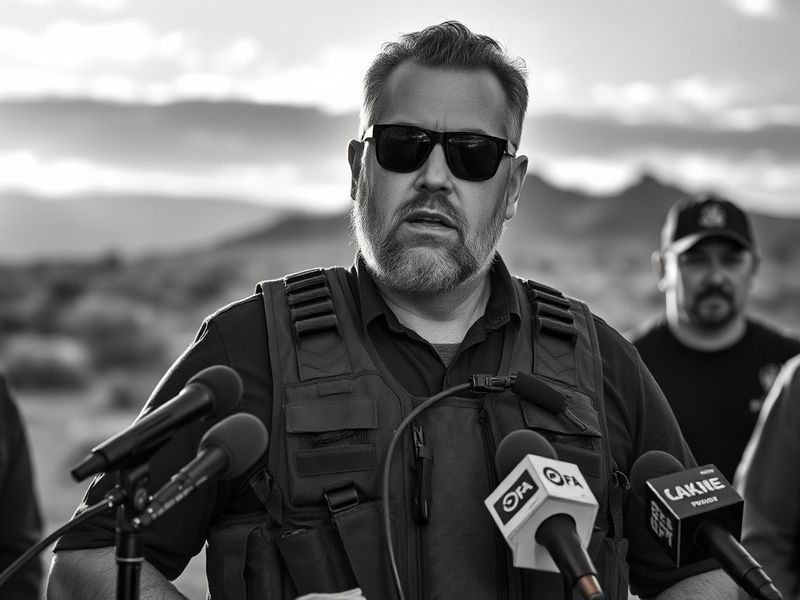
Stewart Rhodes emerged as a polarizing figure in American politics and militia movements over the past two decades. As the founder of the Oath Keepers, a far-right organization that gained prominence during the 2010s, Rhodes positioned himself at the intersection of constitutional activism, anti-government rhetoric, and, eventually, legal controversy. His trajectory—from a Yale Law School graduate to a prominent voice in militia circles—reflects broader shifts in American political extremism.
The Oath Keepers, under Rhodes’ leadership, positioned itself as a defender of the Constitution against perceived tyranny. However, its activities have often blurred the line between advocacy and direct action, culminating in Rhodes’ conviction for seditious conspiracy following the January 6 Capitol riot. This article examines Rhodes’ background, the evolution of the Oath Keepers, and the broader implications of his legal and political legacy.
The Early Years: Rhodes’ Path to Militia Leadership
Born in 1966 in Fresno, California, Stewart Rhodes initially pursued a career in the military before transitioning to legal studies. He served in the U.S. Army from 1986 to 1989 and later earned a Bachelor of Arts in history from the University of Nevada, Las Vegas. His academic pursuits culminated in a Juris Doctor from Yale Law School in 2004, where he developed a deep interest in constitutional law.
Rhodes’ political views evolved over time, shifting from libertarianism to a more militant interpretation of constitutionalism. By the late 2000s, he had become disillusioned with what he perceived as the federal government’s overreach, particularly in areas like gun control and economic policy. This disillusionment led him to found the Oath Keepers in 2009, a group that recruited current and former military, police, and first responders to “defend the Constitution” against perceived threats.
The organization’s name was drawn from the oath these officials take to uphold the Constitution. Rhodes framed his mission as a preemptive strike against tyranny, arguing that government officials were already violating their sworn duties. His rhetoric resonated with a segment of the population that felt alienated by mainstream politics, particularly in the wake of the 2008 financial crisis and the election of Barack Obama.
The Oath Keepers: From Advocacy to Direct Action
The Oath Keepers grew rapidly in the early 2010s, positioning itself as a grassroots movement with chapters across the United States. Rhodes and his followers were vocal opponents of gun control measures, such as the 2013 push for expanded background checks after the Sandy Hook Elementary School shooting. They also opposed federal land management policies and what they viewed as unconstitutional federal overreach in areas like healthcare and taxation.
However, the group’s approach often crossed into direct confrontation. During the 2014 standoff at the Bundy Ranch in Nevada, Oath Keepers members, including Rhodes, were present to support rancher Cliven Bundy against federal authorities. While Rhodes did not engage in violence, his presence and rhetoric amplified the standoff’s visibility, drawing national attention to the Oath Keepers’ cause.
The group’s involvement in such events highlighted a broader trend in far-right activism: the blending of legal advocacy with paramilitary posturing. Rhodes frequently invoked the language of the American Revolution, framing his followers as modern-day “minutemen” ready to resist tyranny. This narrative was compelling to many, but it also raised concerns among law enforcement and counterterrorism experts about the group’s potential for violence.
The Oath Keepers’ Ideology: A Mix of Constitutionalism and Conspiracy
Rhodes’ ideology was a patchwork of constitutional originalism, libertarianism, and conspiracy theories. He argued that the federal government had been infiltrated by globalist elites seeking to impose a New World Order. This belief system was not unique to Rhodes but was amplified by his legal training and rhetorical skills. He framed his arguments in legalistic terms, which gave them an air of legitimacy among his followers.
The Oath Keepers’ membership included a mix of individuals who were genuinely concerned about government overreach and those who espoused more extreme views, including white nationalism. Rhodes distanced himself from overtly racist elements, but his failure to consistently condemn such associations within his organization raised questions about his leadership. The Southern Poverty Law Center, which tracks extremist groups, designated the Oath Keepers as a hate group in 2015, citing its ties to white nationalist figures and its promotion of conspiracy theories.
January 6 and the Legal Reckoning
The Oath Keepers’ involvement in the January 6, 2021, Capitol riot marked a turning point in Rhodes’ legal and political fortunes. As the 2020 presidential election results were contested by then-President Donald Trump and his allies, Rhodes and the Oath Keepers positioned themselves as part of a broader “Stop the Steal” movement. On January 6, hundreds of Oath Keepers members were present in Washington, D.C., with some breaching the Capitol in an attempt to disrupt the certification of Joe Biden’s electoral victory.
Rhodes was not physically present at the Capitol on January 6, but he played a key role in organizing and funding the group’s presence. Prosecutors argued that he and his co-defendants conspired to oppose the lawful transfer of power through force. In November 2022, a jury found Rhodes and his lieutenant, Kelly Meggs, guilty of seditious conspiracy, a rare charge that carries significant penalties. In May 2023, Rhodes was sentenced to 18 years in prison, the longest sentence handed down to any of the January 6 defendants at that time.
The Broader Implications of Rhodes’ Conviction
Rhodes’ conviction sends a clear message about the legal consequences of conspiring to undermine democratic processes. However, it also raises broader questions about the role of extremist groups in American politics. The Oath Keepers are just one of many far-right organizations that have gained traction in recent years, fueled by distrust of government, economic anxiety, and the spread of misinformation online.
The rise of such groups reflects a growing polarization in American society, where political disagreements are increasingly framed as existential battles between good and evil. Rhodes’ rhetoric, with its emphasis on resisting tyranny, resonates with segments of the population that feel ignored by mainstream institutions. This dynamic is not unique to the United States; similar trends can be observed in other Western democracies, where populist movements have gained ground by challenging established political norms.
The Oath Keepers’ trajectory also highlights the challenges of countering extremism without infringing on free speech or civil liberties. While Rhodes’ conviction is a step toward accountability, it does not address the underlying grievances that fuel such movements. Policymakers and civil society leaders face the difficult task of addressing these grievances while ensuring that democratic institutions remain resilient against violent challenges.
Key Takeaways from Stewart Rhodes’ Story
- Legal Background: Rhodes’ Yale Law School education gave his activism an air of legitimacy, despite his extremist views.
- Oath Keepers’ Growth: The group expanded rapidly in the 2010s, blending constitutional advocacy with paramilitary rhetoric.
- January 6 Role: Rhodes played a central role in organizing the Oath Keepers’ presence at the Capitol riot, leading to his conviction for seditious conspiracy.
- Broader Extremism: Rhodes’ story reflects broader trends in far-right activism, where conspiracy theories and distrust of government fuel radicalization.
- Legal Precedent: His conviction sets a precedent for holding extremist leaders accountable, but it does not resolve the underlying issues driving such movements.
Conclusion: Rhodes’ Legacy and the Future of Extremism
Stewart Rhodes’ story is one of ambition, radicalization, and legal downfall. His journey from a Yale Law School graduate to a convicted felon illustrates how extremist ideologies can take root even among highly educated individuals. The Oath Keepers, under his leadership, became a symbol of the tensions between constitutional advocacy and paramilitary posturing, culminating in a legal reckoning that sent a message to other extremist groups.
However, Rhodes’ conviction does not mark the end of far-right activism in America. If anything, it underscores the challenges of addressing the root causes of extremism, including economic inequality, political polarization, and the erosion of trust in institutions. As long as these grievances persist, groups like the Oath Keepers will continue to find fertile ground for recruitment and radicalization.
For those concerned about the future of American democracy, Rhodes’ story serves as a cautionary tale. It highlights the dangers of unchecked conspiracy theories, the importance of holding leaders accountable, and the need for constructive dialogue to address the underlying issues fueling extremism. Whether these lessons are heeded remains to be seen, but Rhodes’ legacy will undoubtedly shape the conversation about extremism and democracy for years to come.
To learn more about extremist groups and their impact on American politics, visit our Politics and Analysis sections for in-depth coverage and expert perspectives.