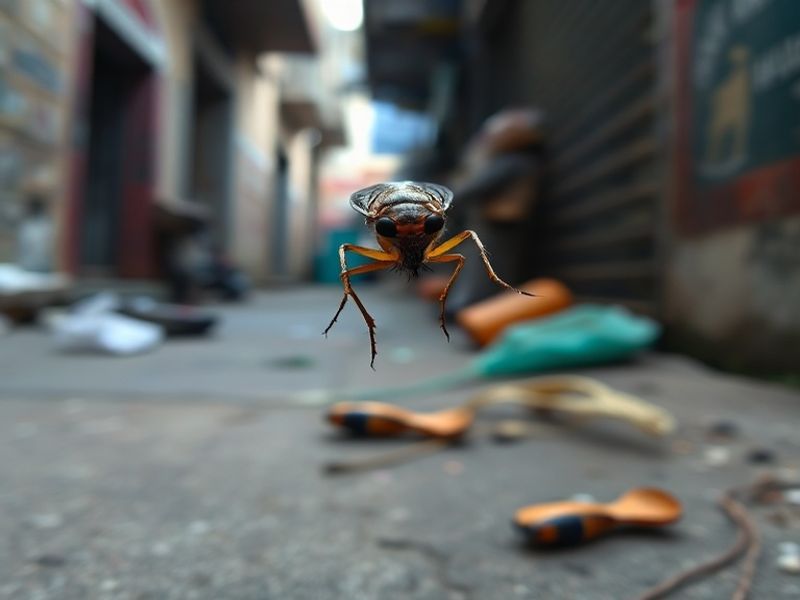
Flea-Borne Typhus: A Rising Global Health Threat You Need to Know
“`html
Flea-Borne Typhus: A Rising Global Health Concern
Flea-borne typhus, also known as murine typhus, is a bacterial infection transmitted primarily by fleas. While it has long been considered a disease of the past, recent years have seen a resurgence in cases across multiple continents. This uptick has prompted health authorities to reassess the threat it poses, particularly in urban and suburban environments where rodents and their fleas thrive.
The disease is caused by Rickettsia typhi and, less commonly, Rickettsia felis. These bacteria reside in the gut of infected fleas, which then spread the pathogen through their feces. When flea droppings contaminate a person’s skin—often through scratching—or enter the body via a bite, transmission occurs. Symptoms typically include fever, headache, muscle pain, and a rash, though severe cases can lead to organ damage if untreated.
The Global Resurgence of Flea-Borne Typhus
Once confined to tropical and subtropical regions, flea-borne typhus has recently expanded its reach. In the United States, California has become a hotspot, with Los Angeles County reporting over 100 cases in 2023 alone—a significant increase from previous years. Texas and Hawaii have also seen notable outbreaks, raising concerns among public health officials.
Beyond North America, the disease remains endemic in parts of Latin America, Africa, and Asia. In South Africa, for example, flea-borne typhus is a leading cause of febrile illness in some regions. Meanwhile, in Southeast Asia, the disease often overlaps with other vector-borne illnesses, complicating diagnosis and treatment. The World Health Organization (WHO) has flagged flea-borne typhus as a neglected disease, one that receives far less attention than malaria or dengue fever despite its potential for outbreaks.
The reasons behind this resurgence are multifaceted. Urbanization has led to closer interactions between humans and rodents, which serve as primary hosts for infected fleas. Climate change further exacerbates the problem by expanding the habitats where fleas and their hosts can survive. Warmer temperatures and altered rainfall patterns create ideal conditions for flea proliferation, particularly in areas with poor sanitation.
Cultural and Socioeconomic Factors at Play
Socioeconomic conditions play a critical role in the spread of flea-borne typhus. In many developing nations, inadequate waste management and overcrowded living conditions provide fertile ground for rodent infestations. In Brazil, for instance, favelas with limited infrastructure have reported recurring outbreaks. Similarly, in parts of India, religious and cultural practices involving the feeding of stray animals—including rats—may inadvertently contribute to flea populations.
In wealthier nations, the issue is often tied to suburban sprawl and the encroachment of human habitats into natural ecosystems. In Southern California, the rise in typhus cases has been linked to brush clearance practices that displace rodents into residential areas. Meanwhile, in Hawaii, feral cat colonies—protected by local ordinances—have become reservoirs for infected fleas, posing a risk to both animals and humans.
Public awareness campaigns have struggled to keep pace with these trends. Many people remain unaware of the disease’s existence, let alone its transmission routes. In some communities, misconceptions about hygiene or the role of pets in spreading illness have delayed effective interventions. For example, pet owners may unknowingly introduce fleas into their homes, only to dismiss symptoms as allergies or flu.
How Flea-Borne Typhus Compares to Other Vector-Borne Diseases
Flea-borne typhus shares similarities with other vector-borne diseases, such as Lyme disease and West Nile virus, but it has distinct characteristics that set it apart. Unlike Lyme disease, which is spread by ticks, or West Nile virus, transmitted by mosquitoes, flea-borne typhus relies on rodents and their fleas for transmission. This makes it particularly challenging to control, as rodent populations are difficult to eradicate.
The disease’s symptoms also overlap with those of other febrile illnesses, such as dengue fever or even COVID-19. This diagnostic ambiguity can lead to delayed treatment, increasing the risk of complications. In severe cases, flea-borne typhus can cause neurological damage, pneumonia, or even death if antibiotics like doxycycline are not administered promptly.
Prevention and Public Health Responses
Preventing flea-borne typhus requires a multi-pronged approach. Controlling rodent populations is the most direct method, but it is often impractical in urban settings. Integrated pest management—combining sanitation, habitat modification, and targeted pesticide use—has shown promise in reducing flea infestations. In Los Angeles, for example, the county health department has ramped up efforts to trap and remove rodents from high-risk areas while educating residents on flea-proofing their homes.
Public health interventions also focus on flea control. Treating pets with veterinarian-approved flea medications can break the transmission cycle, as can regular cleaning of pet bedding and living areas. For communities with feral animal populations, trap-neuter-return programs may help reduce the number of potential carriers.
Education remains a cornerstone of prevention. Residents in at-risk areas should be advised to:
- Store trash in sealed containers to deter rodents.
- Keep vegetation trimmed and remove debris that could harbor fleas.
- Use flea repellents when spending time outdoors in flea-prone areas.
- Seek medical attention if symptoms such as fever, rash, or muscle pain develop.
Global collaboration is equally important. The WHO and other health organizations are working to improve surveillance systems, particularly in regions where the disease is underreported. By sharing data and best practices, countries can better anticipate and respond to outbreaks. Meanwhile, researchers are exploring innovative solutions, such as developing flea-resistant rodents or vaccines for at-risk populations.
Looking Ahead: A Disease on the Move
The trajectory of flea-borne typhus suggests that it will continue to challenge public health systems in the coming decades. As climate change alters ecosystems and urbanization accelerates, the conditions for flea proliferation will only grow more favorable. Without sustained efforts to control rodent populations, improve sanitation, and raise public awareness, the disease could become a more persistent threat.
For now, flea-borne typhus remains a disease of paradoxes: it is both ancient and emergent, neglected yet preventable. Its resurgence serves as a reminder that even diseases once thought to be under control can re-emerge in new forms. The challenge ahead lies in balancing immediate response with long-term strategies, ensuring that communities—whether in bustling cities or rural villages—are equipped to meet this growing health concern.
For more insights into vector-borne diseases and their impact on global health, explore our Health section. To understand how environmental changes are influencing public health trends, visit our Science category.