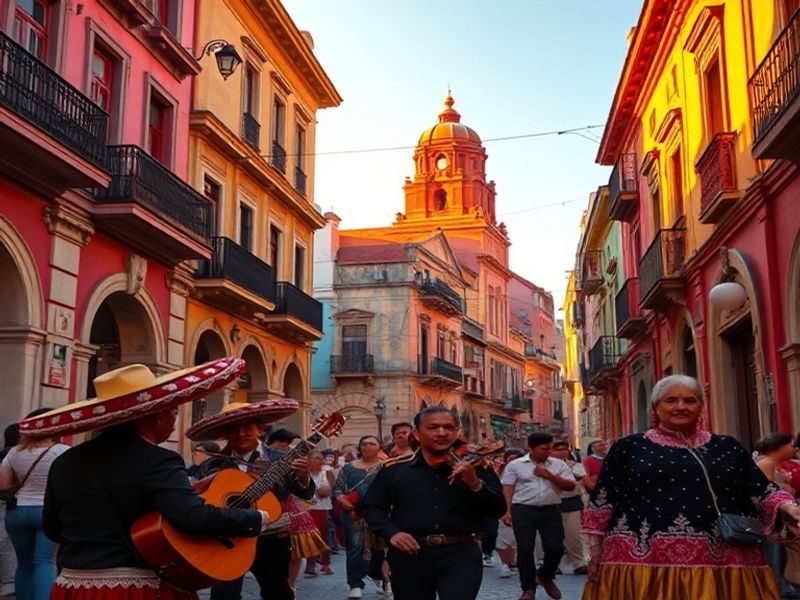
México has long stood as a bridge between ancient civilizations and modern ambitions, where colonial plazas share sidewalks with neon-lit skyscrapers and indigenous traditions live alongside digital innovation. This duality defines the nation’s identity—one that is as deeply rooted in history as it is dynamically evolving in the 21st century. From its archaeological treasures to its booming tech scene, México continues to shape global culture, politics, and economics in ways both visible and subtle.
The Cultural Tapestry: Preserving Heritage in a Modern World
At the heart of México’s enduring appeal is its unparalleled cultural richness. Home to 35 UNESCO World Heritage Sites, including the ancient city of Chichén Itzá and the historic center of Mexico City, the country offers a living museum of human achievement. These sites are not mere relics; they are active centers of community, tourism, and national pride. Festivals like Día de los Muertos and Carnival in Veracruz transform public spaces into vibrant celebrations of identity and memory.
Artistically, México has produced icons such as Frida Kahlo and Diego Rivera, whose murals in Mexico City’s Palacio Nacional tell the story of the nation’s social and political evolution. Today, a new wave of artists, filmmakers, and musicians continues to push boundaries. Directors like Alfonso Cuarón and Alejandro González Iñárritu have redefined global cinema, while contemporary artists like Gabriel Orozco blend conceptual rigor with Mexican sensibilities. This creative legacy is not just preserved—it is reimagined with every generation.
Indigenous Communities: Voices That Shape the Nation
More than six million people in México speak an indigenous language, and 68 distinct groups maintain distinct cultural practices. From the Zapotec in Oaxaca to the Maya in Yucatán, these communities contribute to México’s biodiversity, culinary traditions, and spiritual worldviews. Organizations like the National Institute of Indigenous Peoples work to protect land rights and promote bilingual education, yet challenges persist in access to healthcare, political representation, and economic opportunity.
One notable example is the Zapatista movement in Chiapas, which since 1994 has advocated for indigenous autonomy and land reform through peaceful resistance. Their autonomous municipalities offer models of self-governance that challenge traditional state structures. These efforts highlight a paradox: México’s identity is both unified and fragmented, a nation defined by both shared history and persistent regional disparities.
Economic Growth and Global Influence: México on the Rise
México is now the 15th largest economy in the world and the second-largest in Latin America, powered by a young, tech-savvy workforce and a strategic geographic position. The country is the United States’ top trading partner, with over $600 billion in annual bilateral trade. Manufacturing, particularly in the automotive and aerospace sectors, drives much of this growth, with brands like General Motors, Tesla, and Boeing operating major facilities in states such as Nuevo León and Querétaro.
Beyond manufacturing, México is emerging as a leader in nearshoring—a trend accelerated by global supply chain disruptions. Companies are relocating production from Asia to México to reduce shipping times and costs, especially in electronics, medical devices, and apparel. The government has invested in industrial corridors like the “Mazatlán Culiacán Monterrey” corridor and the “Yucatán Peninsula” economic zone to capitalize on this momentum.
Yet economic progress is uneven. While northern cities like Monterrey and Tijuana thrive, southern states such as Guerrero and Oaxaca lag behind in infrastructure and investment. This regional divide reflects broader challenges: improving education quality, reducing informality in labor markets, and combating corruption that siphons public resources. The International Monetary Fund has praised México’s fiscal discipline but warns that structural reforms are needed to sustain inclusive growth.
Tourism: A Double-Edged Engine
Tourism remains vital to México’s economy, contributing nearly 9% of GDP and supporting over four million jobs. Destinations like Cancún, Los Cabos, and Puerto Vallarta attract millions of international visitors annually, drawn by pristine beaches, all-inclusive resorts, and vibrant nightlife. Meanwhile, cultural tourism flourishes in cities like Guanajuato, Puebla, and Mérida, where colonial charm and UNESCO sites offer deeper experiences.
However, mass tourism has also led to environmental strain and social tensions. Over-tourism in Tulum has damaged coral reefs and strained local water supplies, prompting new regulations on hotel construction. In response, communities and local governments are promoting sustainable tourism models, such as community-led ecotourism in Chiapas and Oaxaca, where visitors can stay in traditional homes and learn from indigenous guides.
Politics and Social Change: A Nation in Transition
México’s political landscape has undergone a dramatic shift since 2018, when Andrés Manuel López Obrador (AMLO) won the presidency by a landslide on a platform of anti-corruption, austerity, and social welfare expansion. His administration, known as the “Fourth Transformation,” has prioritized programs like “Jóvenes Construyendo el Futuro,” which provides job training to nearly a million youth, and increased pensions for seniors.
Critics argue that AMLO’s centralized leadership style and militarization of public security—such as using the National Guard for domestic policing—undermine democratic checks and balances. His commitment to “hugs, not bullets” in combating drug cartels contrasts sharply with the militarized approaches of past administrations, yet violence remains a persistent crisis. In 2023, México recorded over 30,000 homicides, with femicides and disappearances drawing international concern.
On the international stage, México has reasserted its role as a mediator, brokering dialogue in conflicts like the Ukraine war and advocating for Latin American unity at forums such as the G20. Its relationship with the U.S. remains complex—defined by cooperation on migration, trade, and security, but strained by differing approaches to fentanyl trafficking and asylum policies.
Youth and Digital Transformation: The Future in the Making
With a median age of 29, México is one of the youngest countries in the OECD. This demographic advantage is fueling a digital revolution. Over 80 million Mexicans are internet users, and mobile connectivity has reached 90% of the population. Platforms like Mercado Libre, Kavak, and Clip have become household names, while fintech startups like Nu and RappiPay are transforming how people bank, shop, and pay.
Universities in Mexico City, Monterrey, and Guadalajara are incubating tech talent, with programs like Tecnológico de Monterrey’s “Startup Garage” supporting over 1,000 ventures annually. The government’s “Digital Mexico” initiative aims to close the digital divide by expanding broadband access in rural areas and training teachers in digital literacy.
Yet challenges remain. Cybersecurity threats, digital inequality between urban and rural youth, and brain drain to the U.S. and Canada pose risks. Still, the energy is undeniable. México is home to Latin America’s largest tech conference, “Mexico IT Growth,” and has become a preferred destination for remote workers due to its affordable cost of living and reliable internet infrastructure.
Conclusion: México’s Enduring Spirit
México is a nation of contrasts: ancient and modern, rich and unequal, resilient and restless. It is a country where a child in a remote village can dream of becoming a software engineer, and where a mural in the capital tells the story of an entire people. It is a place where tradition and innovation coexist—not without tension, but with a vitality that continues to inspire the world.
As México navigates its path forward, it must balance growth with equity, sovereignty with global engagement, and progress with preservation. In doing so, it offers a model not just of cultural survival, but of reinvention. Whether through its art, its economy, or its people, México reminds us that identity is not static—it is a living, evolving force.
For those seeking to understand the soul of Latin America, there is no better place to begin than in México. It is not just a destination. It is a conversation—one that has been unfolding for centuries and shows no sign of ending.
Explore more about cultural movements and economic trends on Dave’s Locker Culture and Dave’s Locker Business pages.