<!DOCTYPE html>
<html lang="en">
<head>
    <meta charset="UTF-8">
    <meta name="viewport" content="width=device-width, initial-scale=1.0">
    <title>Abdul El-Sayed: The Physician, Policy Expert, and Progressive Voice</title>
</head>
<body>
    <article>
        <h1>Abdul El-Sayed: The Physician, Policy Expert, and Progressive Voice</h1>

        <p>Abdul El-Sayed has emerged as a distinctive figure in American politics and public health, blending academic rigor with grassroots activism. Born in 1984 in Detroit, Michigan, El-Sayed grew up in a working-class Arab-American family. His upbringing in a city marked by industrial decline and racial inequity deeply influenced his worldview. After earning degrees from the University of Michigan and Columbia University, he became a Rhodes Scholar, studying at Oxford before returning to the U.S. to pursue medicine and public policy.</p>

        <p>El-Sayed’s career reflects his dual passions for health care and social justice. He served as the executive director of the Detroit Department of Health from 2015 to 2018, where he led efforts to combat the city’s lead water crisis. His leadership during this public health emergency demonstrated his ability to navigate bureaucratic challenges while prioritizing community needs. Under his guidance, Detroit implemented aggressive lead testing and mitigation programs, setting a benchmark for other cities facing similar crises.</p>

        <h2>Early Life and Education: A Foundation in Service</h2>

        <p>El-Sayed’s early years were shaped by Detroit’s economic struggles and the resilience of its communities. His parents, immigrants from Egypt, instilled in him the values of hard work and service. These principles guided his academic journey. He attended the University of Michigan, where he studied political science and became involved in student activism, advocating for immigrant rights and economic equity.</p>

        <p>His academic excellence earned him a Rhodes Scholarship, allowing him to study at Oxford University. There, he focused on global health policy, exploring how systemic inequities affect health outcomes. This research deepened his understanding of the intersections between health care, economics, and social justice—an intersection he would revisit throughout his career.</p>

        <p>After Oxford, El-Sayed returned to the U.S. to attend Columbia University’s Mailman School of Public Health. He later earned his medical degree from Columbia University Irving Medical Center. His dual training in medicine and public policy positioned him uniquely to address health disparities from both clinical and systemic perspectives.</p>

        <h2>Public Health Leadership: A Crisis Management Approach</h2>

        <p>El-Sayed’s tenure as Detroit’s health director was marked by his hands-on approach to crisis management. The city’s water crisis, which began in 2014, exposed severe failures in infrastructure and governance. El-Sayed’s team responded with urgency, prioritizing transparency and direct community engagement. They launched a citywide lead testing program, distributing thousands of water filters and providing resources for affected residents.</p>

        <p>His efforts did not go unnoticed. In 2017, he was named one of <em>Crain’s Detroit Business</em>’s “40 Under 40,” recognizing his impact on the city. However, his tenure was not without controversy. Some critics argued that his reforms were too aggressive or costly, while others praised his commitment to public health over political convenience. El-Sayed’s willingness to challenge the status quo set him apart as a leader who prioritized evidence over expedience.</p>

        <p>Beyond Detroit, El-Sayed has been a vocal advocate for universal health care. He co-authored the book <em>Healing Politics: A Doctor’s Journey into the Heart of Our Political Epidemic</em>, which critiques the U.S. health care system and proposes structural reforms. His arguments are rooted in both personal experience and data, making his case compelling to policymakers and the public alike.</p>

        <h2>Political Ambitions and Progressive Advocacy</h2>

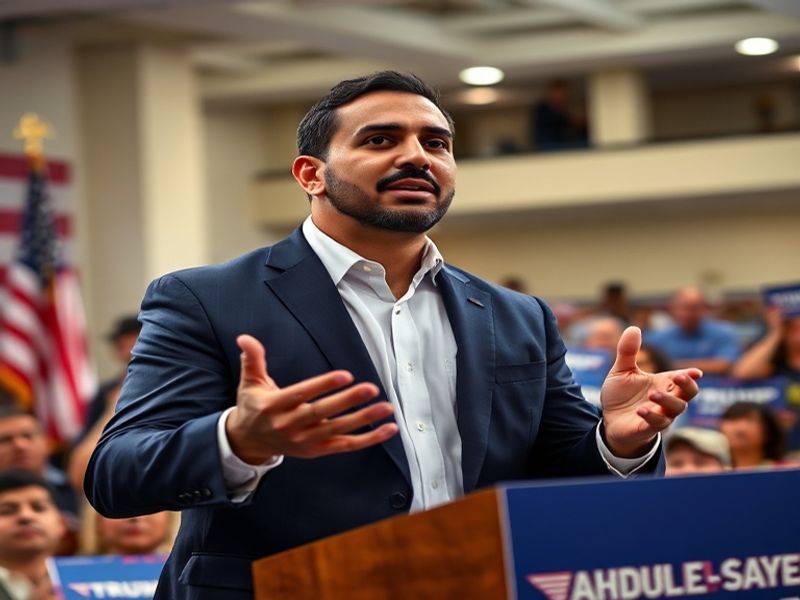
        <p>El-Sayed’s political career took a national turn in 2018 when he ran for governor of Michigan as a progressive Democrat. His campaign emphasized Medicare for All, clean energy, and economic justice. Though he ultimately lost the primary to Gretchen Whitmer, the race showcased his ability to mobilize young voters and energize progressive circles.</p>

        <p>His gubernatorial bid highlighted several key themes:
        <ul>
            <li>Medicare for All: El-Sayed argued that health care is a human right and called for a single-payer system in Michigan.</li>
            <li>Climate Action: He proposed a Green New Deal-style plan to transition Michigan to 100% renewable energy by 2030.</li>
            <li>Criminal Justice Reform: El-Sayed advocated for ending cash bail and legalizing marijuana, framing these issues as both moral and economic imperatives.</li>
            <li>Economic Equity: His platform included raising the minimum wage and investing in underserved communities.</li>
        </ul>
        </p>

        <p>Though his campaign did not secure the nomination, it demonstrated his capacity to articulate a bold progressive vision. Since then, El-Sayed has remained active in national discourse, appearing on news programs, writing op-eds, and advising other progressive candidates. His advocacy extends to issues like immigration reform and voting rights, where he emphasizes the need for inclusive policies.</p>

        <h2>Media Presence and Public Intellectual Role</h2>

        <p>El-Sayed’s ability to communicate complex ideas has made him a sought-after commentator. He is a frequent contributor to outlets like <em>The Nation</em>, <em>The Guardian</em>, and <em>MSNBC</em>, where he breaks down policy issues for a general audience. His appearances on podcasts and panels further amplify his reach, particularly among younger and more diverse audiences.</p>

        <p>One of his most notable media ventures was the podcast <em>America Dissected</em>, which he co-hosted with comedian and activist Travon Free. The show used humor and sharp analysis to explore health care, politics, and social justice. Its success underscored El-Sayed’s talent for making dense topics accessible without sacrificing depth.</p>

        <p>El-Sayed’s public intellectual role also includes his work with organizations like the Sanders Institute, where he collaborates with other progressive thinkers to shape policy agendas. His focus remains on systemic change, whether through electoral politics, grassroots organizing, or academic research.</p>

        <h2>Legacy and Future Prospects</h2>

        <p>At 40, El-Sayed is still early in his career, but his impact is already significant. His work in Detroit’s water crisis alone has saved countless lives and set a precedent for how cities can respond to public health emergencies. His advocacy for Medicare for All has pushed the national conversation leftward, influencing even mainstream Democratic candidates.</p>

        <p>Looking ahead, El-Sayed’s future could take several paths:
        <ol>
            <li>Elective Office: He may run for higher office, such as Congress or another statewide position, where he could shape policy directly.</li>
            <li>Health Policy Leadership: His expertise could lead to roles in federal agencies, such as the Department of Health and Human Services or the Centers for Disease Control and Prevention.</li>
            <li>Academia and Research: El-Sayed’s academic background suggests he could return to teaching or leading research initiatives, particularly in public health policy.</li>
            <li>Media and Advocacy: His knack for communication could lead to expanded roles in journalism, podcasting, or advocacy organizations.</li>
        </ol>
        </p>

        <p>Regardless of the path he chooses, El-Sayed’s commitment to equity and evidence-based policy ensures he will remain a prominent voice in progressive circles. His ability to bridge gaps between academia, activism, and governance makes him a rare figure in American politics—one who can translate complex ideas into actionable change.</p>

        <p>For those interested in exploring more about progressive health care policies or Michigan’s political landscape, visit our <a href="https://www.daveslocker.net/category/politics">Politics</a> and <a href="https://www.daveslocker.net/category/health">Health</a> category pages on Dave’s Locker.</p>

        <p>Abdul El-Sayed’s journey is far from over. As he continues to challenge conventional wisdom and advocate for systemic reform, his work serves as a reminder that progress is possible—even in the face of daunting challenges.</p>
    </article>