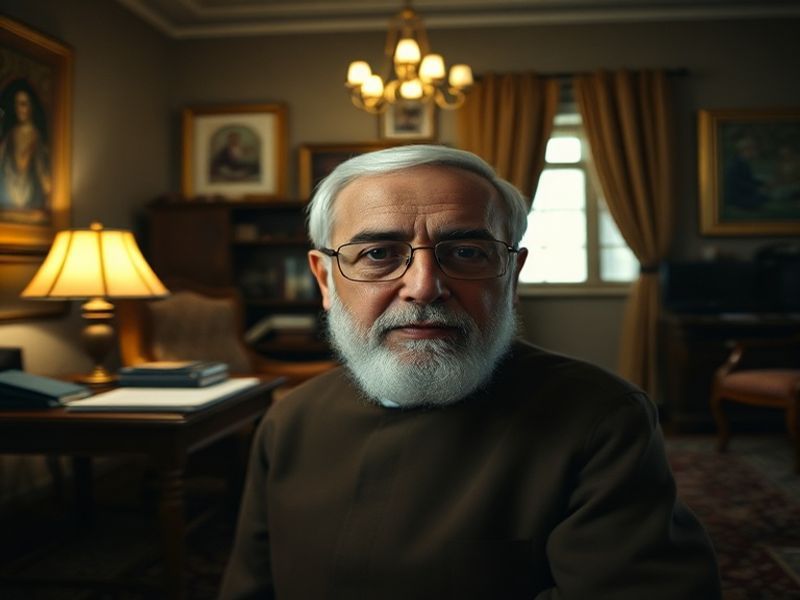
For decades, Iran’s political landscape has been dominated by the Supreme Leader, Ayatollah Ali Khamenei. Yet, one of the most consequential yet least scrutinized figures in Tehran’s corridors of power is his son, Mojtaba Khamenei. Born in 1969, Mojtaba has remained largely out of the public eye, operating behind the scenes as a key strategist and power broker within Iran’s conservative establishment. His influence extends far beyond family ties, touching every major decision from domestic policies to regional alliances.
As Iran navigates economic turmoil, regional conflicts, and internal dissent, Mojtaba’s role has become increasingly pivotal. Observers suggest he may be positioning himself to succeed his father, a transition that could reshape Iran’s political future. To understand Iran’s trajectory, one must first examine Mojtaba Khamenei’s rise, his ideological leanings, and the controversies that surround him.
From Cleric to Kingmaker: Mojtaba’s Early Rise
Mojtaba Khamenei’s path to influence began in the aftermath of the 1979 Islamic Revolution, when his father emerged as a dominant figure in Iran’s new theocratic order. Unlike many of his peers, Mojtaba did not seek the spotlight. Instead, he focused on religious studies, eventually earning a doctorate in jurisprudence from Qom’s prestigious seminaries. His academic rigor earned him respect among hardline clerics, but it was his political acumen that truly set him apart.
By the 2000s, Mojtaba had become a trusted advisor to his father, particularly in matters of intelligence and security. His involvement in the 2009 presidential election—widely regarded as a pivotal moment in Iran’s modern history—solidified his reputation as a behind-the-scenes operator. While Mahmoud Ahmadinejad’s controversial victory sparked mass protests, Mojtaba worked quietly to ensure the regime’s survival. His network of allies in the Revolutionary Guard and conservative factions became instrumental in suppressing dissent.
One of Mojtaba’s defining characteristics is his ability to navigate Iran’s complex power structures. He avoids direct confrontation but wields influence through patronage and strategic alliances. Analysts note that his approach mirrors his father’s: pragmatic yet uncompromising when it comes to preserving the Islamic Republic’s core principles.
The Power Behind the Throne: Mojtaba’s Political Network
Mojtaba Khamenei’s influence is not just a matter of familial connection; it is the result of decades spent cultivating a web of loyalists across Iran’s political and military institutions. His most critical power base lies within the conservative factions of the Assembly of Experts, the body tasked with selecting the Supreme Leader. By ensuring loyalists occupy key positions, Mojtaba has positioned himself as a gatekeeper for any future succession.
The Revolutionary Guard (IRGC) also serves as a cornerstone of his influence. Many IRGC commanders view Mojtaba as a stabilizing force, particularly as Iran faces mounting pressures from sanctions, protests, and regional conflicts. His ties to the IRGC’s elite Quds Force—responsible for Iran’s foreign interventions—have raised eyebrows, especially as Tehran expands its influence in Syria, Yemen, and Lebanon.
- Key allies: Hardline clerics, IRGC commanders, and members of the Assembly of Experts.
- Strategic leverage: Control over intelligence networks and economic patronage systems.
- Successor speculation: His name frequently surfaces in discussions about Iran’s next Supreme Leader.
Yet, Mojtaba’s network is not without its critics. Reformists and moderates view him as a reactionary force, resistant to change and accountable only to the regime’s most rigid factions. His alleged role in suppressing dissent during the 2009 Green Movement and the 2019 protests has drawn condemnation from human rights groups. For many, he embodies the paradox of Iran’s system: a theocracy that claims divine legitimacy while operating through opaque, often brutal, power structures.
The Succession Question: Will Mojtaba Follow in His Father’s Footsteps?
Ayatollah Ali Khamenei, now 85, has ruled Iran for over three decades. His health has become a subject of intense speculation, with questions looming over who will succeed him. Mojtaba’s name is frequently mentioned, but the path is fraught with challenges. Iran’s constitution requires the next Supreme Leader to be a marja’—a high-ranking Shia jurist—something Mojtaba has not achieved. Some analysts argue he could bypass this requirement by consolidating power through the Assembly of Experts, effectively rewriting the rules to accommodate his leadership.
His potential rise would signal a shift toward even greater conservatism, with implications for Iran’s domestic and foreign policies. Under his influence, Iran could double down on its regional ambitions, further entrenching its military presence in neighboring countries. Domestically, repression of dissent and tighter control over civil society would likely intensify. The international community would face a regime even more resistant to negotiations, particularly on issues like nuclear proliferation and human rights.
Yet, Mojtaba’s succession is not guaranteed. Other contenders, including current President Ebrahim Raisi and hardline cleric Saeed Jalili, are also vying for power. The Revolutionary Guard’s loyalty is not monolithic, and internal fractures could derail Mojtaba’s ambitions. Additionally, public sentiment in Iran is increasingly restless, with protests over economic hardship and political repression showing no signs of abating.
Broader Implications: What Mojtaba’s Rise Means for Iran and the World
The stakes of Mojtaba Khamenei’s potential rise extend beyond Iran’s borders. His leadership would likely deepen Tehran’s alignment with Russia and China, further isolating Iran from the West. The nuclear deal’s future—already on life support—would face even steeper obstacles, as hardliners prioritize resistance over diplomacy. For countries like Israel and Gulf states, a Mojtaba-led Iran would mean heightened regional tensions, with proxy conflicts in Syria, Iraq, and Yemen intensifying.
Domestically, his rule could accelerate Iran’s slide toward economic stagnation. The IRGC’s dominance over key industries—from construction to telecommunications—would likely expand, exacerbating corruption and inefficiency. Meanwhile, the middle class, already squeezed by inflation and unemployment, would face even greater hardships. The regime’s survival would hinge on its ability to suppress dissent through force, a strategy that risks further destabilizing the country.
For the international community, Mojtaba’s ascendancy would present a dilemma. Engaging with Iran under his leadership would mean dealing with a regime even more opaque and uncompromising than the one in place today. Sanctions, already a point of contention, would likely remain a central tool of pressure, though their effectiveness in altering Tehran’s behavior remains questionable.
Ultimately, Mojtaba Khamenei represents the paradox of Iran’s Islamic Republic: a system that claims divine authority while operating through a labyrinth of power struggles. His rise is not just about one man’s ambition; it is a reflection of the regime’s resilience in the face of mounting challenges. Whether he becomes the next Supreme Leader or remains a shadowy power broker, his influence will continue to shape Iran’s future—and the world’s response to it.
As Iran stands at a crossroads, the question is not just who will lead the country next, but what kind of future awaits its people under a leadership that prioritizes control over reform, confrontation over cooperation.