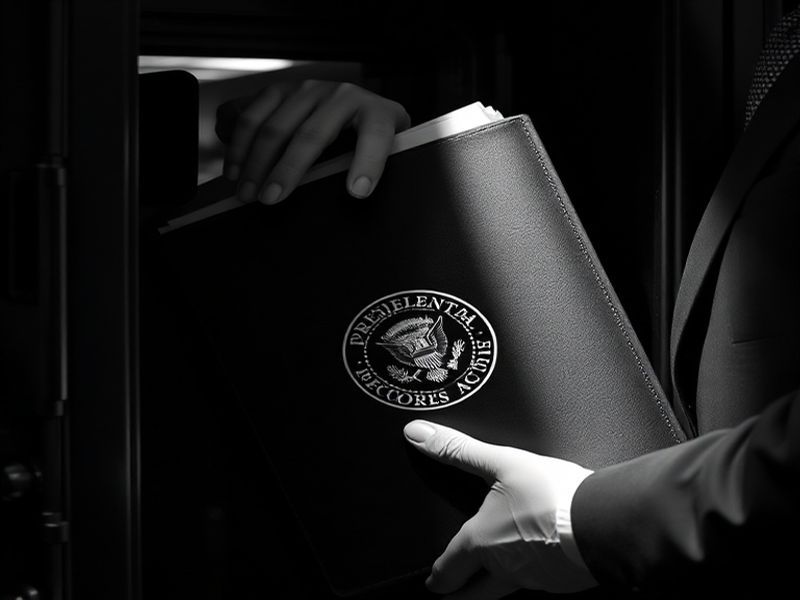
The Presidential Records Act (PRA) of 1978 stands as a cornerstone of U.S. archival law, designed to ensure that the official documents of the White House are properly managed and preserved for future generations. Yet, this legislation has frequently found itself at the center of political controversies, raising questions about transparency, accountability, and the balance between presidential authority and public access. Understanding the PRA requires examining its origins, its legal intricacies, and the real-world consequences of its enforcement—or lack thereof.
This law emerged from a pivotal moment in American history when the Watergate scandal exposed gaps in how presidential records were handled. Before the PRA, presidents could destroy or withhold documents at will, leaving gaps in the historical record. The act sought to close those gaps by declaring presidential records as public property, subject to the Freedom of Information Act (FOIA) after a president leaves office. However, its implementation has been far from seamless, leading to legal battles and public debates.
The Origins and Intent of the Presidential Records Act
Signed into law by President Jimmy Carter on December 20, 1978, the PRA was a direct response to the abuses of power revealed during the Nixon administration. During Watergate, President Richard Nixon attempted to destroy tapes and documents that implicated him in the scandal. This act of obstruction highlighted the need for a legal framework to govern how presidential records were created, stored, and eventually released to the public.
The PRA defines presidential records as any documentary materials created or received by the president, their staff, or agencies within the Executive Office of the President. This includes everything from emails and memos to meeting notes and audio recordings. The law distinguishes these from personal records, which are not subject to public disclosure. The distinction between personal and presidential records has itself become a contentious issue, particularly in the digital age where lines between professional and private communication have blurred.
One of the PRA’s most significant provisions is the requirement that presidential records be transferred to the National Archives and Records Administration (NARA) at the end of a president’s term. NARA is tasked with preserving these records and making them available to the public, with certain exceptions for national security or personal privacy. However, the process is not automatic. Presidents retain control over their records for up to 12 years after leaving office, and they can assert executive privilege to withhold certain documents even after that period.
Key Provisions of the PRA
- Definition of Presidential Records: Includes all documentary materials created or received by the president or their staff in the course of official duties.
- Ownership and Control: Presidential records are owned by the federal government, but presidents retain control over their records for 12 years post-term.
- Transfer to NARA: Presidents must transfer their records to NARA at the end of their term, though the process can be delayed or contested.
- Public Access: Records become subject to FOIA requests after the 12-year period, with exceptions for national security, personal privacy, and other legal protections.
- Personal Records Exemption: Documents created for purely private purposes are not subject to the PRA and may be destroyed or withheld by the president.
Controversies and Legal Challenges
The PRA has been tested repeatedly in courts and public discourse, often revealing its limitations in the face of modern governance and political resistance. One of the most high-profile controversies involved the Trump administration, which faced allegations of improperly handling and potentially destroying presidential records. In February 2022, NARA informed the Justice Department that 15 boxes of records, including classified documents, had been removed from the White House and were missing. This revelation led to a months-long investigation and ultimately a federal indictment against former President Donald Trump for willful retention of national defense information.
The case underscored a critical flaw in the PRA: the lack of robust mechanisms to enforce compliance. While the law requires presidents to turn over their records, it places significant trust in their good faith to do so. The Trump administration’s actions highlighted how easily this trust can be abused, particularly when a president views certain documents as personal property rather than official records. The legal battle that followed also raised questions about whether the PRA is equipped to handle the complexities of digital records, including emails, texts, and encrypted communications.
Another controversy erupted during the Obama administration when it was revealed that some White House officials had used personal email accounts to conduct official business. While these emails were eventually turned over to NARA, the episode raised concerns about whether the PRA adequately addresses the challenges of modern communication tools. Personal devices and encrypted apps make it easier to avoid the record-keeping requirements of the PRA, creating loopholes that could undermine transparency.
Notable Cases and Their Implications
- Trump Administration (2022-2023): The retrieval of classified documents from Mar-a-Lago exposed gaps in the PRA’s enforcement and sparked a debate about the handling of sensitive materials.
- Obama Administration (2015): The use of personal emails for official business raised questions about compliance with the PRA and the preservation of digital records.
- Bush Administration (2008): NARA sued the Bush White House to recover missing emails, revealing that millions of messages had been lost or improperly archived.
- Reagan Administration (1989): The first significant test of the PRA arose when NARA sought to recover records that the Reagan administration had attempted to destroy or withhold.
The Role of NARA and the Limits of Transparency
The National Archives and Records Administration plays a crucial role in upholding the PRA, yet its authority is frequently challenged. NARA is responsible for preserving presidential records and making them available to the public, but it lacks the power to compel compliance. When a president or their staff fails to turn over records, NARA’s only recourse is to refer the matter to the Justice Department or Congress, a process that can be slow and politically fraught.
Even when records are turned over, the process of reviewing and releasing them is often delayed. NARA must redact sensitive information, consult with agencies on national security grounds, and navigate legal challenges from former presidents who seek to withhold documents. The result is a system where transparency is often deferred, sometimes indefinitely. Critics argue that this undermines the very purpose of the PRA, which is to ensure that the public has access to the historical record of the presidency.
The challenges posed by digital records have further complicated NARA’s role. In the era of email, instant messaging, and cloud storage, the volume of records has exploded, making it difficult to track and preserve every document. Social media posts, which have become a primary mode of communication for modern presidents, also fall under the PRA’s purview. However, the transient nature of these platforms—where posts can be deleted or altered—creates additional hurdles for archivists.
In response to these challenges, NARA has begun updating its guidelines to better address digital records. In 2023, the agency issued new regulations requiring federal agencies to capture and preserve social media content as federal records. While this is a step forward, implementation remains inconsistent, and the risk of lost or altered records persists.
The Future of the Presidential Records Act
The PRA is at a crossroads. As technology evolves and political norms shift, the law must adapt to ensure that it remains effective in preserving the historical record. One potential reform is to shorten the 12-year period during which presidents retain control over their records. This would allow NARA to begin reviewing and releasing documents sooner, increasing transparency and reducing the risk of records being withheld or destroyed.
Another critical reform would be to strengthen NARA’s enforcement powers. Currently, the agency relies on voluntary compliance from the White House, which is not always forthcoming. Granting NARA subpoena power or increasing penalties for non-compliance could deter future abuses. Additionally, Congress could clarify the definition of presidential records to better account for digital communications, ensuring that no loophole exists for evading record-keeping requirements.
The PRA also raises broader questions about executive power and the public’s right to know. In an era where presidential authority is often expanded through executive orders and unilateral actions, the need for robust record-keeping laws has never been greater. The PRA serves as a reminder that transparency is not just a courtesy—it is a cornerstone of democratic governance. Without it, the public’s ability to hold leaders accountable is severely diminished.
As we look to the future, the PRA will continue to be a battleground between those who prioritize secrecy and those who advocate for openness. The lessons of the past—from Nixon to Trump—demonstrate that the law’s effectiveness hinges not just on its text, but on the willingness of presidents, Congress, and the public to uphold its principles. For now, the PRA remains a work in progress, a fragile safeguard against the erosion of historical memory.
For those interested in diving deeper into the intersection of law and politics, explore our Analysis section, where we break down complex issues with clarity and depth. To stay updated on the latest developments in government transparency, visit our News page.
Conclusion: A Vital Law in Need of Reinforcement
The Presidential Records Act is more than a bureaucratic rule—it is a commitment to democratic values. By ensuring that the actions of the president and their administration are documented and accessible, the PRA upholds the principle that no individual, no matter how powerful, is above the public’s right to know. Yet, its effectiveness is constantly tested by the realities of modern governance, political resistance, and technological change.
Reforms are necessary to close loopholes, strengthen enforcement, and adapt to the digital age. Without these changes, the PRA risks becoming a relic of a bygone era, unable to fulfill its mission in a world where records are increasingly ephemeral and power is concentrated in fewer hands. The challenges are significant, but the stakes could not be higher. The future of historical accountability depends on it.