Steve McMichael’s career is a study in contrasts—brutal athleticism in the National Football League paired with theatrical flair in professional wrestling. Born on October 17, 1957, in Houston, Texas, McMichael’s journey from college football standout to NFL defensive tackle and later a wrestling superstar reflects a unique blend of raw physicality and unscripted charisma. His legacy extends beyond American sports culture, influencing global perceptions of athlete versatility and entertainment crossover.
In an era when athletes were expected to stay within their lanes, McMichael defied convention. He became one of the few figures to achieve top-tier status in two of the world’s most physically demanding and culturally distinct sports. His story isn’t just about personal achievement; it’s about redefining what it means to be an athlete in the public imagination, especially in an increasingly connected global sports landscape.
NFL Dominance: The “Mongo” of the Chicago Bears
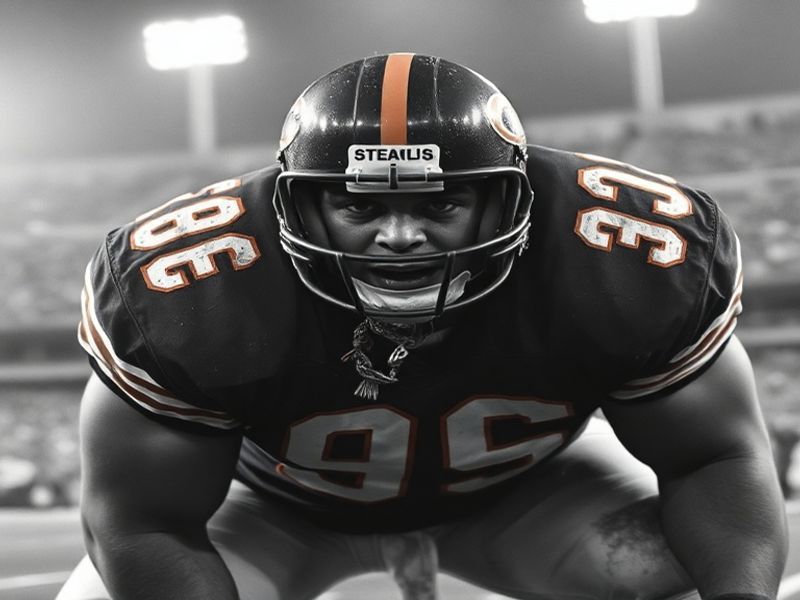
McMichael earned his nickname “Mongo” during his time with the Chicago Bears, a moniker that underscored both his power and his larger-than-life persona. Drafted by the New England Patriots in 1980, McMichael quickly established himself as a disruptive force on the defensive line. His move to the Bears in 1982 marked the beginning of an era.
The 1985 Chicago Bears remain one of the most iconic teams in NFL history, and McMichael was a central figure in their 15-1 regular season and Super Bowl XX victory. As part of the legendary “46 Defense,” designed by coordinator Buddy Ryan, McMichael and his teammates terrorized opposing offenses with relentless pass rushes and physical dominance. His performance in that Super Bowl win over the New England Patriots cemented his place in football lore.
Standing at 6’2″ and weighing over 280 pounds, McMichael wasn’t just big—he was explosive. His ability to collapse the pocket and disrupt quarterbacks made him a nightmare for offensive coordinators. Over his 15-year NFL career, he amassed 95 sacks and was selected to five Pro Bowls. Yet, it was his presence in the trenches, often overshadowed by flashier skill positions, that defined his impact.
More Than Just a Defensive Tackle: The Cultural Role of the “Big Man”
In many ways, McMichael embodied the blue-collar ethos of the NFL’s defensive line. Players like him represented the backbone of the league—unheralded, underappreciated, but essential. His rise coincided with a shift in how defensive players were perceived, moving from anonymous grunts to celebrated figures. This transformation mirrored broader cultural trends in sports media, where personality and marketability began to rival performance in defining an athlete’s legacy.
Wrestling’s Wild Ride: From NFL to WWE Stardom
What truly set McMichael apart was his transition from the NFL to professional wrestling in 1994. At 36 years old, he entered the squared circle with the same intensity he brought to football, joining WWE (then WWF) as part of the stable known as “The Corporation.” His wrestling persona blended his real-life toughness with theatrical villainy, making him a compelling figure in a sport where authenticity often blurred with fiction.
McMichael’s wrestling career included memorable feuds and alliances, most notably with stars like Triple H, The Undertaker, and his former Bears teammate William “Refrigerator” Perry. He won the WWE Tag Team Championship twice—once with Perry and once with Chris Benoit. Though his wrestling career lasted only five years, it was long enough to cement his status as one of the most unusual crossover stars in sports entertainment history.
The Global Appeal of the Athlete-Wrestler
McMichael’s crossover appeal wasn’t limited to the United States. Wrestling has a massive international following, particularly in Europe, Japan, and Latin America. His presence in WWE helped introduce a new audience to the NFL and broadened his personal brand. In countries where American football was still gaining traction, McMichael became a tangible link between two of the world’s most popular sports.
This dual-sport phenomenon reflects a growing trend in global sports culture, where athletes increasingly seek to expand their influence beyond traditional boundaries. Figures like Dwayne “The Rock” Johnson and Bo Jackson have followed similar paths, but McMichael was one of the pioneers. His ability to transition from one elite sport to another demonstrated that physical talent and marketability could transcend disciplines.
The Post-Sports Life: Broadcasting, Health, and Legacy
After retiring from wrestling, McMichael returned to football as a broadcaster, providing analysis for NFL games. His deep voice, no-nonsense demeanor, and firsthand experience made him a respected voice in sports media. He also became an advocate for athlete health, particularly in addressing the long-term effects of concussions and chronic traumatic encephalopathy (CTE), issues that have gained global attention in recent years.
In 2020, McMichael’s induction into the WWE Hall of Fame highlighted his unique place in sports entertainment history. The ceremony, held during the pandemic, was a testament to his enduring appeal. Fans who grew up watching him in the NFL or in wrestling rings alike celebrated his induction, underscoring how his career resonated across generations.
Lessons from McMichael’s Career
McMichael’s journey offers several key insights into the evolution of sports and entertainment:
- Versatility is Power: His ability to succeed in two elite sports proved that talent isn’t confined to a single discipline.
- Personality Matters: In an era of increasing media scrutiny, his larger-than-life persona helped him stand out both on and off the field.
- Health Awareness is Crucial: His advocacy for athlete health reflects a growing global conversation about the long-term impacts of sports.
- Cultural Bridges: His work in wrestling introduced new audiences to the NFL, demonstrating the power of sports to transcend borders.
Steve McMichael’s Global Influence and Lasting Impact
Steve McMichael’s career is a reminder that greatness isn’t limited to one arena. His legacy spans the gridiron, the wrestling ring, and the broadcast booth, making him a rare figure who shaped multiple industries. In an age where athletes are increasingly expected to build personal brands, McMichael’s career serves as a blueprint for how to leverage physical talent, charisma, and adaptability.
Globally, his story resonates because it reflects broader trends in sports culture. The rise of the athlete-entrepreneur, the blurring of lines between sports and entertainment, and the growing emphasis on athlete health are all themes that McMichael’s career embodies. Whether in Chicago, where he’s a sports legend, or in Tokyo, where wrestling fans remember his intensity, McMichael’s impact is felt far beyond the borders of the United States.
For younger athletes dreaming of transcending their sport, McMichael’s career is proof that reinvention is possible. His journey from the Bears’ defensive line to the WWE Hall of Fame illustrates that success isn’t a straight path—it’s a series of bold choices, relentless work, and an unshakable belief in one’s abilities.
As sports continue to evolve, figures like Steve McMichael remind us that the most compelling stories aren’t just about trophies or titles. They’re about the people who redefine what it means to be an athlete in a globalized, media-driven world.
For fans looking to explore more about the intersection of sports and entertainment, check out our Sports category for deeper analysis and historical features.