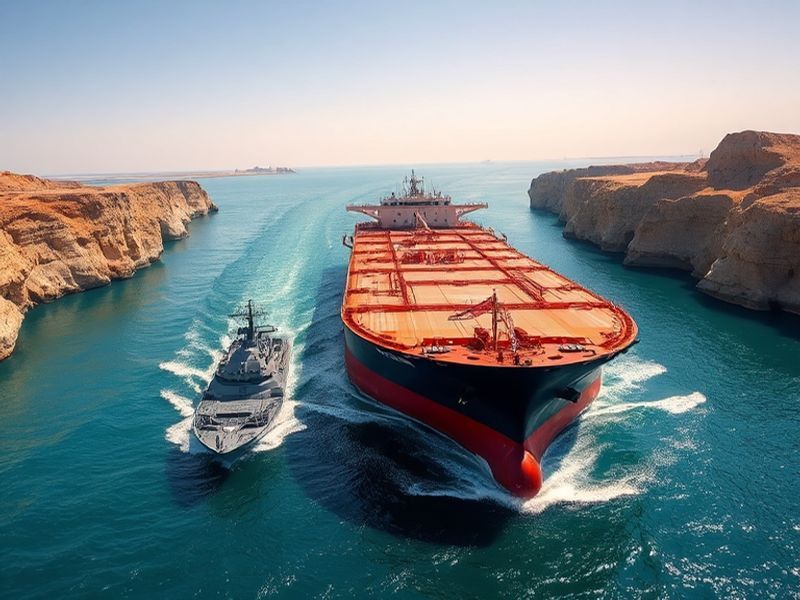
The Strait of Hormuz remains one of the most strategically vital waterways in the world. Connecting the Persian Gulf to the Gulf of Oman, it serves as a critical artery for global oil transport. Each day, nearly 20% of the world’s petroleum passes through these narrow waters. The strait’s importance isn’t just economic—it’s geopolitical, military, and cultural. Nations far beyond the Middle East watch its waters closely, knowing that stability here affects fuel prices, supply chains, and international relations.
Recent years have seen tensions rise around the Strait of Hormuz. Incidents involving naval confrontations, drone strikes, and tanker seizures have made headlines. These events don’t happen in isolation. They reflect deeper struggles over influence, sovereignty, and energy dominance. The strait’s role in global trade makes it a flashpoint where local conflicts ripple across continents.
The Strait’s Role in the World Energy Market
More than 17 million barrels of crude oil flow through the Strait of Hormuz daily. This volume dwarfs most other shipping lanes. The strait’s narrowest point is just 21 nautical miles wide, with a two-mile shipping channel on each side. This bottleneck means that even minor disruptions can cause major global repercussions.
Oil from Saudi Arabia, Iraq, the UAE, and Iran all pass through this route. Any closure or threat to navigation forces tankers to reroute around Africa, adding weeks and millions of dollars to shipping costs. In 2021, a drone attack on an Israeli-linked tanker temporarily halted operations. The market reacted within hours, with Brent crude prices spiking by nearly 3%. Such volatility underscores how deeply the strait influences energy markets.
Beyond oil, the strait also carries liquefied natural gas (LNG). Qatar, the world’s largest LNG exporter, relies almost entirely on this route. Disruptions here could trigger energy shortages in Europe and Asia, regions already grappling with supply instability. The strait isn’t just a regional concern—it’s a global pressure point.
Geopolitical Tensions and Military Presence
The Strait of Hormuz sits at the center of a decades-long rivalry between Iran and Western-aligned Gulf states. Iran has repeatedly threatened to close the strait in response to sanctions or perceived threats. Its Revolutionary Guard controls several islands near the strait, including Abu Musa and the Tunbs, which are claimed by the UAE. These territorial disputes add another layer of complexity to an already tense region.
International naval forces patrol the waters to ensure safe passage. The U.S. Fifth Fleet, based in Bahrain, maintains a constant presence. Other nations, including the UK, France, and Australia, contribute ships and surveillance. These patrols aim to deter aggression and protect commercial traffic. Yet, incidents still occur. In 2019, Iran seized British-flagged tankers, escalating tensions with London. In 2023, a U.S. Navy helicopter and Iranian boats had a close encounter, raising concerns about accidental conflict.
- Iran’s Strategy: Uses asymmetric tactics—fast boats, drones, and mines—to challenge larger navies.
- Gulf States’ Response: Invest in missile defense systems and strengthen alliances with Western powers.
- Global Stakeholders: Depend on the strait for energy security, making neutrality impossible.
This delicate balance of power turns the strait into a chessboard where every move carries global consequences. Diplomacy often struggles to keep pace with military posturing. The region’s history of conflict—from the Iran-Iraq War to the rise of ISIS—keeps tensions simmering just below the surface.
Cultural and Economic Impact on Coastal Communities
The Strait of Hormuz isn’t just a geopolitical chess piece—it’s home to vibrant communities. Cities like Bandar Abbas in Iran and Fujairah in the UAE thrive because of maritime trade. Fishermen, dockworkers, and small businesses depend on the strait’s stability. Yet, these communities also bear the brunt of conflicts they didn’t start.
In Iran, the strait is a source of national pride. State media often frames it as a symbol of resistance against foreign pressure. The annual “National Persian Gulf Day” celebrates Iran’s historical claim to the waters. Meanwhile, in the UAE, the strait represents economic opportunity. Ports like Jebel Ali, one of the world’s busiest, rely on smooth transit through Hormuz.
Cultural identity is deeply tied to the strait. Traditional dhow boats, used for centuries in Gulf trade, still navigate these waters. Pearl diving, once the region’s economic backbone, has faded, but its legacy lives on in local festivals and oral histories. The strait’s waters are more than a shipping lane—they’re a living archive of Gulf culture.
Environmental concerns add another dimension. Oil spills and ballast water discharge threaten marine life. Coral reefs and dugongs, already endangered, face increased risk during conflicts. The strait’s ecological health reflects the balance between human ambition and natural limits. Protecting it requires cooperation, yet cooperation remains elusive.
What the Future Holds for the Strait
Forecasting the strait’s future means weighing multiple forces: energy demand, military posturing, and diplomatic efforts. On one hand, renewable energy could reduce reliance on Gulf oil. On the other, Asia’s growing energy needs ensure demand for Middle Eastern crude will persist for decades. China, India, and Japan all depend heavily on Hormuz oil. Their naval presence is growing, adding another layer of complexity.
Diplomatic initiatives offer cautious hope. The 2023 U.S.-Iran indirect talks in Oman hinted at de-escalation. Yet, trust is fragile. Regional blocs, like the Gulf Cooperation Council, seek unity but struggle with internal divisions. Meanwhile, non-state actors, such as Yemen’s Houthis, continue to target ships, complicating security efforts.
Technological solutions may provide partial relief. AI-driven maritime surveillance and autonomous patrol boats could enhance safety. The UAE’s use of blockchain for trade documentation reduces paperwork delays. Yet, technology alone can’t resolve political disputes. The strait’s future hinges on whether nations prioritize cooperation over confrontation.
For now, the Strait of Hormuz remains a paradox: a vital lifeline and a powder keg. Its waters carry the fuel that powers industries worldwide. Its shores are home to cultures shaped by centuries of trade and conflict. As long as energy flows through its channels, the strait will command global attention. The challenge is not just navigating its waters—but navigating the ambitions of those who control them.
For deeper analysis on regional energy policies, explore our Politics section. To learn how global trade routes shape local economies, visit our Business coverage.