Spanning 2,899.54 miles from Teaneck, New Jersey, to San Francisco, California, Interstate 80 remains one of the most historically significant and culturally resonant highways in the United States. More than just a stretch of asphalt, it traces the footsteps of pioneers, industrialists, and travelers who shaped the nation’s identity. From the wagon trails of the 19th century to the truck convoys of the 21st, I-80 has evolved into a living monument to American mobility.
Unlike some interstates designed primarily for speed and efficiency, I-80 weaves through diverse landscapes—rolling farmlands, rugged mountains, dense urban corridors, and remote deserts. It connects major cities like New York, Chicago, and Salt Lake City, while also passing through smaller towns where local stories unfold. This blend of scale and intimacy makes I-80 unique among American highways. It’s not just a road; it’s a corridor of ambition, resilience, and transformation.
The Route’s Historical Footprint
Interstate 80 follows the path of earlier transportation networks. In the 1800s, this corridor was home to the Lincoln Highway, America’s first transcontinental automobile road, established in 1913. Before that, it overlapped with sections of the Pony Express route and the Overland Trail used by settlers heading west. The modern I-80 was officially designated in 1956 as part of the Federal-Aid Highway Act, but its roots go back much further.
The highway’s alignment reflects both geography and human ingenuity. East of the Mississippi, it cuts through the rolling hills of Pennsylvania and Ohio, mirroring the routes of early railroads. West of the Mississippi, it traces the Platte River valley, a natural corridor used by Native American tribes, fur trappers, and 19th-century gold seekers. This continuity—from ancient trails to modern expressways—makes I-80 a timeline of American movement.
Key Historical Landmarks Along I-80
- Toledo, Ohio: Home to the Jeep factory, where military vehicles were mass-produced during World War II, symbolizing industrial might.
- Des Plaines, Illinois: Site of the first McDonald’s franchise, opened in 1955, marking the birth of America’s fast-food culture.
- Salt Lake City, Utah: Gateway to the Great Salt Lake and the Mormon Trail, a pivotal chapter in westward expansion.
- Sacramento, California: Endpoint of the First Transcontinental Railroad, completed in 1869, which revolutionized cross-country travel.
I-80 as a Global Symbol of Mobility
While Interstate 80 is quintessentially American, its story resonates globally. Highways like Germany’s Autobahn or China’s G4 Beijing–Hong Kong–Macau Expressway serve similar roles in their countries, connecting regions and fueling economic growth. But I-80 stands out for its role in the American mythos—it’s a road that embodies the pioneer spirit, the promise of opportunity, and the relentless pursuit of progress.
In many ways, I-80 mirrors the evolution of global infrastructure. Like the Silk Road of antiquity or the Pan-American Highway, it’s a conduit for migration, trade, and cultural exchange. Trucks carrying goods from Chicago to California mirror the container ships that traverse oceans. The rest stops and diners along I-80 echo the truck stops of Europe and Asia, where drivers share stories across borders.
Even the challenges facing I-80 reflect global concerns: aging infrastructure, traffic congestion, environmental impact, and the push toward sustainable transportation. In this sense, I-80 is not just a relic of the past—it’s a living case study in how nations adapt their arteries of commerce and connection to meet modern demands.
Culture and Commerce Along the Highway
Interstate 80 has long been a stage for American culture. Blues musicians traveled its length in the early 20th century, spreading Southern sounds to the North. Route 66 may be more famous for its nostalgic allure, but I-80 carried the real volume of mid-century migration—families in station wagons, students heading to college, and workers seeking new opportunities.
Today, I-80 supports a thriving logistics industry. The highway is part of the “NAFTA Superhighway” concept, linking North American trade corridors. Warehouses and distribution centers dot its path, especially in the Midwest and California. Cities like Omaha, Nebraska, and Reno, Nevada, have grown into logistics hubs, transforming sleepy towns into economic engines.
Culturally, I-80 is also a symbol of displacement and renewal. The highway’s construction in the 1950s and 60s displaced thousands, particularly in urban areas like Gary, Indiana, and Salt Lake City. Yet, it also enabled new communities to form—suburbs grew, immigrant populations settled, and cultural enclaves emerged along its route.
Notable Cultural Touchpoints
- Chicago: The highway begins near the city’s iconic skyline, a global symbol of industry and innovation.
- Wyoming’s Green River: Featured in countless Western films and novels, representing the frontier spirit.
- Reno: Known as “The Biggest Little City in the World,” it thrives on tourism and gaming, fueled by highway traffic.
- San Francisco: The highway’s western terminus at the Bay Bridge offers one of the most scenic final stretches in America.
The Future of Interstate 80
As climate change intensifies, so do the demands on I-80. Rising temperatures threaten pavement integrity in the Southwest, while increased rainfall in the Midwest raises concerns about flooding and erosion. States are investing in climate-resilient infrastructure, using materials designed to withstand extreme weather and reduce heat absorption.
Technology is also reshaping the highway. Electric vehicle charging stations are being installed along the route, and autonomous vehicle testing zones are emerging in states like Nevada and Ohio. The rise of e-commerce has turned I-80 into a 24/7 logistics corridor, with trucks operating around the clock to meet demand.
Yet, amid these changes, the human element endures. Roadside diners still serve pie and coffee. Truck drivers still share stories at rest stops. Families still embark on cross-country road trips, capturing the same sense of wonder that has defined travel along I-80 for generations.
Interstate 80 is more than a road. It’s a thread woven into the fabric of American life—a testament to human ambition, adaptability, and the unending journey forward.
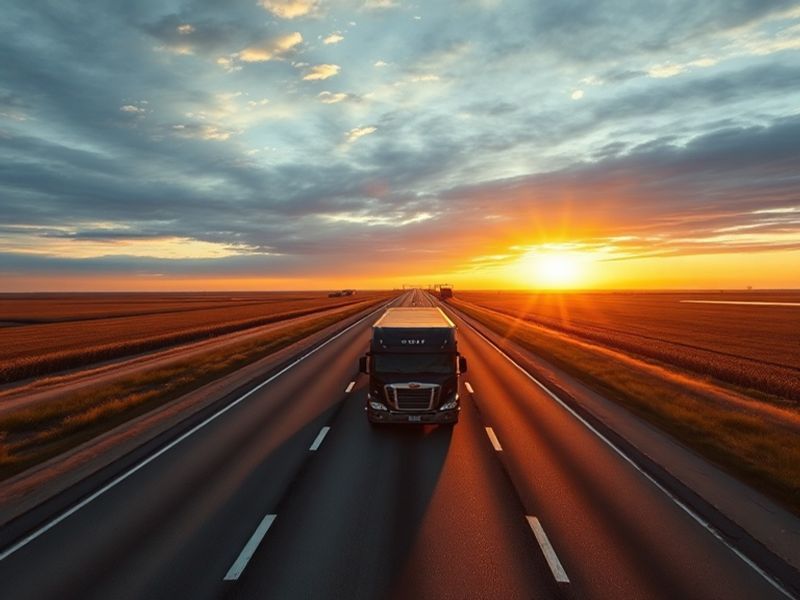
As the sun sets over the Nevada desert or rises over the Great Lakes, the headlights of passing vehicles continue to trace the path of progress. And for now, the road still stretches ahead, open and inviting, just as it has for over a century.