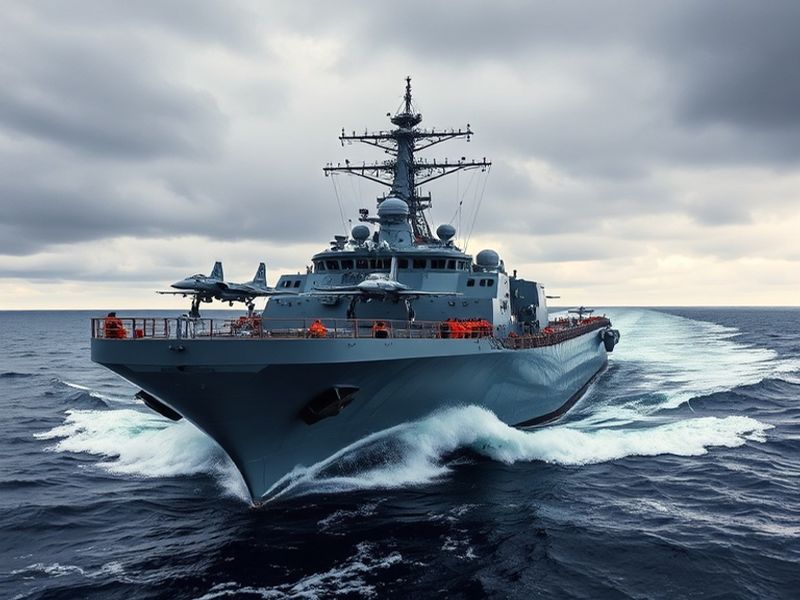
Russian Warship Meme: How a Naval Exchange Became Internet Legend
“`html
The Russian Warship Incident: From Naval Drama to Internet Legend
The phrase “Russian warship” entered internet culture in February 2022, not through official naval reports or geopolitical analysis, but through a viral audio clip that would redefine online humor. What began as a tense moment in the Black Sea escalated into one of the most recognizable soundbites of modern conflict. This is the story of how a single phrase transcended its origins to become a global meme, a symbol of resistance, and a testament to the internet’s power to reframe history.
The Real-Life Incident Behind the Meme
On February 24, 2022, as Russia launched its full-scale invasion of Ukraine, reports emerged of Ukrainian forces on Snake Island—a strategic Black Sea outpost—receiving a radio transmission from a Russian warship. According to Ukrainian officials, the warship identified itself as the Moskva, then Russia’s flagship of the Black Sea Fleet, and demanded the surrender of the island’s defenders. The Ukrainian response has since become legendary.
The audio clip of the exchange spread rapidly online, capturing a moment of defiance that would echo far beyond the battlefield. While the exact wording has been debated, the essence remains clear: Ukrainian soldiers responded to the Russian warship’s ultimatum with a single phrase that would soon be immortalized across the internet. The audio’s authenticity has been confirmed by multiple sources, including the Ukrainian Navy and independent journalists.
For those unfamiliar with the context, the exchange might seem like a minor footnote in a much larger conflict. But for millions online, it became something far more significant—a moment where humor and heroism intertwined in the face of overwhelming odds.
The Memeification Process: How a Phrase Took Over the Internet
The transformation of “Russian warship” into a meme wasn’t immediate, but it was inevitable. Within days of the audio’s release, the phrase began appearing in online forums, social media posts, and even music remixes. The simplicity of the phrase made it perfect for meme culture—short, punchy, and open to endless reinterpretation.
One of the earliest viral formats involved pairing the phrase with images of unlikely objects or scenarios, such as:
- A single potato with the caption “Russian warship”
- A screenshot of a vintage video game character with the same phrase
- A surreal image of a building with the words “Russian warship” superimposed
These memes spread across platforms like Reddit, Twitter, and TikTok, each iteration adding a new layer to the joke. The phrase became a shorthand for defiance, absurdity, and the underdog’s triumph—whether in war, video games, or everyday life. It also spawned countless variations, from “Russian cruise ship” to “Russian submarine,” each maintaining the same irreverent tone.
What makes this meme particularly fascinating is its longevity. While most internet trends fade within weeks, “Russian warship” has persisted for over two years, evolving to reflect new contexts. It has been used in political commentary, gaming culture, and even corporate branding, proving its versatility as a cultural touchstone.
The Cultural Significance: Why This Meme Matters
Beyond its humor, the “Russian warship” meme carries deeper cultural weight. It represents the internet’s ability to reframe narratives, turning a moment of conflict into one of resilience and creativity. In a time when misinformation and propaganda often dominate online discourse, this meme served as a counterbalance—a way for people to process complex events through laughter and shared experience.
The phrase also highlights the democratization of media. What began as a radio transmission between soldiers became a global phenomenon because ordinary people chose to amplify it. Platforms like Twitter and Reddit allowed the phrase to spread organically, without the need for traditional gatekeepers like news outlets or celebrities to validate its significance.
Moreover, the meme has become a symbol of Ukrainian resistance. While the Snake Island defenders’ fate remains unclear—reports suggest they were either killed, captured, or evacuated—their defiant response lives on in the meme. It serves as a reminder that even in the darkest moments, humor can be a form of defiance.
Interestingly, the meme has also been adopted by anti-war activists and critics of Russian military actions. By repurposing the phrase, they’ve turned a moment of aggression into one of ridicule, undermining the perceived invincibility of Russian forces. This duality—both a celebration of resistance and a critique of war—adds layers to the meme’s cultural impact.
The Legacy and Future of the Meme
As the war in Ukraine continues, the “Russian warship” meme has cemented its place in internet history. It joins the ranks of other iconic memes like “Distracted Boyfriend” and “Wojak,” but with a unique twist—it’s rooted in real-world events and carries a sense of gravitas. This blend of humor and history is rare and may explain why the meme has endured for so long.
Looking ahead, the phrase shows no signs of fading. It has already been referenced in mainstream media, political commentary, and even educational contexts. Some analysts suggest that the meme could become a lasting symbol of the war, much like “Keep Calm and Carry On” did for World War II. Others argue that its future lies in continued reinvention, as new generations discover and reinterpret it for their own purposes.
For those who lived through the meme’s creation, it serves as a reminder of the internet’s power to shape narratives. In an era where information is often weaponized, the “Russian warship” meme stands out as a moment where truth, humor, and creativity converged to create something truly unique. Whether it fades into obscurity or becomes a permanent fixture of internet culture, its legacy is already assured.
As we reflect on this phenomenon, it’s worth considering what the next viral phrase might be. In a world where conflict and creativity often collide online, the “Russian warship” meme proves that even the most serious moments can give rise to something unforgettable.
For more on how internet culture intersects with global events, visit our News section. To explore other viral phenomena, check out our Trending category.