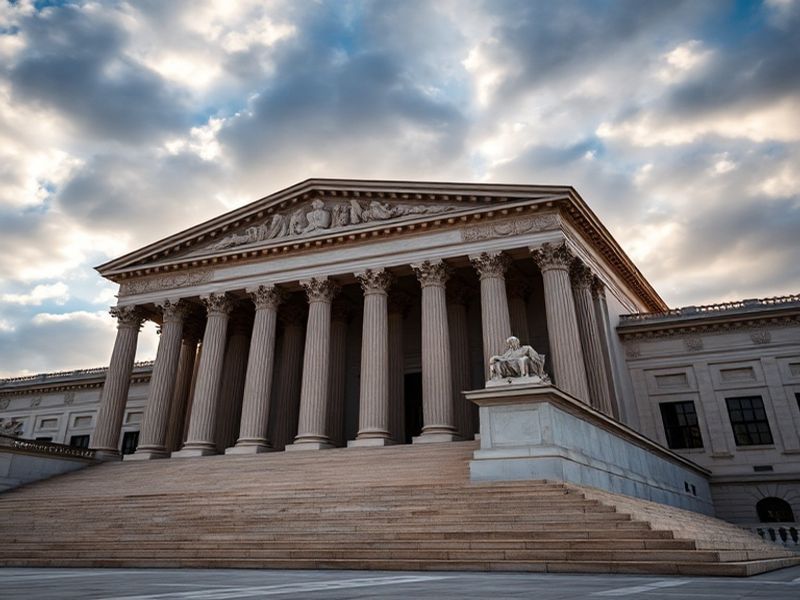
The Supreme Court of the United States (SCOTUS) stands as the highest judicial body in the federal judiciary. Established by Article III of the Constitution, it interprets laws, resolves disputes, and shapes the legal landscape of the nation. Unlike other branches of government, the Court’s decisions often carry lasting consequences, influencing everything from civil rights to corporate regulations. Its rulings can redefine American society, making its composition and philosophy critical to understanding the country’s direction.
Unlike the legislative or executive branches, the Supreme Court does not create laws. Instead, it clarifies their meaning and ensures they align with the Constitution. This interpretive role grants the Court immense power, as its decisions become binding precedent for lower courts. The Court’s ability to elevate certain rights or limit government authority underscores its unique position in the American system of checks and balances.
A Brief History of the Supreme Court
The Supreme Court was established in 1789 under the Judiciary Act, with its first session held in 1790. Initially, the Court struggled to assert its authority, but landmark cases in the 19th century, such as Marbury v. Madison (1803), solidified its power to declare laws unconstitutional. This principle of judicial review remains a cornerstone of the Court’s influence today.
The Court’s role expanded significantly in the 20th century. Landmark decisions like Brown v. Board of Education (1954), which ended racial segregation in schools, and Roe v. Wade (1973), which recognized a constitutional right to abortion, demonstrated the Court’s ability to drive social change. More recently, cases like Citizens United v. FEC (2010), which reshaped campaign finance laws, have shown how the Court’s rulings can reshape the political and economic landscape.
Key Milestones in Supreme Court History
- 1803: Marbury v. Madison – Established judicial review, allowing the Court to invalidate laws conflicting with the Constitution.
- 1896: Plessy v. Ferguson – Upheld racial segregation under the “separate but equal” doctrine, later overturned in Brown v. Board of Education.
- 1954: Brown v. Board of Education – Declared racial segregation in public schools unconstitutional, marking a turning point in the civil rights movement.
- 1973: Roe v. Wade – Recognized a constitutional right to abortion, sparking decades of legal and political debate.
- 2010: Citizens United v. FEC – Ruled that political spending by corporations and unions is protected under the First Amendment, reshaping campaign finance laws.
Structure and Function of the Supreme Court
The Supreme Court consists of nine justices: one chief justice and eight associate justices. These justices are nominated by the president and confirmed by the Senate, serving lifetime appointments unless they resign or are impeached. This lifetime tenure ensures independence from political pressures, though it also means the Court’s ideological balance can shift dramatically with each new appointment.
The Court’s docket is limited, with justices selecting around 100 cases per year from thousands of petitions. The cases they choose often involve significant legal questions or conflicts between lower courts. Once a case is accepted, both sides submit written briefs, followed by oral arguments where justices question attorneys. After deliberation, the Court issues a majority opinion, which sets legal precedent, along with concurring or dissenting opinions that provide alternative perspectives.
How the Supreme Court Operates
- Case Selection: The Court reviews petitions and selects cases that address important legal questions or resolve conflicts among lower courts.
- Oral Arguments: Attorneys present their arguments, and justices ask questions to clarify legal issues.
- Conference and Deliberation: Justices meet privately to discuss cases and vote on the outcome.
- Opinion Writing: The majority opinion is drafted and circulated among the justices for review and potential revisions.
- Decision and Precedent: The Court issues its ruling, which becomes binding precedent for future cases.
The Supreme Court’s Broader Impact
The Supreme Court’s rulings extend far beyond the courtroom. Decisions on civil rights, voting rights, and individual liberties have reshaped American society. For example, Obergefell v. Hodges (2015), which legalized same-sex marriage nationwide, marked a significant milestone in LGBTQ+ rights. Similarly, Dobbs v. Jackson Women’s Health Organization (2022), which overturned Roe v. Wade, returned abortion regulation to the states, sparking intense debate over reproductive rights.
The Court’s influence also extends to the economy. Cases like National Federation of Independent Business v. Sebelius (2012), which upheld the Affordable Care Act, and West Virginia v. EPA (2022), which limited the Environmental Protection Agency’s authority to regulate greenhouse gas emissions, demonstrate how the Court shapes economic and environmental policy. These decisions often reflect the Court’s ideological leanings, with conservative majorities tending to favor limited government intervention and liberal majorities more open to regulatory oversight.
Controversies and Criticisms
The Supreme Court is not without its controversies. Critics argue that the Court’s lifetime appointments create an undemocratic institution, as justices serve for decades without facing electoral accountability. The confirmation process has also become increasingly politicized, with senators and advocacy groups fiercely debating nominees’ qualifications and judicial philosophies. The rushed confirmation of Justice Amy Coney Barrett in 2020, following the death of Justice Ruth Bader Ginsburg just weeks before the presidential election, highlighted the contentious nature of the process.
Another criticism is the Court’s perceived lack of transparency. Unlike other branches of government, the Court’s deliberations are conducted in private, and justices are not required to explain their reasoning beyond written opinions. This opacity can fuel perceptions of bias or favoritism, particularly when decisions split along ideological lines. The Court’s refusal to adopt an ethics code, despite calls for greater accountability, has further eroded public trust in its impartiality.
The Future of the Supreme Court
The Supreme Court’s future will be shaped by its current composition and the political climate. With a conservative supermajority of six justices to three liberals, the Court is poised to continue its trend of limiting federal regulatory power and expanding individual rights in certain areas. However, the Court’s legitimacy is increasingly under scrutiny, with calls for reform growing louder. Proposals such as term limits for justices, expanding the Court’s size, or implementing stricter ethics rules are gaining traction among legal scholars and advocacy groups.
The Court’s role in addressing modern challenges, such as climate change, artificial intelligence, and election integrity, will also define its legacy. How the justices navigate these complex issues will determine whether the Court remains a unifying force or further polarizes the nation. As the Court approaches its 235th anniversary, its ability to adapt to changing societal needs while maintaining public trust will be critical to its enduring influence.
For those interested in the intersection of law and politics, the Supreme Court remains one of the most fascinating institutions in American democracy. Its decisions will continue to shape the nation for generations to come, making it essential to understand its structure, history, and impact.
To explore more about the intersection of law and culture, visit Dave’s Locker Politics section. For deeper analysis on legal trends, check out Dave’s Locker Analysis.