How RSPB Bird Feeders Are Transforming Backyard Wildlife Across Continents
Across urban balconies, suburban gardens, and rural landscapes, a quiet revolution is unfolding. RSPB bird feeders, designed by the Royal Society for the Protection of Birds, are not just accessories—they are lifelines for avian populations facing habitat loss and seasonal food shortages. What began in the United Kingdom as a conservation tool has quietly spread globally, reshaping how people interact with nature and supporting biodiversity in unexpected places.
The RSPB’s approach to bird feeding combines science, sustainability, and public engagement. Their feeders are engineered to prevent waste, discourage pests, and cater to the nutritional needs of different bird species. This attention to detail has made them a trusted choice among bird enthusiasts from Tokyo to Toronto, from Buenos Aires to Berlin. But their impact goes beyond individual gardens. They represent a growing movement where everyday citizens become active participants in global conservation efforts.
The Global Reach of a British Conservation Icon
Originally developed in the 1960s as part of the RSPB’s broader campaign to reverse bird population declines, these feeders were initially targeted at common British species like blue tits, robins, and blackbirds. Yet, as environmental awareness grew, so did their reach. Today, RSPB-style feeders are found in over 40 countries, adapted to local climates and bird behaviors. In Japan, for example, feeders with drainage systems are popular to cope with monsoon rains, while in South Africa, models resistant to strong winds are favored in open landscapes.
This adaptation reflects a deeper cultural shift. In many Western nations, bird feeding is a longstanding tradition—think of the American Audubon Society’s century-old campaigns or the German Vogelfütterung culture, where winter feeding is a civic duty. But in places like India and Brazil, bird feeding is a newer habit, often linked to urbanization and the loss of natural habitats. Here, RSPB feeders serve not only as practical tools but as symbols of reconnecting with nature amid rapid development.
Interestingly, the rise of RSPB feeders in Asia aligns with a broader trend: the urbanization of wildlife. As cities expand, birds like house sparrows and mynas adapt to human-dominated environments. Feeders provide a reliable food source, especially during harsh winters or dry seasons. In Seoul, community gardens equipped with RSPB feeders have become micro-habitats for migratory birds, turning concrete rooftops into unexpected sanctuaries.
Design That Works: Why RSPB Feeders Stand Out
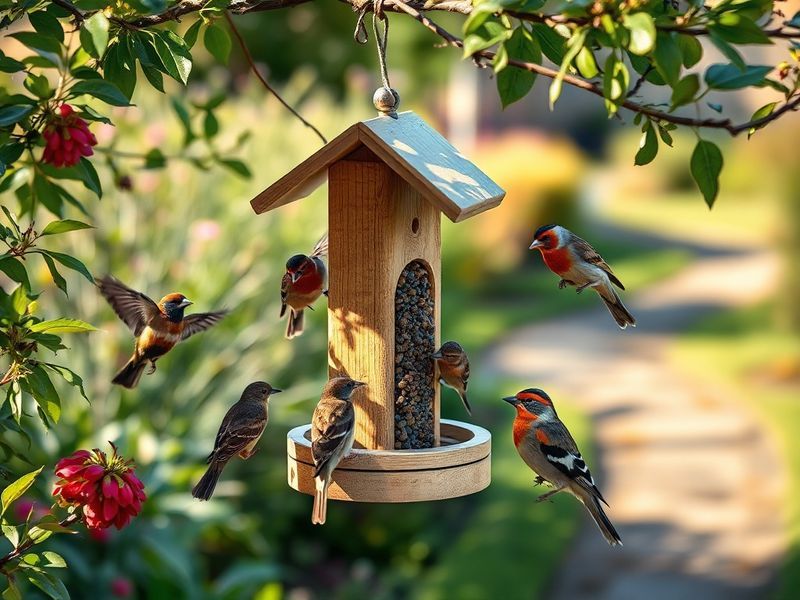
Not all bird feeders are created equal. Cheap plastic models can harbor mold and spill seed, attracting rats and creating messes. RSPB feeders, by contrast, prioritize durability, hygiene, and efficiency. Their most popular designs feature:
- Squirrel-proof mechanisms: Spring-loaded ports that close when heavy animals attempt to access the seed, preserving food for birds.
- Seed guards: Small barriers that prevent seed from falling to the ground, reducing waste and deterring pests.
- Easy-clean bases: Removable trays that can be sanitized, lowering the risk of salmonella and other diseases among bird populations.
- UV-resistant materials: Ensuring feeders last multiple seasons even in intense sunlight, a crucial feature in equatorial regions.
These features are not just practical—they’re ethical. RSPB feeders are designed with the well-being of birds in mind, minimizing risks like window collisions (a leading cause of bird deaths) and contamination. For instance, their window feeders, which suction to glass, alert birds to the presence of glass, reducing fatal strikes—a growing concern as glass architecture dominates modern cities.
In Scandinavia, where winter temperatures can plummet below -20°C, RSPB feeders with insulated bases help prevent seed from freezing. Meanwhile, in Australia, models with elevated platforms protect feed from flooding during cyclones. This versatility demonstrates how thoughtful design can address regional challenges while maintaining ecological integrity.
From Backyard to Big Data: Citizen Science in Action
One of the most powerful aspects of RSPB feeders is their role in citizen science. The RSPB’s Big Garden Birdwatch, launched in 1979, encourages people to count birds visiting their feeders for one hour each January. What started as a British initiative has grown into the world’s largest wildlife survey, with over 1.4 million participants in 2024. Data from these observations helps scientists track population trends, identify species at risk, and even predict environmental changes.
For example, the dramatic decline of house sparrows in European cities was first flagged through feeder-based surveys. Similarly, in North America, data from feeder watchers contributed to the recovery of bald eagle populations by highlighting the importance of supplemental feeding during migration.
But the benefits extend beyond data collection. Feeder networks foster community engagement. In Melbourne, local councils have installed RSPB-style feeders in public parks, turning birdwatching into a shared activity. Schools use them to teach children about ecosystems, while retirement homes use feeder observations to combat isolation by connecting residents with nature. In India, women’s self-help groups have adopted bird feeding as a livelihood, selling handcrafted seed mixes and feeder accessories to support conservation.
This grassroots participation underscores a global truth: bird feeding is no longer a niche hobby. It’s a cultural practice with ecological, educational, and economic dimensions. And RSPB feeders are at its heart.
The Future: Sustainability and Ethical Feeding
As demand grows, so do concerns about sustainability. RSPB feeders address this through partnerships with ethical seed suppliers, ensuring that bird food is free from pesticides and sourced from regenerative agriculture. Their peanut feeders, for instance, use sustainably harvested nuts, supporting both birds and tropical ecosystems.
Looking ahead, the integration of smart technology could further elevate the role of feeders. Prototypes now in development include feeders with motion sensors that alert users to visiting species via smartphone apps. Others use solar-powered lights to attract nocturnal birds like nightjars, expanding the scope of feeder-based conservation.
Yet challenges remain. In some regions, overfeeding has led to unnatural bird concentrations, increasing disease transmission. Others worry about the homogenization of local bird diets, as non-native seeds become widely available. RSPB addresses this through region-specific guidelines, encouraging users to research native species and tailor feeding practices accordingly.
The future of bird feeding, then, is not just about providing food—it’s about fostering balance. RSPB feeders, with their blend of science and practicality, offer a model for how individuals can contribute to global conservation without causing unintended harm. Whether in a London garden or a Mumbai terrace, these feeders remind us that nature’s survival often begins in our own backyards.
As urbanization continues to reshape the planet, tools like RSPB feeders may become essential to maintaining biodiversity. They transform passive observers into active stewards, turning the simple act of filling a feeder into a gesture of hope. In doing so, they prove that conservation doesn’t always require grand gestures—sometimes, it starts with a seed and a sparrow.