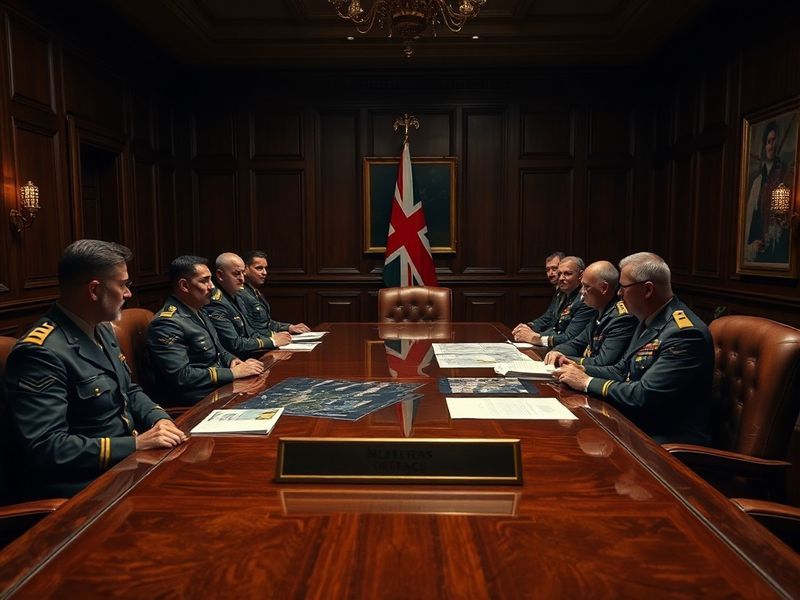
Ministry of Defence: Roles, Challenges, and Future Strategies Explained
“`html
The Ministry of Defence: Balancing Security and Modern Challenges
The Ministry of Defence (MoD) stands as a cornerstone of national stability, tasked with safeguarding a nation’s sovereignty while navigating an increasingly complex global landscape. From cyber threats to geopolitical tensions, the MoD’s responsibilities have expanded far beyond traditional military operations. Understanding its role requires examining its structure, historical evolution, and the modern pressures it faces.
The Evolution of the Ministry of Defence
The MoD as we know it today is the result of decades of strategic adaptation. Originally, defence ministries were focused primarily on land, sea, and air forces, but the 20th century introduced new dimensions—nuclear deterrence, space warfare, and cybersecurity. The UK’s Ministry of Defence, for example, was formally established in 1964 through the merger of the Admiralty, War Office, and Air Ministry. This consolidation aimed to streamline decision-making and improve inter-service coordination.
In the decades since, the MoD’s role has shifted from conventional warfare to a more nuanced approach. The end of the Cold War reduced the threat of large-scale conflict but introduced instability in regions like the Middle East and Eastern Europe. Meanwhile, emerging technologies have forced the MoD to rethink its strategies. The rise of drones, artificial intelligence, and autonomous systems has blurred the lines between traditional military roles and civilian applications.
A Global Perspective
Different nations approach defence differently, reflecting their unique security needs. The United States, for instance, operates the largest defence budget in the world, with the Pentagon serving as the central hub for military operations. China’s Ministry of National Defence, while less transparent, has significantly expanded its naval and cyber capabilities. Meanwhile, smaller nations like Singapore prioritize agility and technological innovation to counter larger threats.
This diversity highlights a key challenge for the MoD: balancing national priorities with international obligations. Alliances like NATO require member states to coordinate their defence strategies, yet each nation must tailor its approach to its own geopolitical realities.
Key Responsibilities of the Ministry of Defence
The MoD’s portfolio is vast, encompassing both overt and covert operations. Below are some of its core functions:
- Military Operations: Deploying troops, coordinating with allied forces, and conducting peacekeeping missions.
- Intelligence and Surveillance: Monitoring threats through signals intelligence, satellite imagery, and cyber reconnaissance.
- Procurement and Logistics: Acquiring advanced weaponry, maintaining supply chains, and ensuring troop readiness.
- Cybersecurity: Protecting critical infrastructure from digital attacks and developing offensive cyber capabilities.
- Disaster Response: Coordinating military aid during natural disasters or humanitarian crises.
Each of these areas demands significant resources and expertise. The MoD must constantly balance immediate threats with long-term strategic planning, often under tight budget constraints.
The Modern Challenges Facing the MoD
Today’s defence landscape is defined by uncertainty. Geopolitical tensions, such as Russia’s invasion of Ukraine or China’s assertiveness in the South China Sea, have reignited concerns about large-scale conflict. At the same time, non-state actors like terrorist groups and cybercriminals pose asymmetric threats that traditional military structures are ill-equipped to handle.
Cyber Warfare and the Digital Frontier
Cyber warfare has emerged as one of the most pressing challenges for the MoD. State-sponsored hacking groups can infiltrate critical infrastructure, steal classified data, or disrupt communications. The 2020 SolarWinds hack, attributed to Russian operatives, demonstrated how vulnerable even the most secure systems can be.
In response, the MoD has invested in cyber defence units and partnerships with private tech firms. The UK’s National Cyber Security Centre, a branch of GCHQ, works closely with the MoD to mitigate risks. However, the pace of technological change means these defences must constantly evolve.
The Ethical Dilemmas of Modern Warfare
Autonomous weapons and AI-driven decision-making raise profound ethical questions. Should a machine be allowed to make life-and-death choices on the battlefield? The MoD has grappled with these issues, advocating for human oversight in critical operations. Meanwhile, the use of drones in conflict zones has sparked debates about civilian casualties and the psychological impact on operators.
These dilemmas extend beyond the battlefield. The MoD must also consider the environmental impact of military activities, from fuel consumption to waste management. Sustainability is no longer a secondary concern but a strategic necessity.
The Future of the Ministry of Defence
The MoD’s future will be shaped by three key trends: technological innovation, shifting alliances, and public perception. As nations race to develop hypersonic missiles, quantum computing, and next-generation stealth technology, the MoD must ensure it does not fall behind. This requires not only financial investment but also a willingness to embrace disruptive ideas.
Public trust is another critical factor. In democratic societies, the MoD operates under scrutiny, with decisions often debated in the court of public opinion. Transparency and accountability are essential to maintaining legitimacy, especially when military actions result in civilian casualties or unintended consequences.
Finally, the MoD must adapt to the changing nature of warfare. Hybrid conflicts, which blend conventional military tactics with cyberattacks, disinformation, and economic pressure, demand a more agile and integrated approach. The ability to respond quickly and decisively will separate successful defence strategies from those that falter.
Building Resilience for Tomorrow
To prepare for the challenges ahead, the MoD is focusing on several initiatives:
- Enhancing Cyber Resilience: Developing AI-driven threat detection and response systems.
- Expanding Alliances: Strengthening partnerships with like-minded nations to counter shared threats.
- Investing in Human Capital: Recruiting and training specialists in cybersecurity, AI, and space operations.
- Modernizing Infrastructure: Upgrading bases, communication networks, and logistical systems to meet 21st-century demands.
These efforts reflect a recognition that defence is no longer solely about military might but about creating a resilient ecosystem capable of withstanding a wide range of threats.
Conclusion
The Ministry of Defence remains a vital institution, but its role has never been more complex. Balancing traditional military duties with the demands of a digital, interconnected world requires foresight, adaptability, and a commitment to ethical governance. As technology advances and geopolitical tensions rise, the MoD’s ability to evolve will determine its effectiveness in safeguarding national security.
For those interested in exploring how defence intersects with broader societal issues, Trending and Politics on Dave’s Locker offer further insights into the forces shaping our world.