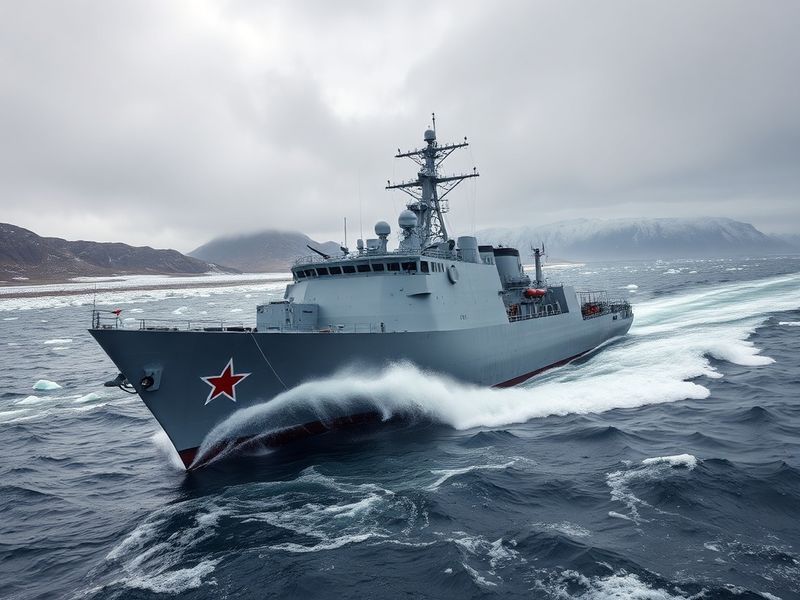
The Russian Navy stands as one of the world’s most formidable maritime forces, blending centuries of naval tradition with cutting-edge technological advancements. As the successor to the Soviet Navy, it has undergone significant transformations since the Cold War era, adapting to geopolitical shifts and modern threats. Today, the Russian Navy plays a critical role in projecting power, safeguarding national interests, and countering NATO’s dominance in key regions.
With a fleet that spans the Arctic, Atlantic, Pacific, and Indian Oceans, Russia’s naval capabilities extend far beyond its immediate shores. The navy’s strategic reach is underscored by its submarine force, surface combatants, and expeditionary capabilities, all of which have been upgraded in recent years. This modernization reflects Russia’s ambition to remain a major player in global naval affairs despite economic constraints and sanctions.
The Historical Foundations of Russia’s Naval Power
The Russian Navy traces its origins to the late 17th century, when Peter the Great established the first permanent naval force during his reign. The creation of the Russian Imperial Navy in 1696 marked the beginning of a tradition that would shape the country’s military and geopolitical ambitions for centuries. Peter’s vision was to build a fleet capable of challenging Sweden and securing Russia’s access to the Baltic Sea—a goal that culminated in victories such as the Battle of Gangut in 1714.
By the 19th century, the Russian Navy had expanded into the Black Sea and Pacific, becoming a key instrument of imperial expansion. The disastrous Russo-Japanese War (1904–1905) exposed vulnerabilities in the fleet’s readiness, leading to reforms under Tsar Nicholas II. The Soviet era further solidified the navy’s role, with the Red Banner Fleet becoming a cornerstone of Cold War military strategy. Submarine technology, in particular, flourished during this period, culminating in the deployment of nuclear-powered ballistic missile submarines (SSBNs).
After the Soviet Union’s collapse, the Russian Navy struggled with budget cuts and organizational challenges. However, the 2000s saw a renewed focus on modernization, driven by President Vladimir Putin’s emphasis on restoring Russia’s global influence. Investments in new classes of warships, submarines, and advanced weaponry have since reshaped the fleet’s capabilities, ensuring its relevance in an era dominated by high-tech naval warfare.
Modernization and Technological Advancements
Russia’s naval modernization program has prioritized stealth, firepower, and endurance. The introduction of the Admiral Gorshkov-class frigates, equipped with the 3M22 Zircon hypersonic missile, represents a leap in surface combatant capabilities. These frigates, combined with the Steregushchiy-class corvettes, form the backbone of Russia’s blue-water navy, capable of operating in contested regions such as the Mediterranean and Arctic.
The submarine fleet remains the most potent component of the Russian Navy. The Borei-class SSBNs, armed with the Bulava intercontinental ballistic missile, ensure a credible second-strike capability. Meanwhile, the Yasen-class nuclear-powered attack submarines (SSGNs) incorporate advanced acoustic stealth and vertical launch systems, making them some of the most capable submarines in the world. These platforms are critical for countering NATO’s submarine dominance and projecting power in distant theaters.
- Admiral Gorshkov-class frigates: Designed for long-range operations, these ships feature advanced air-defense systems and anti-ship missiles.
- Borei-class SSBNs: Equipped with Bulava missiles, these submarines provide Russia with a reliable nuclear deterrent.
- Yasen-class SSGNs: Multi-role submarines capable of striking land and sea targets with precision-guided weapons.
- Ivan Gren-class landing ships: Enhancing Russia’s amphibious capabilities for expeditionary operations.
The Arctic has emerged as a key focus for the Russian Navy, given the region’s strategic and economic significance. With melting ice opening new shipping routes, Russia has invested in icebreaker fleets and Arctic-capable warships. The Project 22220 Arktika-class icebreakers, powered by nuclear reactors, are among the most powerful in the world, ensuring year-round access to the Northern Sea Route. This infrastructure supports both military and commercial objectives, reinforcing Russia’s claim to Arctic dominance.
Strategic Deployments and Geopolitical Implications
Russia’s naval deployments are not merely symbolic; they serve as a tool for coercive diplomacy and power projection. The Mediterranean Sea has become a frequent operating area for Russian warships, particularly following the 2015 intervention in Syria. The presence of the Admiral Kuznetsov aircraft carrier, despite its operational limitations, underscores Russia’s commitment to maintaining a forward naval presence.
The Black Sea Fleet, headquartered in Sevastopol, remains a critical asset for Russia, enabling rapid power projection into the Mediterranean and beyond. The annexation of Crimea in 2014 further solidified Russia’s control over this strategic waterway, allowing for unhindered access to the Bosporus Strait. Recent conflicts, including the ongoing war in Ukraine, have highlighted the Black Sea Fleet’s role in supporting amphibious operations and denying NATO access to the region.
In the Pacific, the Russian Navy maintains a robust presence to counterbalance China’s growing influence. The Pacific Fleet, based in Vladivostok, operates a mix of modern and legacy platforms, including the Slava-class cruisers and newer corvettes. Joint exercises with China, such as the Vostok series, demonstrate a growing strategic alignment between the two nations, particularly in the face of U.S. naval dominance.
These deployments are not without risks. The Russian Navy has faced setbacks, including the sinking of the Moskva flagship in 2022 and the loss of several smaller vessels in Ukraine. Such incidents underscore the challenges of maintaining an aging fleet while pursuing modernization. However, Russia’s ability to adapt—through the deployment of asymmetric capabilities like hypersonic missiles and unmanned systems—has mitigated some of these vulnerabilities.
Challenges and the Path Forward
Despite its advancements, the Russian Navy faces significant challenges. Economic sanctions, imposed after the invasion of Ukraine, have disrupted supply chains and limited access to critical technologies. The reliance on domestic production, while reducing dependence on foreign suppliers, has also led to delays in shipbuilding programs. For example, the lead ship of the new Lider-class destroyer has been postponed multiple times, reflecting the strain on Russia’s industrial base.
Personnel shortages further complicate naval operations. The Russian military has struggled to attract and retain skilled sailors, particularly in an era of declining birth rates and increased competition from civilian sectors. The introduction of professional contract servicemen has helped, but the navy still relies heavily on conscription, which can impact readiness and morale.
The future of the Russian Navy will likely hinge on its ability to balance modernization with operational realism. Key priorities include:
- Expanding Arctic capabilities: Continued investment in icebreakers and Arctic-capable vessels will be essential for securing Russia’s northern borders.
- Enhancing submarine stealth: Next-generation submarines with reduced acoustic signatures will be critical for evading detection.
- Developing unmanned systems: Autonomous underwater vehicles (AUVs) and drones could supplement traditional platforms, offering cost-effective solutions.
- Strengthening alliances: Cooperation with nations like China, India, and Iran may provide alternative supply chains and strategic partnerships.
Ultimately, the Russian Navy remains a formidable force, but its long-term viability will depend on overcoming internal and external pressures. As global naval competition intensifies, Russia’s ability to adapt will determine whether it can sustain its status as a top-tier maritime power.
The Russian Navy’s story is one of resilience and adaptation. From its imperial origins to its modern-day role as a key instrument of state power, it has continuously evolved to meet the demands of an ever-changing world. While challenges persist, the navy’s strategic vision and technological investments suggest that it will remain a critical player in global naval affairs for decades to come.
For further reading on naval technology and military analysis, explore our Technology and Politics sections.