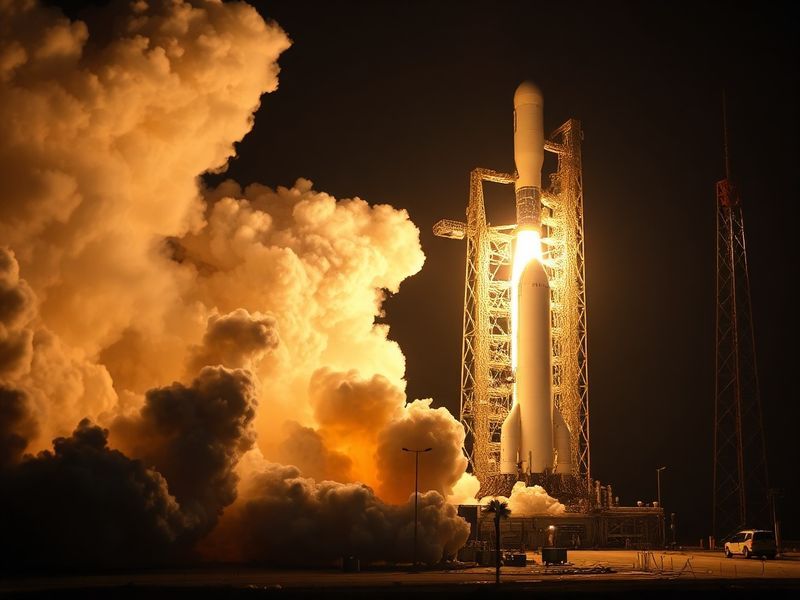
Artemis 3: NASA’s Historic Mission to the Moon and Beyond
“`html
NASA’s Artemis 3 Mission: A New Chapter in Human Spaceflight
NASA’s Artemis program represents humanity’s boldest return to the Moon in over five decades. As the first crewed lunar mission since Apollo 17 in 1972, Artemis 3 is not just a technical achievement—it’s a cultural milestone with global implications. Scheduled for no earlier than September 2026, this mission will land the first woman and the next man on the lunar surface, marking a historic moment in space exploration and gender equality.
The Artemis program builds on decades of scientific progress, international collaboration, and technological innovation. Unlike the Apollo missions, which were driven by Cold War competition, Artemis is a cooperative effort involving NASA, commercial partners like SpaceX, and international agencies such as the European Space Agency (ESA) and Japan Aerospace Exploration Agency (JAXA). This shift reflects a broader trend in space exploration: the democratization of space, where nations and private companies work together to push the boundaries of human achievement.
The Science Behind Artemis 3: Why the Moon Matters Again
Artemis 3 is more than a symbolic return to the Moon. It’s a critical step toward establishing a sustainable human presence on the lunar surface and preparing for future missions to Mars. The mission will land near the Moon’s south pole, an area rich in water ice—a resource essential for long-term survival and fuel production. Scientists believe this ice could be extracted and converted into drinking water, oxygen, and rocket propellant, reducing the need to transport these supplies from Earth.
The mission’s scientific objectives include studying the Moon’s geology, testing new technologies, and conducting experiments that could answer fundamental questions about the solar system’s formation. For example, the lunar south pole is believed to contain ancient materials that have remained untouched for billions of years, offering clues about the early solar system and Earth’s history.
Artemis 3 will also serve as a testing ground for technologies that could be used in future deep-space missions. These include advanced life support systems, habitats, and rovers designed to operate in extreme lunar conditions. By mastering these technologies on the Moon, NASA and its partners are laying the groundwork for humanity’s next giant leap: sending astronauts to Mars.
A Global Endeavor: Collaboration in Space Exploration
The Artemis program is a testament to the power of international cooperation. Unlike the Apollo era, which was dominated by the United States and the Soviet Union, Artemis involves contributions from multiple countries and private companies. For instance, the European Space Agency is providing the service module for NASA’s Orion spacecraft, while SpaceX’s Starship will serve as the lunar lander for Artemis 3.
The mission’s global reach extends beyond technical contributions. NASA has emphasized inclusivity, aiming to inspire a new generation of scientists, engineers, and explorers worldwide. The selection of the first woman and the next man to walk on the Moon reflects a commitment to diversity and representation in space exploration. This approach resonates with audiences across cultures, reinforcing the idea that space is a shared human endeavor.
Countries like Canada, Japan, and the United Arab Emirates have also signed on to the Artemis Accords, a set of principles for international cooperation in space. These agreements emphasize peaceful exploration, transparency, and resource-sharing, setting a precedent for future missions beyond the Moon.
The Cultural Impact: Inspiring the Next Generation
Artemis 3 is poised to capture the public’s imagination in ways that transcend national borders. The Apollo missions of the 1960s and 1970s inspired millions of people to pursue careers in science and engineering. Artemis has the potential to do the same, particularly among young women and underrepresented groups who have historically been excluded from space exploration.
The mission’s cultural significance is amplified by its timing. In an era where climate change, geopolitical tensions, and technological disruption dominate headlines, space exploration offers a unifying narrative. It reminds us of our shared humanity and the boundless possibilities of human ingenuity. From classrooms in India to community centers in Brazil, Artemis 3 is sparking conversations about the future of science, technology, and our place in the universe.
Artemis 3 also reflects a broader shift in how we perceive space exploration. Unlike the Apollo missions, which were driven by national pride, Artemis is framed as a collaborative effort to benefit all of humanity. This narrative aligns with the growing public interest in space tourism, commercial spaceflight, and the search for extraterrestrial life. As private companies like SpaceX and Blue Origin push the boundaries of what’s possible, the line between science fiction and reality continues to blur.
Challenges and Controversies: The Road to the Moon
Despite its promise, Artemis 3 faces significant challenges. Technical hurdles, budget constraints, and geopolitical tensions could delay the mission or alter its scope. For example, SpaceX’s Starship, which will carry astronauts to the lunar surface, has faced repeated setbacks during testing. Meanwhile, international partnerships are tested by shifting political priorities and competing national interests.
There are also ethical considerations. The extraction of lunar resources, such as water ice, raises questions about ownership and environmental impact. The Artemis Accords attempt to address these issues by establishing guidelines for resource-sharing and sustainable exploration. However, the absence of major spacefaring nations like Russia and China from the accords underscores the complexities of global cooperation in space.
Another challenge is public perception. After decades of budget cuts and shifting priorities, some question whether space exploration is a worthwhile investment. Critics argue that the billions spent on Artemis could be better used to address pressing issues on Earth, such as poverty, healthcare, and climate change. Proponents counter that space exploration drives technological innovation, economic growth, and scientific discovery—benefits that ultimately improve life on Earth.
What’s Next: The Future of Artemis and Beyond
Artemis 3 is just the beginning of a broader vision for human spaceflight. NASA plans to establish a sustainable presence on the Moon by the end of the decade, including a lunar base and regular crewed missions. These efforts will serve as a stepping stone for crewed missions to Mars, which NASA aims to achieve in the 2030s or 2040s.
The mission also sets the stage for commercial opportunities. Companies like SpaceX, Blue Origin, and others are developing technologies to support lunar exploration, from landers to habitats. These innovations could pave the way for a new era of space tourism, where private citizens travel to the Moon and beyond. Already, companies like Axiom Space are planning commercial missions to the International Space Station, signaling a future where space is accessible to a broader audience.
For now, the world watches as NASA and its partners prepare for Artemis 3. The mission is a reminder that space exploration is not just about reaching new destinations—it’s about pushing the limits of human potential, fostering global collaboration, and inspiring future generations. As the countdown to launch begins, one thing is clear: the journey to the Moon is far more than a technical achievement. It’s a testament to the enduring human spirit of exploration and discovery.
Key Takeaways: What to Watch for in Artemis 3
Here’s a quick rundown of the mission’s most critical elements:
- Launch Date: No earlier than September 2026, pending technical readiness and funding.
- Landing Site: The Moon’s south pole, near permanently shadowed regions rich in water ice.
- Crew: The first woman and the next man to walk on the Moon, selected from NASA’s diverse astronaut corps.
- Lunar Lander: SpaceX’s Starship, modified for crewed lunar landings.
- Scientific Goals: Studying lunar geology, testing new technologies, and preparing for future Mars missions.
- International Collaboration: Partnerships with ESA, JAXA, and other agencies contributing to the mission’s success.
As NASA prepares to write the next chapter in human spaceflight, Artemis 3 stands as a symbol of what’s possible when the world comes together to explore the unknown. For those following the mission, it’s an opportunity to witness history in the making—and to imagine what comes next.
To learn more about NASA’s Artemis program and its global impact, explore our Science and Technology sections for in-depth analysis and updates.