Fallout 3 Review: Why Bethesda’s Post-Apocalyptic RPG Still Matters
When Bethesda Game Studios released Fallout 3 in 2008, it didn’t just continue a beloved franchise—it redefined what a post-apocalyptic RPG could be. Set in the ruins of Washington, D.C., decades after a nuclear war, the game merged deep storytelling with open-world freedom in a way few titles had before. More than just a sequel, it became a landmark in gaming history, influencing everything from level design to player agency.
The game arrived at a time when open-world RPGs were evolving rapidly. Titles like The Elder Scrolls IV: Oblivion had already proven Bethesda’s ability to craft immersive worlds, but Fallout 3 took that foundation and layered it with the bleak, satirical tone and intricate lore of the original 1997 Fallout. The result was something both familiar and entirely fresh—a game that respected its roots while pushing boundaries in design and atmosphere.
The World of Fallout 3: A Wasteland Rich in Detail
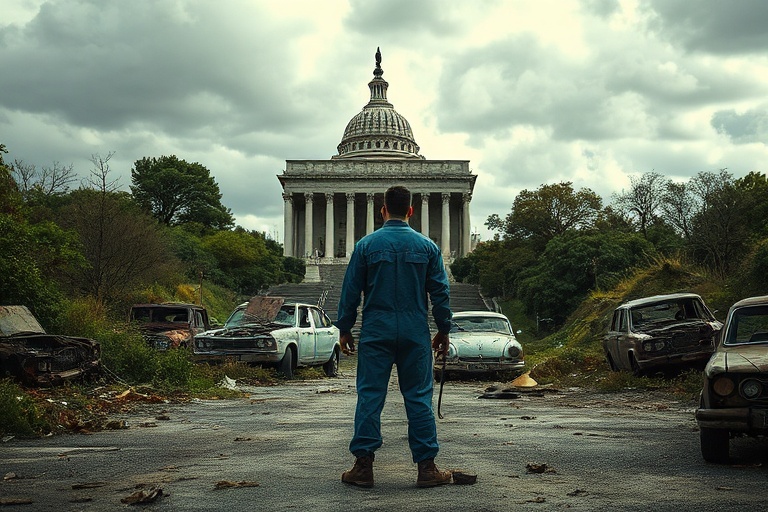
Washington, D.C., in the year 2277, is unrecognizable. The National Mall is buried under irradiated soil. The Jefferson Memorial has become a makeshift fortress. The ruins of the city aren’t just set dressing; they’re a living, breathing environment that reacts to the player’s choices. The game’s attention to detail extends from the crumbling monuments to the scattered remnants of pre-war life—newspapers, terminals, and even graffiti that tell stories of the past.
This level of environmental storytelling was groundbreaking at the time. Unlike many open-world games that prioritize quest markers over immersion, Fallout 3 encouraged exploration by making the world feel dangerous and alive. Raiders, mutants, and scavengers populate the wasteland, each with their own behaviors and routines. The game’s dynamic factions, like the Brotherhood of Steel or the Enclave, add layers of political complexity that reward players who pay attention to lore.
The soundtrack, composed by Inon Zur, further enhances the atmosphere. A mix of melancholic piano, eerie synths, and period-appropriate radio tracks (including the iconic “I Don’t Want to Set the World on Fire” by The Ink Spots), the music shifts seamlessly between tension and nostalgia. It’s a rare example of audio design that doesn’t just accompany the gameplay—it elevates it.
Gameplay Innovations: Choice, Consequence, and Survival
Fallout 3 refined the RPG mechanics that Bethesda had honed in Oblivion while introducing survival elements that made the wasteland feel genuinely perilous. The Vault-Tec Assisted Targeting System (V.A.T.S.) was one of the game’s most innovative features. This real-time combat mechanic allowed players to pause the action, target specific body parts, and execute precise attacks—adding a tactical layer to firefights that balanced action with strategy.
Survival in the wasteland isn’t just about combat, though. Players must manage their character’s needs, including hunger, thirst, and radiation exposure. These mechanics forced players to think strategically about their loadouts and routes. Ammo was scarce, healing items were limited, and even basic supplies like clean water could mean the difference between life and death. This scarcity created a sense of tension that many modern RPGs struggle to replicate.
The game’s skill system was another standout feature. Instead of traditional class restrictions, players could develop their character in any direction they chose. Want to be a stealthy sniper? Invest in the Sneak and Small Guns skills. Prefer brute force? Max out Strength and Big Guns. The perk system, unlocked at level-ups, allowed for deep customization, ensuring that no two playthroughs felt identical. This flexibility, combined with the game’s branching quests, made Fallout 3 endlessly replayable.
Faction Dynamics and Moral Complexity
One of Fallout 3’s greatest strengths is its moral ambiguity. Unlike many RPGs that present clear-cut good and evil paths, Bethesda’s game forces players to grapple with difficult decisions. For example, the fate of Megaton—a settlement built around an undetonated nuclear bomb—hangs in the balance. Players can defuse the bomb, destroy the town (and its inhabitants) for a reward, or even side with the morally gray role of the Talon Company, a mercenary group with shady ethics.
The game’s factions reflect this complexity. The Brotherhood of Steel, while ostensibly noble, hoards technology and sees outsiders as threats. The Enclave, remnants of the pre-war U.S. government, are villains—but their motives are rooted in a twisted ideology rather than pure malice. Even seemingly neutral groups, like the Children of Atom, blur the line between fanaticism and genuine belief in their cause. These shades of gray make the world feel more realistic and the player’s choices more meaningful.
Legacy and Influence: How Fallout 3 Changed Gaming
Fallout 3 didn’t just succeed on its own merits; it reshaped the RPG landscape for years to come. Its open-world design influenced titles like The Witcher 3 and Red Dead Redemption 2, proving that players crave worlds that feel alive and reactive. The game’s emphasis on player freedom—whether in combat, dialogue, or exploration—set a new standard for the genre. Even today, nearly 16 years after its release, its mechanics and design choices are still studied by developers.
The game’s success also revitalized the Fallout franchise. After Fallout Tactics and Fallout: Brotherhood of Steel failed to capture the spirit of the originals, Fallout 3 restored faith in the series. It paved the way for future entries like Fallout: New Vegas (developed by Obsidian Entertainment) and Fallout 4, each of which built on Bethesda’s foundation while adding their own twists. The franchise’s resurgence can be directly attributed to the impact of this single game.
Mods and Community Love
Another testament to Fallout 3’s enduring appeal is its modding community. Even now, players continue to release new mods that expand the game’s content, from graphical overhauls to entirely new quests and locations. The Gaming section on Dave’s Locker has seen a steady stream of Fallout 3 fan projects, showcasing how the community has kept the game alive long after its official support ended. Titles like Fallout 3: Project Purity and Interstellar Overdrive offer fresh experiences that rival official expansions.
This modding culture speaks to the game’s depth and flexibility. Bethesda’s decision to use the Creation Kit—a tool originally designed for Oblivion—made it relatively easy for players to create their own content. The result is a game that has evolved far beyond its original scope, proving that great games never truly die as long as their communities remain engaged.
Why Fallout 3 Remains a Must-Play
For all its strengths, Fallout 3 isn’t without its flaws. Some players criticize its clunky controls, particularly in melee combat, or the occasional bug that crops up in quests. The game’s writing isn’t as sharp as its world-building, with some side quests feeling underdeveloped compared to the main story. These issues, while noticeable, don’t detract from the overall experience. They’re the kind of quirks that come with ambition—a game that dared to do so much that perfection was an impossible standard.
What makes Fallout 3 timeless is its ability to transport players to a world that feels both fantastical and grounded. It’s a game about survival, but also about humanity in the face of annihilation. The choices players make—whether saving a town or condemning it, whether trusting a stranger or betraying them—carry weight. In an era where many games prioritize spectacle over substance, Fallout 3 stands out for its willingness to let players define their own story.
If you’ve never experienced the wasteland of Fallout 3, now is the time to revisit it. Whether you’re playing it for the first time or returning to a familiar world, the game offers something for everyone: rich storytelling, deep gameplay, and a world that feels alive in ways few other RPGs can match. It’s not just a relic of its time—it’s a masterpiece that continues to inspire and entertain.
For those looking to dive deeper into the Fallout universe, Dave’s Locker’s Gaming section offers reviews, guides, and community discussions that can help you get the most out of your wasteland adventures.