Manchester Airport Trial Highlights Global Shifts in Air Travel
The Manchester Airport trial of biometric boarding gates has quietly become one of the most watched experiments in modern aviation. While major hubs like London Heathrow and Dubai International have already embraced facial recognition for select routes, Manchester’s trial represents a different scale—one that could redefine how mid-tier international airports integrate automation without alienating passengers.
Airports are no longer just transit points; they are stages where technology, culture, and human behavior collide. The Manchester trial, which began in late 2023 and expanded in early 2024, uses facial recognition to streamline boarding for flights to the United States and European Schengen Zone. Unlike high-profile trials in Dubai or Atlanta, Manchester’s approach is notable for its focus on accessibility and passenger feedback. It’s not just about speed—it’s about whether passengers from diverse backgrounds feel comfortable with machines making identity decisions.
How the Trial Works: Technology Meets Passenger Experience
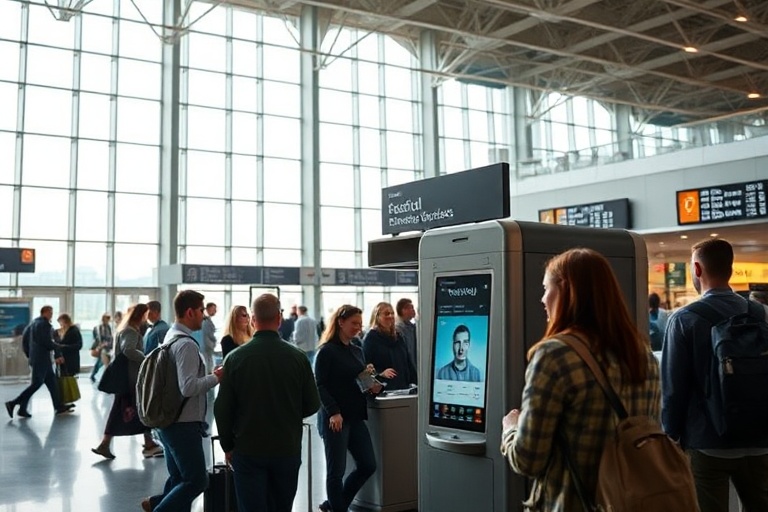
The system operates in three stages. First, travelers scan their passports at a kiosk, which captures biometric data. Next, cameras at the boarding gate compare live images to the stored data. Finally, a green light or boarding pass confirmation allows entry. The entire process takes about 15 seconds per passenger—significantly faster than manual checks.
Critically, the trial includes an opt-out option. Passengers uncomfortable with facial scanning can choose traditional passport checks. This balance reflects a growing trend in biometric adoption: technology must serve people, not the other way around. Manchester Airport reports that over 85% of participants chose the biometric lane during the first phase, suggesting a strong willingness—even eagerness—for automation.
Yet concerns remain. Privacy advocates point to potential data misuse or algorithmic bias. A 2023 report by the Ada Lovelace Institute found that facial recognition systems can misidentify people of color at higher rates. Manchester Airport has addressed this by using multiple camera angles and AI trained on diverse datasets. Still, the trial serves as a real-world test of whether biometric systems can be both efficient and equitable.
Cultural Implications: Trust, Transparency, and Travel Norms
Air travel has long been a mirror of global culture. From the rise of low-cost carriers in Europe to the dominance of state-backed airlines in the Middle East, airports reflect economic and social priorities. The Manchester trial is part of a broader shift: the normalization of surveillance in public spaces under the guise of convenience.
In Europe, where data protection laws like GDPR are strict, the trial required approval from the UK Information Commissioner’s Office. Passengers must consent explicitly, and their data is stored only for the duration of the flight. This legal framework sets Manchester apart from trials in countries with looser regulations, such as China, where facial recognition is woven into daily life without the same checks.
There’s also a generational divide. Younger travelers, raised on social media and selfies, are more comfortable with biometrics. Older passengers, however, may view it as an invasion. Manchester Airport has responded by offering detailed guides and staff assistance, emphasizing education over enforcement. This approach could become a model for airports worldwide, especially in regions where digital literacy varies widely.
Globally, airports are watching Manchester closely. In India, Delhi’s Indira Gandhi International Airport has piloted facial recognition for domestic flights, while Brazil’s São Paulo-Guarulhos is testing similar systems. But Manchester’s trial is unique in its public transparency. Live updates on wait times and passenger feedback are shared openly, creating a feedback loop that could shape future policies.
Economic and Operational Impact: Does Speed Equal Savings?
The primary driver behind biometric trials is efficiency. Long queues at immigration and boarding gates cost airlines and airports millions in delays and lost productivity. The International Air Transport Association (IATA) estimates that airlines could save up to $5 billion annually by reducing boarding times through automation.
For Manchester Airport, the trial is also a strategic move. As a key hub for transatlantic and European routes, faster processing could attract more airlines and passengers. Competitors like London Heathrow and Amsterdam Schiphol are already investing heavily in biometric infrastructure. Manchester’s trial is a cost-effective way to stay competitive without the massive capital expenditure of a full-scale rollout.
However, the financial benefits aren’t guaranteed. The trial’s second phase, which includes full integration with airline systems, will determine whether the technology scales efficiently. Early data suggests a 30% reduction in boarding times, but long-term savings depend on maintenance, updates, and passenger adoption. If the system fails during peak travel seasons, the reputational damage could outweigh the gains.
There’s also the question of job displacement. While Manchester Airport insists that biometric gates won’t replace staff, some roles may evolve. Security personnel, for example, could shift from manual checks to monitoring AI systems. This transition requires retraining and cultural adaptation—a challenge for the aviation industry, which has traditionally relied on human oversight.
What’s Next for Manchester and Beyond
The trial is scheduled to conclude in late 2024, with a full report expected in early 2025. If successful, Manchester Airport plans to expand biometric boarding to all international flights by 2026. But the real impact may extend beyond the UK. This trial could set a precedent for how mid-sized airports adopt biometrics—carefully, incrementally, and with a focus on human-centric design.
Globally, the story of airport automation is still being written. In the United States, the Transportation Security Administration (TSA) has tested facial recognition at select airports, but privacy concerns have slowed widespread adoption. In Japan, airports like Narita have integrated biometrics seamlessly, thanks to high levels of public trust in technology. Manchester’s trial offers a middle path—one that balances innovation with inclusivity.
For travelers, the future may soon look like this: walk into an airport, glance at a camera, and board without a second thought. But the journey to that future is fraught with questions about privacy, equity, and the role of technology in our lives. Manchester’s trial isn’t just about faster flights—it’s about whether we’re ready to trust machines with our identities.
As the trial progresses, one thing is clear: the airports that succeed will be those that prioritize transparency, adaptability, and above all, the passenger experience. The rest will be left behind.
For more on the intersection of technology and travel, explore our Travel section, where we analyze how innovation is reshaping the way we move around the world.
And if you’re curious about how biometric systems are being used in other industries, our Technology category offers deeper insights into AI, automation, and their global impact.
Key Takeaways from the Manchester Airport Trial
- Speed vs. Privacy: The trial shows that passengers are willing to trade privacy for speed—but only if they trust the system.
- Cultural Adaptation: Airports must tailor biometric systems to local norms, whether that means opt-out options or multilingual interfaces.
- Global Precedent: Manchester’s approach could influence mid-tier airports worldwide, offering a model for responsible automation.
- Economic Incentives: Faster boarding times could reduce costs and attract airlines, but long-term savings depend on scalability.
- Human Oversight: Even as automation grows, human roles will evolve rather than disappear—requiring new skills and training.
Conclusion: The Future of Flying Is Facial Recognition
The Manchester Airport trial is more than a technological experiment—it’s a cultural barometer. It reflects our collective comfort with machines making decisions about our identities, our movements, and our lives. As airports worldwide consider similar systems, the lessons from Manchester will be invaluable.
Whether this future is one of seamless travel or creeping surveillance depends not just on the technology, but on the values we embed into it. For now, passengers at Manchester are voting with their feet. The rest of the world is watching.