Radio Caroline: The Pirate Station That Defied the British Government
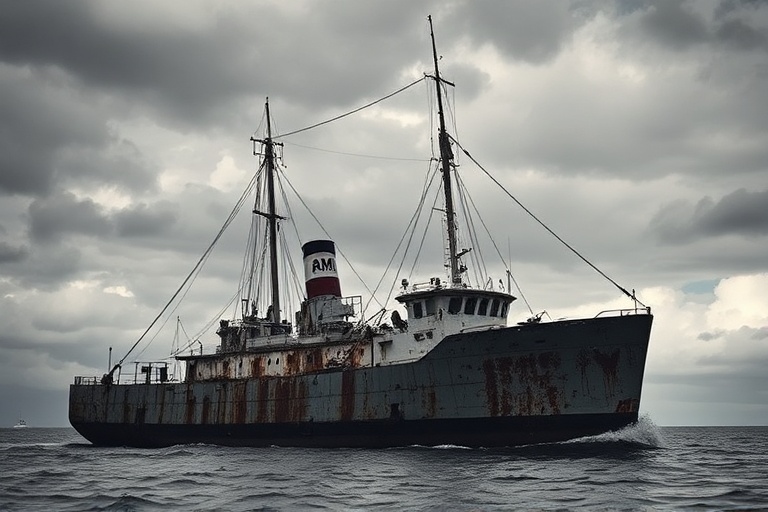
In the summer of 1964, a battered ship anchored off the coast of Frinton-on-Sea, Essex, began broadcasting music to Britain without a license. This was Radio Caroline, the world’s first offshore pirate radio station, and it became a cultural lightning rod that reshaped British radio forever.
The station emerged during a time when the BBC controlled the airwaves with a strict, formulaic approach. Pop music was limited to a few hours a week, and teenagers hungry for new sounds turned to offshore pirate stations for relief. Radio Caroline’s arrival wasn’t just a broadcast rebellion—it was a social and political challenge to the establishment.
The Birth of a Rebel Station
Founded by Irish entrepreneur Ronan O’Rahilly, Radio Caroline was named after John F. Kennedy’s daughter, Caroline, reflecting O’Rahilly’s ambition to create something modern and aspirational. The station launched from the MV Caroline, a former Danish ferry converted into a floating radio studio. Its signal reached millions of British listeners who were tired of the BBC’s conservative programming.
Unlike later pirate stations, Caroline operated in international waters, technically beyond the reach of British law. This legal gray zone allowed it to broadcast freely, playing the latest hits from The Beatles, The Rolling Stones, and other artists ignored by the BBC. Its DJs—including legends like Tony Prince and Roger Day—became household names overnight.
The station’s influence spread quickly. By 1967, an estimated 23 million people in the UK were tuning in regularly. Its success forced the British government to confront the demand for change in radio broadcasting, ultimately leading to the launch of BBC Radio 1 in 1967 as a direct response.
A Global Pirate Movement
Radio Caroline wasn’t alone. Offshore pirate radio became a phenomenon across Europe and beyond, with stations like Radio London, Radio Veronica (Netherlands), and Radio Nord (Sweden) following its lead. These stations played a crucial role in breaking down the monopolies held by state broadcasters, paving the way for commercial radio worldwide.
In the Caribbean, Radio Caroline’s model inspired stations like Radio Free Cayman and Radio Antilles, which broadcasted to ships and coastal communities. Even in the United States, where offshore radio was illegal, stations like Radio New York International (operating from a ship near New York) attempted to emulate Caroline’s success, though with less longevity.
What made Caroline different was its longevity. While many pirate stations lasted only months, Radio Caroline survived into the 1980s, reinventing itself as a nostalgic throwback in the disco era. Its story became a symbol of rebellion, freedom, and the power of youth culture to reshape media.
The Cultural and Political Impact
Radio Caroline’s impact extended beyond music. It challenged the British government’s control over information, proving that audiences would reject top-down broadcasting in favor of choice. The Marine Broadcasting Offences Act of 1967, which banned pirate radio, was a direct response to Caroline’s popularity—but it was too late to silence the movement.
The station’s legacy can be seen in the rise of commercial radio in the UK and Europe. By the 1980s, governments had accepted that radio needed to diversify, and many former pirate DJs found themselves at the helm of mainstream stations. Caroline’s influence even reached the U.S., where the Federal Communications Commission (FCC) began reconsidering its strict licensing policies in the face of underground broadcasting.
Culturally, Radio Caroline became a mythic figure. It was immortalized in songs like “Radio Caroline” by The Fortunes and featured in documentaries, books, and even a 2009 film, Radio Caroline: A Pirate Story. Its story resonated with generations of listeners who saw it as a symbol of defiance against authority.
Lessons from a Pirate Legend
Radio Caroline’s story offers several key lessons. First, it demonstrated the power of audience demand over bureaucratic control. Second, it showed how a small group of determined individuals could disrupt an entire industry. And third, it proved that alternative media could thrive even when operating in legal gray areas.
Today, as streaming services and podcasts dominate the airwaves, Radio Caroline’s spirit lives on in the DIY ethos of internet radio and community stations. Its legacy reminds us that media doesn’t have to be corporate or state-controlled to be influential. Sometimes, the most revolutionary ideas come from the most unexpected places.
For those who lived through its golden age, Radio Caroline remains more than just a memory—it’s a reminder that music and freedom are worth fighting for.
Where to Experience Radio Caroline’s Legacy
If you’re curious about Radio Caroline’s history, several resources can help you dive deeper:
- Official Website: radiocaroline.co.uk – Offers archives, live streams, and historical insights.
- Books: Radio Caroline: The True Story of the Boat That Rocked by Steve Harley provides a firsthand account.
- Documentaries: The BBC’s Pirate Radio Days and Radio Caroline: The Ship That Rocked the World are excellent starting points.
- Music: Listen to compilations of Caroline’s broadcasts on platforms like Spotify and YouTube.
While the original MV Caroline no longer broadcasts, its spirit endures in the hearts of those who remember its rebellious charm.