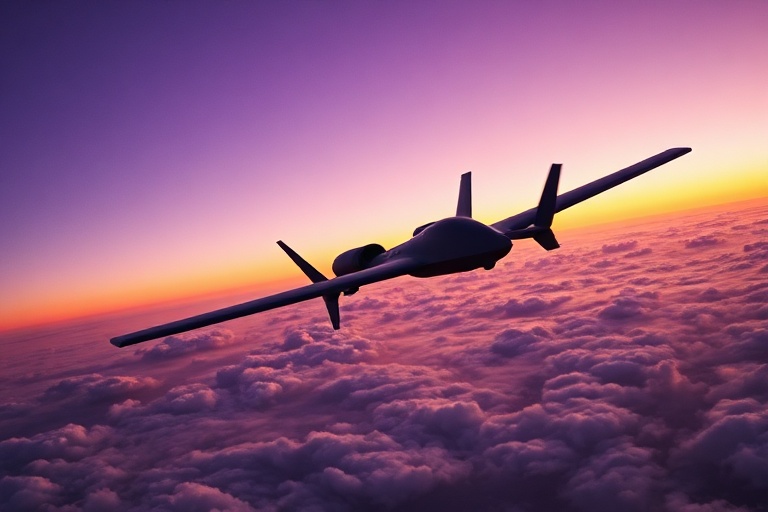
From Cold War reconnaissance missions to modern counterterrorism operations, surveillance aircraft have quietly evolved into one of the most transformative tools in global security. These aircraft extend human vision beyond ground-level limitations, offering real-time intelligence without the risks of human exposure. Their development reflects broader technological trends—miniaturization, artificial intelligence, and persistent connectivity—each reshaping how nations monitor and respond to threats.
Their presence is often unseen but always felt. Whether patrolling borders or tracking humanitarian crises, surveillance aircraft blur the line between necessity and oversight. This duality drives ongoing debates about privacy, ethics, and the future of aerial observation.
The Evolution of Surveillance Aircraft: From U-2 to Global Hawk
Surveillance aircraft trace their origins to the early 20th century, but the genre truly matured during the Cold War. The Lockheed U-2, first flown in 1955, became a symbol of aerial espionage, capable of photographing Soviet missile sites from 70,000 feet. Its successor, the SR-71 Blackbird, pushed the envelope further with speeds exceeding Mach 3 and altitudes above 80,000 feet.
By the 1990s, unmanned systems began to dominate the field. The RQ-1 Predator, initially used for surveillance, later carried missiles, illustrating how aerial platforms now serve both intelligence and kinetic roles. Today, platforms like the Northrop Grumman RQ-4 Global Hawk can remain airborne for over 30 hours, capturing high-resolution imagery across vast regions.
This progression reflects a shift from manned to unmanned systems, driven by cost efficiency and reduced risk to pilots. Modern surveillance aircraft now integrate AI-driven analytics, automatically detecting anomalies in vast data streams—from troop movements to environmental changes.
How Surveillance Aircraft Operate: Technology Behind the Vision
Modern surveillance aircraft rely on a combination of sensors, communication systems, and processing power. At their core, they function as flying data centers, collecting and transmitting intelligence in real time. Here’s how they work:
- Electro-Optical/Infrared Sensors (EO/IR): High-definition cameras and infrared imagers detect movement, heat signatures, and structural details even in darkness or adverse weather.
- Synthetic Aperture Radar (SAR): Penetrates clouds and darkness to create detailed 3D terrain maps, crucial for tracking hidden facilities or terrain changes.
- Signal Intelligence (SIGINT): Intercepts and analyzes communications, radar emissions, and electronic signals, identifying adversary activity patterns.
- Data Link Systems: Secure satellite and line-of-sight communications relay data to ground stations or command centers within seconds.
- AI and Machine Learning: Automates object recognition, anomaly detection, and predictive analysis, reducing the cognitive load on human operators.
The RQ-4 Global Hawk, for example, can simultaneously monitor 40,000 square miles—an area larger than Switzerland—while transmitting data to multiple users across the globe. This scalability makes it ideal for both military and civilian applications, from tracking drug trafficking to assessing natural disasters.
The Dual Role: Security Tool and Ethical Dilemma
The same capabilities that make surveillance aircraft invaluable for national security raise profound ethical questions. Governments and agencies use them to monitor borders, track insurgents, and respond to humanitarian crises. Yet, their unblinking gaze can also infringe on civil liberties, enabling mass surveillance without public consent.
In 2020, a report from the American Civil Liberties Union highlighted concerns over persistent aerial surveillance in U.S. cities, where police departments used planes equipped with wide-area motion imagery systems to track thousands of people per flight. While this technology aids crime prevention, it also creates a chilling effect on public behavior and erodes anonymity.
Internationally, surveillance aircraft have been linked to human rights abuses. Reports from conflict zones in Syria, Yemen, and Ukraine suggest that aerial reconnaissance data has been used to target civilian infrastructure. The dual-use nature of these platforms complicates oversight, as civilian agencies and militaries often share data and technology.
As sensor resolution improves and AI systems become more autonomous, the need for robust ethical frameworks grows. Transparency in deployment, strict data retention policies, and public accountability mechanisms are essential to balance security with privacy.
Beyond Borders: Civilian and Commercial Uses
Surveillance aircraft are no longer confined to military or intelligence use. Their applications now span agriculture, environmental monitoring, disaster response, and infrastructure inspection. In agriculture, drones and light aircraft equipped with multispectral sensors assess crop health, optimize irrigation, and predict yields with unprecedented accuracy.
Oil and gas companies deploy surveillance aircraft to monitor pipelines, detect leaks, and assess environmental impact. In the wake of hurricanes or wildfires, these platforms provide real-time damage assessments, guiding rescue and recovery efforts.
Commercial operators are also entering the market. In 2023, the U.S. Federal Aviation Administration approved expanded drone operations beyond visual line of sight, paving the way for persistent aerial monitoring in logistics and urban air mobility. Companies like Percepto and American Aerospace Technologies now offer turnkey surveillance solutions for energy, transportation, and smart city initiatives.
This commercialization has democratized access to aerial intelligence. Startups and municipalities can now deploy cost-effective systems that rival military-grade capabilities, albeit on a smaller scale. The result is a more connected world—but one where the line between public safety and private intrusion continues to blur.
What’s Next for Surveillance Aircraft?
The future of surveillance aircraft lies in convergence. As AI, 5G connectivity, and quantum computing advance, these platforms will become faster, smarter, and more autonomous. Predictive analytics will allow systems to anticipate threats before they materialize, shifting from reactive to proactive surveillance.
However, this trajectory demands careful governance. The proliferation of low-cost drones and open-source mapping tools means even non-state actors can conduct aerial surveillance. The proliferation of these technologies could destabilize regions by enabling asymmetric threats or unauthorized monitoring.
International treaties and industry standards will play a critical role in shaping this future. The 2020 International Civil Aviation Organization guidelines on drone operations represent a step forward, but global consensus on surveillance ethics remains elusive.
One thing is clear: surveillance aircraft are no longer a niche capability reserved for superpowers. They are becoming a ubiquitous presence in the skies, redefining how we see the world—and how the world sees us.
Conclusion: A Sky Filled with Eyes
Surveillance aircraft have transformed from Cold War relics into indispensable tools of modern governance, commerce, and crisis response. Their evolution mirrors our own technological ascent—faster, sharper, and more persistent with each generation. Yet, with every advantage they confer, they also pose new challenges to privacy, ethics, and international stability.
The challenge ahead is not technological, but moral. As these platforms become more capable and accessible, societies must decide how much visibility they are willing to surrender—and under what conditions. The sky is no longer the limit. It’s the frontier.
For now, surveillance aircraft remain our quietest sentinels—watching, analyzing, and adapting. But in a world increasingly shaped by data and observation, the real question isn’t what they can see. It’s what we’re willing to let them show us.