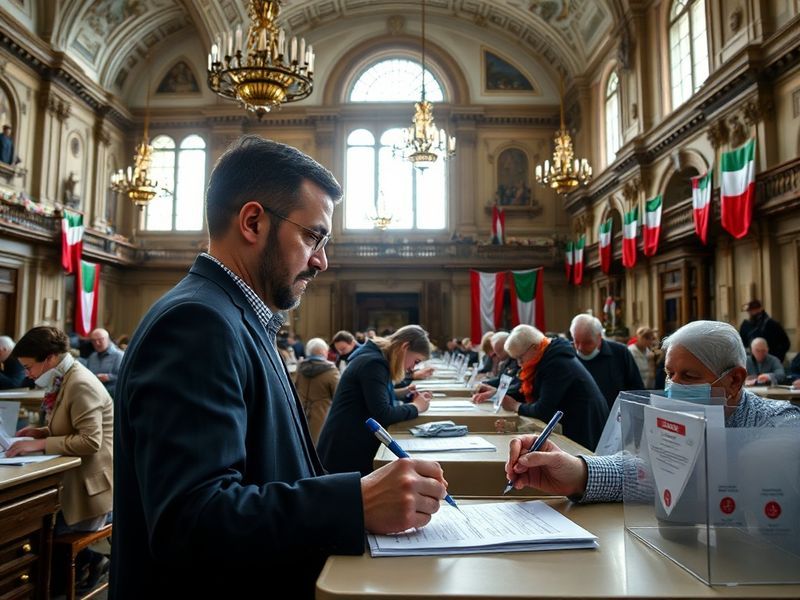
The 2026 Hungarian parliamentary elections are shaping up to be one of the most consequential political contests in the country’s recent history. Scheduled for April 2026, these elections will determine whether Prime Minister Viktor Orbán’s Fidesz party maintains its decade-long grip on power or faces a serious challenge from an increasingly unified opposition. With economic pressures, shifting voter demographics, and growing discontent over governance, the stakes could not be higher for Hungary’s political future.
These elections arrive at a critical juncture for Hungary, which has seen significant changes since Orbán’s first victory in 2010. His government has reshaped the country’s institutions, media landscape, and judicial system, drawing both praise for stability and criticism for democratic backsliding. As 2026 approaches, opposition parties are regrouping, civil society is mobilizing, and international observers are sharpening their focus on Hungary’s electoral integrity. The outcome could redefine Hungary’s role in the European Union and its relationship with Western democracies.
The Political Landscape in 2026
Hungary’s political scene remains dominated by Fidesz, which has governed since 2010 under Orbán’s leadership. The party’s long-standing dominance is rooted in a combination of media control, electoral engineering, and populist messaging that resonates with a significant portion of the electorate. However, the 2026 elections could mark a turning point if opposition forces manage to present a cohesive alternative.
Opposition parties, which have struggled with fragmentation in past elections, are now exploring new strategies to consolidate their base. The United Opposition alliance, which briefly gained momentum in the 2022 elections, is expected to play a central role in 2026. Key figures such as Péter Magyar, a former Fidesz insider turned opposition leader, have injected fresh energy into the political debate. Meanwhile, smaller parties like the Democratic Coalition and Momentum Movement are pushing for reforms that could sway undecided voters.
Beyond domestic politics, international factors will also influence the election. The European Union’s ongoing scrutiny of Hungary’s rule-of-law violations and the war in Ukraine could sway voter sentiment. Orbán’s government has positioned itself as a mediator between Russia and the West, a stance that has drawn both support and criticism. As Hungary navigates its relationship with Brussels and Washington, the 2026 elections will test whether voters prioritize sovereignty over alignment with Western institutions.
Key Issues Shaping the Campaign
Several pressing issues are expected to dominate the 2026 election campaign, reflecting both domestic concerns and broader geopolitical tensions. The economy remains a top priority for voters, with inflation, wage stagnation, and rising costs of living eroding confidence in the government. Orbán’s economic policies, including price caps on essential goods and generous family subsidies, have provided temporary relief but have done little to address structural challenges such as labor shortages and foreign investment declines.
Another critical issue is migration. Hungary’s hardline stance on immigration, embodied by its border fence and strict asylum policies, has been a cornerstone of Orbán’s political brand. However, the ongoing migration crisis in Europe and Hungary’s own demographic challenges—such as an aging population and emigration of young workers—raise questions about the sustainability of this approach. Opposition parties are likely to challenge Fidesz’s narrative, advocating for more pragmatic solutions to labor market needs.
Corruption and governance also remain flashpoints. Hungary has consistently ranked poorly in Transparency International’s Corruption Perceptions Index, with critics pointing to the concentration of power within Orbán’s inner circle and the lack of accountability in public procurement. The 2026 elections could serve as a referendum on whether voters are willing to accept this status quo or demand systemic reforms.
Finally, Hungary’s relationship with the European Union will loom large over the campaign. Orbán’s confrontational stance with Brussels has strained Hungary’s access to EU funds and sparked clashes over issues like LGBTQ+ rights and judicial independence. Opposition parties, many of which advocate for closer ties with the EU, will likely frame the election as a choice between isolation and integration.
Election Mechanics and Potential Outcomes
Hungary’s electoral system is a mix of proportional representation and a two-round majoritarian system, designed to favor the ruling party. The 199-seat parliament is elected through a combination of individual constituencies and party lists, with Fidesz benefiting from gerrymandering and a fragmented opposition. In 2026, the opposition’s ability to overcome these structural disadvantages will be crucial.
Polling data suggests a tight race, with Fidesz maintaining a narrow lead but facing growing discontent. A recent survey by Publicus Institute indicates that while Orbán’s approval ratings remain strong among rural and older voters, urban and younger populations are increasingly dissatisfied. The opposition’s success may hinge on its ability to mobilize these demographics while also addressing internal divisions.
Several potential outcomes could emerge from the 2026 elections:
- Fidesz Victory: If Orbán’s party manages to retain its parliamentary majority, it could further consolidate power, potentially accelerating reforms to entrench its influence in state institutions. This scenario would likely lead to continued tensions with the EU and further democratic backsliding.
- Opposition Surge: A breakthrough by the United Opposition could force a coalition government or even a minority administration. This would mark a historic shift, though governing would require navigating deep ideological divides within the opposition bloc.
- Hungarian-style Swing: Some analysts predict a more nuanced result, where Fidesz retains control but loses its supermajority, forcing Orbán to compromise on key policies. This could open the door to limited reforms while preserving the party’s dominance.
- Low Turnout Scenario: A historically low voter turnout, particularly among urban youth, could skew results in Fidesz’s favor, raising questions about the election’s legitimacy and further straining Hungary’s democratic credentials.
The election’s aftermath will also depend on how both sides respond to the results. Orbán has a history of using electoral victories to justify further centralization of power, while the opposition may push for mass protests or legal challenges if it perceives foul play. International observers, including the OSCE and the EU, will likely scrutinize the process closely, adding another layer of complexity to the post-election landscape.
What’s at Stake Beyond Hungary
The outcome of the 2026 Hungarian elections will have ripple effects far beyond Budapest. As a member of the European Union and NATO, Hungary plays a pivotal role in shaping the bloc’s stance on issues like migration, rule of law, and defense. A Fidesz victory could embolden other illiberal leaders in Europe, while an opposition win might signal a shift toward more pro-EU governance in Central Europe.
Hungary’s relationship with Ukraine will also be closely watched. Orbán’s government has maintained a delicate balance between supporting Ukraine militarily and avoiding direct confrontation with Russia. A change in leadership could realign Hungary’s foreign policy, potentially affecting regional stability and Hungary’s role in the war effort.
For the United States and other Western allies, the elections present an opportunity to reassess their engagement with Hungary. Diplomatic pressure, targeted sanctions, and support for civil society organizations could all play a role in shaping the post-election environment. Meanwhile, Hungary’s economic ties with China and other non-Western partners may become a point of contention if the opposition seeks to reduce reliance on Beijing.
The 2026 elections are more than just a domestic contest—they are a test of Hungary’s democratic resilience and its place in the world. Whether Hungary moves toward greater authoritarianism or begins a slow process of democratic renewal, the stakes could not be higher for its people and its neighbors.
Conclusion
The 2026 Hungarian elections will be a defining moment for the country’s political future. With Orbán’s Fidesz party facing its most serious challenge in years, the campaign promises to be contentious, with high stakes for Hungary’s democracy, economy, and international relations. The opposition’s ability to unite, the government’s response to dissent, and the electorate’s willingness to engage will all shape the outcome.
Regardless of the result, the 2026 elections will likely reverberate across Europe and beyond, influencing debates about democracy, sovereignty, and the future of the EU. As Hungarians prepare to cast their ballots, the world will be watching closely to see whether the country takes a step toward reform or doubles down on the path it has followed for over a decade.