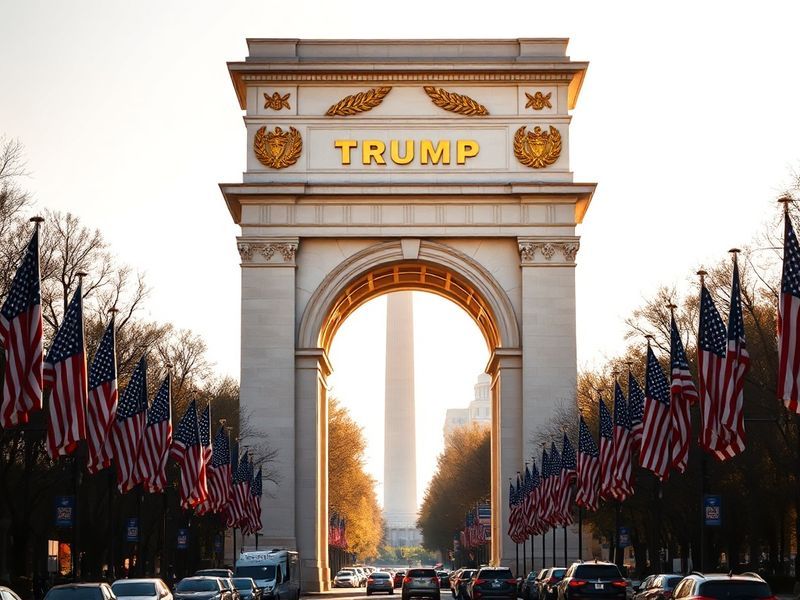
The Trump Triumphant Arch has emerged as one of the most polarizing architectural proposals in recent memory. Designed by architect James Mallonee, the structure draws inspiration from classical triumphal arches but incorporates modern elements that reflect contemporary political and cultural tensions. The design features a towering white marble facade, intricate bas-relief sculptures, and a central passageway large enough to accommodate double-decker buses. While proponents argue it represents a triumph of American ambition, critics see it as a monument to divisiveness.
The Design Philosophy Behind the Controversial Structure
Mallonee’s vision for the Trump Triumphant Arch blends neoclassical grandeur with populist symbolism. The arch’s dimensions—reportedly 180 feet tall and 240 feet wide—are intended to dwarf traditional monuments, creating an immediate visual impact. The exterior is clad in Carrara marble, a material historically reserved for monuments like the Parthenon and the Lincoln Memorial. This choice alone has sparked debate about whether the arch seeks to align itself with historical reverence or assert dominance in the present.
Inside, the arch incorporates a series of gold-leafed friezes depicting scenes from American history. These include both celebrated moments like the Apollo 11 moon landing and more contentious episodes, such as the storming of the Capitol on January 6, 2021. The inclusion of the latter has drawn sharp criticism from historians and architects alike, who argue that the arch risks glorifying political violence under the guise of patriotism.
Key Features of the Trump Triumphant Arch
- Height and Scale: 180 feet tall and 240 feet wide, designed to be a dominant presence in any urban skyline.
- Materials: Carrara marble exterior with gold-leafed internal friezes, emphasizing opulence and permanence.
- Symbolic Imagery: Friezes include both traditional American milestones and politically charged events, creating a narrative that is open to interpretation.
- Functionality: Central passageway designed to accommodate large vehicles, suggesting a blend of monument and infrastructure.
The Broader Context: Monuments and Political Identity
The Trump Triumphant Arch does not exist in a vacuum. It reflects a broader trend in which monuments are increasingly used as tools for political messaging rather than as neutral symbols of shared history. In recent decades, monuments have become flashpoints in cultural wars, from Confederate statues to proposals for a National Garden of American Heroes. The arch’s design, with its deliberate ambiguity, forces viewers to confront uncomfortable questions about what—and whom—monuments are meant to celebrate.
Architectural historian Dr. Elena Vasquez notes, “Monuments have always been about power. The question is whether this arch seeks to unify or to divide. The inclusion of contentious imagery suggests the latter.” This perspective aligns with broader critiques of the Trump administration’s approach to public memory, which often prioritized a specific, nostalgic vision of American history over more inclusive narratives.
Public Reception and the Role of Social Media
Reaction to the Trump Triumphant Arch has been swift and polarized. Supporters, many of whom are vocal proponents of the former president, have taken to social media to praise the structure as a “bold reassertion of American greatness.” On platforms like Truth Social and X (formerly Twitter), hashtags such as #TrumpTriumph and #MonumentToGreatness have trended, often accompanied by edited images of the arch superimposed onto famous city skylines.
Critics, however, have framed the arch as a “21st-century propaganda tool,” pointing to its potential to normalize divisive rhetoric in public spaces. The American Institute of Architects (AIA) has remained notably silent on the project, though individual members have expressed concern over the blending of architecture and politics. “Architecture should elevate, not inflame,” said one anonymous AIA fellow. “This design does the latter.”
Implications for Future Monument Design
The Trump Triumphant Arch raises critical questions about the future of monument design in an era of deep political division. As cities and private entities continue to commission new public works, the risk of these projects becoming political statements—rather than unifying symbols—grows. The arch’s design process, which reportedly involved minimal public input, sets a troubling precedent for how monuments might be conceived in the future.
Already, other architects and designers are taking note. Some are exploring ways to create monuments that reflect the complexities of modern society without alienating portions of the population. Others argue that the backlash against the Trump Triumphant Arch will lead to a resurgence of more abstract, less didactic public art, where symbolism is open to individual interpretation rather than prescribed by a single narrative.
One potential outcome is the rise of “counter-monuments”—structures designed not to celebrate but to provoke thought about historical injustices. Examples include the National Memorial for Peace and Justice in Montgomery, Alabama, which commemorates lynching victims, and the recently unveiled Emmett Till Memorial in Washington, D.C. These projects demonstrate that monuments can still serve as powerful tools for education and reflection, provided they are approached with nuance and inclusivity.
Conclusion: A Monument for the Ages—or a Flashpoint?
The Trump Triumphant Arch remains a work in progress, with no confirmed location or construction timeline. Yet its very existence has ignited a national conversation about the role of architecture in shaping public memory. Whether it becomes a lasting symbol of a particular political vision or a cautionary tale about the perils of divisive design will depend largely on how it is received and contextualized in the years to come.
What is clear is that the arch represents more than just an architectural statement. It is a test of how society navigates the intersection of history, politics, and public space. As cities grapple with their own monument legacies, the Trump Triumphant Arch serves as both a warning and an opportunity—a reminder that the structures we build are not merely stone and marble, but reflections of who we are and what we choose to remember.
For further reading on the intersection of architecture and politics, explore our Politics and Culture sections on Dave’s Locker.