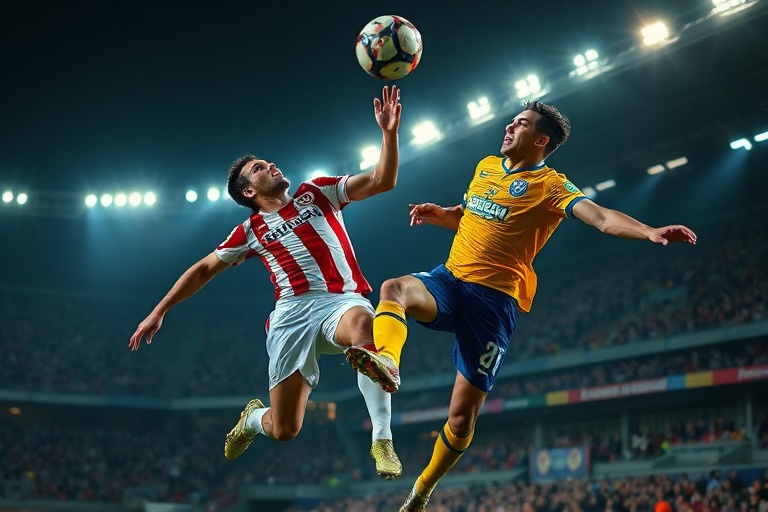
The Liga MX match between Querétaro and Necaxa on October 14, 2023, at Estadio Corregidora was more than just a fixture on the calendar. It was a collision of two contrasting football philosophies, regional pride, and tactical evolution—elements that define modern Mexican football. While Querétaro entered the game under pressure with just one win in their last five matches, Necaxa arrived with renewed confidence after a strong defensive performance in their previous outing. The 1-1 draw that followed was not merely a result but a narrative of resilience, missed opportunities, and the unpredictable beauty of the sport.
Liga MX continues to captivate audiences beyond Mexico’s borders. With its vibrant fan culture, rapid transitions between attacking football, and a growing number of international stars, the league has carved a niche in global football consciousness. Matches like Querétaro vs Necaxa exemplify why: they are raw, unscripted, and often emotionally charged. They reflect the broader story of Mexican football—where tradition meets innovation, and where every game can shift the balance of power in a league known for its volatility.
Historical Context: Two Clubs with Distinct Identities
Querétaro Fútbol Club, founded in 1950, has long been seen as a club of modest means but passionate supporters. Based in the colonial city of Santiago de Querétaro, the team has spent much of its history in the lower divisions before securing promotion to Liga MX in 2015. Their journey has been one of survival and occasional flashes of brilliance, often buoyed by local talent and community support. The club’s identity is deeply tied to its region, with Estadio Corregidora serving as a fortress where underdogs have risen.
Necaxa, on the other hand, is a club with a legacy that predates many in Mexican football. Established in 1923, Necaxa was once a powerhouse in the amateur era and won multiple league titles in the early 20th century. Known as “Los Electricistas” due to their original sponsorship by the Mexican Light and Power Company, the club has a storied past. Though they experienced relegations and financial struggles in the 21st century, a revival in recent years—supported by new ownership and a focus on youth development—has returned them to the top flight. Their style of play often emphasizes quick transitions and technical midfielders, a reflection of their historical identity.
When these two clubs meet, they bring more than three points at stake. They bring contrasting narratives: one of perennial struggle and regional pride, the other of historical prestige and tactical discipline. That clash of identities often produces unpredictable football, where moments of individual brilliance can outweigh tactical dominance.
Tactical Breakdown: Contrasting Philosophies in Action
The October 14 match was a microcosm of the tactical trends shaping Liga MX in 2023. Querétaro, managed by a pragmatic coach, deployed a 4-4-2 formation with a focus on compactness in midfield and direct play to their lone striker. Their approach was pragmatic, prioritizing defensive stability over possession. Necaxa, under a coach known for promoting an attacking 4-3-3, pressed high and looked to overload the wings with overlapping fullbacks.
Early in the match, Necaxa’s intensity paid off. A quick counterattack led to a goal in the 12th minute, with midfielder Alejandro Andrade slotting home after a through ball from striker Alejandro Prieto. Querétaro, however, responded with a moment of individual quality. In the 34th minute, midfielder Kevin Kelsy—on loan from Brazilian club Botafogo—received the ball on the edge of the box, dribbled past two defenders, and fired a low shot past Necaxa goalkeeper Nahuel Guzmán. The equalizer was a reminder of how a single moment of magic can shift momentum.
After halftime, both teams adjusted. Querétaro dropped deeper, inviting Necaxa forward and looking to exploit space on the counter. Necaxa, meanwhile, struggled to break down a disciplined defensive block. Despite having 62% possession, they managed only four shots on target. Querétaro, with just 38% possession, created their best chance in the 78th minute when Kelsy forced a brilliant save from Guzmán after a one-on-one opportunity.
By the final whistle, neither team could claim dominance. It was a game of missed chances, tactical stalemates, and the kind of unpredictability that keeps Liga MX unpredictable and fascinating.
The Global Lens: How Liga MX Fits Into the World Football Scene
Liga MX is often celebrated for its fan culture, but its tactical evolution and player development are equally noteworthy. The league has become a proving ground for young Mexican talents and a temporary home for South American stars seeking high-intensity football. Clubs like Querétaro and Necaxa play a crucial role in this ecosystem, providing opportunities for players who might not yet be ready for European football but have the skill to thrive in Mexico’s fast-paced environment.
In a global football landscape dominated by financial might and star power, Liga MX offers an alternative narrative. It is a league where passion often outweighs payroll, where stadiums buzz with local pride, and where tactical innovation is as valued as individual flair. The Querétaro vs Necaxa rivalry, though not historic in the traditional sense, reflects this broader context. It is a reminder that football’s soul is not solely found in the Champions League or the Premier League, but in leagues that nurture identity, resilience, and unpredictability.
Moreover, the match highlighted the growing influence of analytics and sports science in Mexican football. Coaches are increasingly using data to optimize pressing triggers, set-piece routines, and player workloads. Querétaro’s compact shape and Necaxa’s high press are not just tactical choices—they are informed by data trends sweeping through the league. This blend of tradition and modernity is what makes Liga MX a compelling spectacle for global audiences.
Looking Ahead: What This Match Means for Both Clubs
The draw left both teams at a crossroads. For Querétaro, the result was a rare point in a difficult run, but the underlying issues remained: inconsistent form, a lack of depth in certain positions, and the challenge of building a competitive squad on a limited budget. The club’s leadership has emphasized youth development, and the emergence of players like Kelsy offers hope. However, maintaining stability will require more than individual brilliance—it will demand a coherent long-term strategy.
For Necaxa, the point was a step toward consolidating their position in the upper half of the table. Their defensive solidity was commendable, but the lack of a killer instinct in front of goal is a concern. With several teams pushing for continental qualification, every missed opportunity could prove costly. The club’s revival is still in its early stages, and consistency will be key to securing a playoff spot.
As the season progresses, both clubs will face pivotal fixtures that could define their trajectories. Querétaro’s next challenge is a trip to Monterrey, a team known for its attacking prowess. Necaxa, meanwhile, hosts Club América in a high-stakes encounter that could shift the balance in the standings. These upcoming matches will reveal whether the Querétaro-Necaxa draw was a turning point or merely a moment of equilibrium in a season full of fluctuations.
The Liga MX landscape is constantly shifting. Clubs rise and fall, stars emerge and depart, and tactical trends evolve. Yet, at its core, the league remains a celebration of football’s unpredictability. Matches like Querétaro vs Necaxa are not just about points—they are about identity, ambition, and the enduring magic of the game.
For fans, whether in Mexico or across the globe, Liga MX offers something rare: a league where every match feels like a story worth watching. And in a world where football is increasingly dominated by narratives of wealth and power, that is a story worth telling.