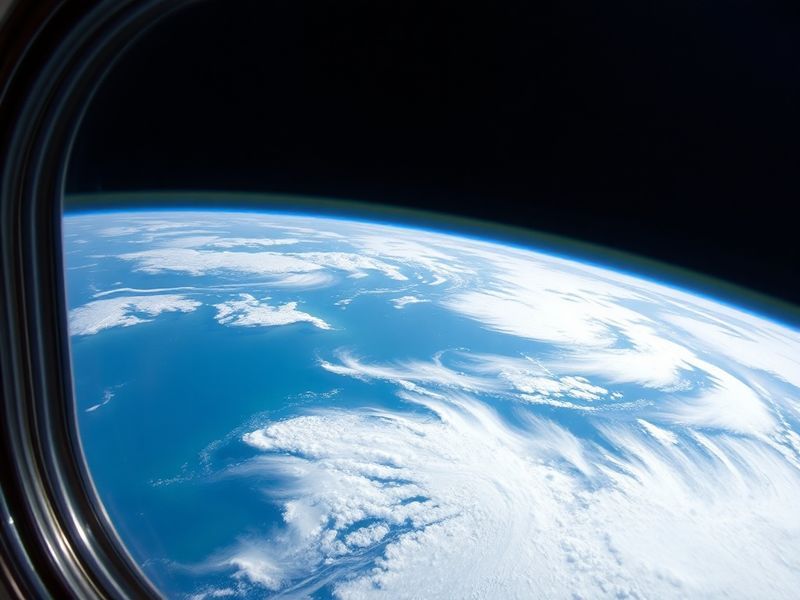
The Artemis II mission marks NASA’s first crewed lunar flyby in over 50 years, but one of its most anticipated moments won’t involve the Moon at all. Instead, the four-person crew will share unprecedented views of Earth from deep space. These images promise to combine scientific value with visceral human impact, potentially reshaping how humanity perceives its home planet.
The mission’s trajectory will carry the Orion spacecraft 6,400 miles beyond the far side of the Moon, providing a unique vantage point. From this distance, Earth will appear as a small blue marble suspended in the blackness of space—a perspective that has moved astronauts for generations. The crew’s Earth observation tasks represent a deliberate blend of public engagement and scientific monitoring.
How Earth Observation Enhances the Artemis II Mission
The Artemis II crew’s Earth observation objectives serve multiple purposes beyond simply capturing beautiful images. These activities fall into three primary categories: technical validation, scientific research, and public inspiration.
Technical validation includes testing Orion’s optical systems for Earth imaging from deep space. The spacecraft’s advanced camera suite must perform flawlessly during both mission phases—lunar transit and Earth approach. NASA engineers have calibrated these systems specifically for the lighting conditions expected during the 10-day mission.
Scientifically, the observations will support atmospheric research through calibrated imagery of Earth’s limb. This data will complement existing satellite observations, particularly for studying cloud formations and ocean color variations. The crew will also document phenomena like auroras and weather patterns that are best observed from the unique vantage point between Earth and the Moon.
Most significantly, these Earth views will be broadcast live to global audiences. NASA’s commitment to real-time sharing represents a strategic shift toward transparent space exploration. The agency has learned from past missions that humanity connects more deeply with spaceflight when it can see Earth from afar.
Equipment and Techniques for Capturing Earth from Deep Space
The Orion spacecraft carries specialized equipment for Earth observation, including the Crew Window Observational Research Facility (CWORF). This modular system allows astronauts to position cameras at various windows with minimal setup time. The main imaging tool is the Artemis Camera System (ACS), a modified version of the cameras used on the International Space Station but optimized for deep space lighting conditions.
Astronauts will primarily use three camera types:
- Nikon Z9 mirrorless cameras with telephoto lenses for detailed Earth surface imaging
- HDEV (High Definition Earth-Viewing) system for real-time video feeds
- Thermal imaging cameras for atmospheric temperature measurements
The crew has trained extensively in orbital mechanics to predict optimal imaging windows. Earth observation opportunities occur during specific points in the mission timeline when Orion’s position relative to Earth and the Sun creates ideal lighting conditions. These windows typically last between 15-30 minutes, requiring precise coordination between the crew and mission control.
The Human Impact of Seeing Earth from Afar
Perhaps the most profound aspect of the Artemis II Earth views won’t be scientific but philosophical. Every astronaut who has seen Earth from beyond low Earth orbit has described the experience as transformative. The phenomenon, known as the “Overview Effect,” describes the cognitive shift that occurs when viewing Earth as a fragile, isolated planet in the vastness of space.
NASA psychologist Dr. Sheryl Bishop has studied this effect extensively. Her research shows that astronauts returning from deep space missions often experience lasting changes in their worldview. “The scale difference between Earth and space creates an immediate recognition of our planet’s vulnerability,” Bishop explains. “It’s not just an intellectual understanding—it becomes an emotional reality.”
The Artemis II crew has participated in pre-flight workshops designed to prepare them for this experience. These sessions include guided meditation, artistic expression exercises, and discussions about the ethical implications of space exploration. The goal isn’t to manufacture a specific reaction but to help crew members process whatever emotions arise from seeing their home planet from such a distance.
Cultural Significance of Earth Imagery in Spaceflight
Earth photography has been integral to spaceflight since the first images were captured during the Mercury missions. The iconic “Blue Marble” photo from Apollo 17 became one of the most reproduced images in history, shaping environmental consciousness in the 1970s. The Artemis II images will enter a cultural landscape that’s dramatically different from the Space Race era.
Today’s global audience has access to real-time Earth imagery through services like Dave’s Locker Science and commercial satellite networks. However, the authenticity of astronaut-taken images carries unique weight. These aren’t processed data visualizations—they’re direct representations of human experience in space.
The timing of these images coincides with growing environmental concerns and renewed interest in space exploration. The contrast between Earth’s visible fragility and humanity’s expanding presence in space creates a powerful narrative tension. These images will exist in a cultural moment where questions about planetary stewardship and interplanetary expansion are increasingly urgent.
What to Expect During Earth Observation Operations
The Earth observation phase will begin approximately two days into the mission, shortly after Orion completes its translunar injection burn. The crew will first capture wide-angle views of Earth as a complete disk, documenting its position relative to the Moon. These initial images will establish the mission’s visual identity.
As Orion approaches its maximum distance from Earth (about 230,000 miles), the crew will focus on detailed observations of specific regions. Priority targets include:
- Coastal zones experiencing sea level rise
- Areas affected by recent natural disasters
- Cloud formations relevant to climate modeling
- Ocean color patterns indicating biological activity
- Artificial lighting patterns revealing human population distribution
Real-time data transmission will be limited by Orion’s communication constraints, but NASA plans to release processed images within hours of capture. The agency has partnered with international space agencies to create a collaborative processing pipeline, ensuring that images are available in multiple formats for educational and media use.
The most anticipated moment will occur during Orion’s return trajectory, when Earth grows from a distant point of light to a fully illuminated disk. This phase will be broadcast live, with commentary from the crew about their personal experiences. NASA’s social media team has prepared educational materials to help viewers understand the scientific and human significance of what they’re seeing.
Conclusion: A New Perspective on Our Place in the Universe
The Artemis II mission’s Earth observation activities represent more than technical objectives—they’re a deliberate attempt to reconnect humanity with the reality of our planetary home. In an era of increasing space activity, these images will serve as a reminder of what’s at stake and what’s possible.
The crew’s dual role as both explorers and witnesses creates a unique dynamic. They won’t just be documenting Earth’s appearance; they’ll be conveying the emotional weight of seeing it from a place no humans have visited since 1972. This combination of scientific data and human experience may prove to be the mission’s most lasting legacy.
As the world watches these images unfold, they’ll be seeing not just a planet, but a reminder of our shared existence on a fragile blue world. The Artemis II Earth views won’t just show us what Earth looks like from deep space—they’ll show us what it means to be human in the age of space exploration.