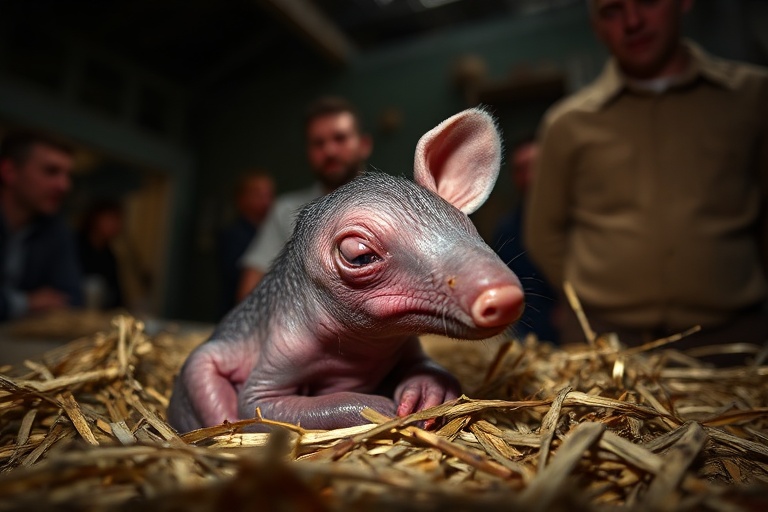
At a quiet corner of Chester Zoo, an extraordinary event unfolded last week when a critically endangered aardvark gave birth to a healthy calf. The birth marks one of only a handful of successful aardvark births in captivity across Europe this year, drawing attention from conservationists and animal lovers alike. Staff at the zoo, known for its commitment to breeding rare species, confirmed the calf is thriving under the watchful care of its mother.
The aardvark calf, whose sex has not yet been determined, represents a significant milestone in the zoo’s long-running conservation program. Aardvarks, often called “antbears” despite being unrelated to bears, are native to sub-Saharan Africa and face threats from habitat loss and hunting. Their elusive nature and low reproductive rate make successful births in captivity particularly noteworthy.
Chester Zoo has been a leader in aardvark breeding, with this being the 14th calf born at the facility since 1990. The zoo participates in the European Endangered Species Programme (EEP), which coordinates breeding efforts across the continent to maintain genetically healthy populations. This latest birth contributes to the sustainability of the species in human care while raising awareness about their plight in the wild.
Aardvarks in Captivity: Challenges and Conservation
Aardvarks are notoriously difficult to breed in captivity due to their specific dietary and environmental needs. Their diet consists almost entirely of ants and termites, which must be provided in precise quantities and freshness. At Chester Zoo, keepers have spent years refining feeding protocols to mimic the natural foraging behavior of these nocturnal mammals.
The zoo’s aardvark enclosure is designed to replicate their natural habitat, featuring deep sandbeds for burrowing and specialized heating systems to maintain optimal temperatures. These efforts are part of a broader strategy to reduce stress and encourage natural breeding behaviors. The successful birth of this calf suggests that these conditions are proving effective.
According to the International Union for Conservation of Nature (IUCN), aardvarks are classified as “least concern,” but their populations are declining in many parts of Africa. Habitat destruction, bushmeat hunting, and climate change pose growing threats. Conservationists argue that captive breeding programs like Chester Zoo’s are vital for maintaining genetic diversity and serving as a genetic “insurance policy” against extinction.
How Chester Zoo Became a Hub for Aardvark Breeding
Chester Zoo first welcomed an aardvark calf in 1990, but early years were marked by high infant mortality. Through trial and error, zoo staff identified key factors in successful rearing, including maternal bonding, appropriate diet, and environmental enrichment. Today, the zoo’s aardvark breeding program is one of the most successful in the world.
The zoo’s animal care team works closely with veterinarians specializing in exotic species to monitor pregnancies and neonatal health. Ultrasound scans and hormone tracking help predict birth timing, allowing staff to prepare the enclosure and ensure minimal disturbance during the birthing process. The birth of this latest calf follows a routine ultrasound check that confirmed a healthy pregnancy.
In addition to breeding, Chester Zoo supports aardvark conservation in the wild through partnerships with African wildlife organizations. These efforts include anti-poaching patrols, habitat restoration, and community education programs aimed at reducing human-wildlife conflict. The zoo’s holistic approach combines on-site breeding with field conservation, creating a model for other institutions.
What’s Next for the Aardvark Calf?
For now, the aardvark calf remains under the care of its mother in a secluded part of the zoo’s Africa exhibit. Visitors hoping to catch a glimpse will need patience—the aardvark is nocturnal, and calves typically stay hidden for several weeks after birth. Zoo staff expect the calf to begin venturing out of the burrow within the next month, offering the public a rare opportunity to see one of nature’s most unusual mammals up close.
The calf will be introduced to a diet of termites and ants gradually, a process that can take several months. Keepers will monitor its weight, behavior, and interactions with its mother to ensure healthy development. If all goes well, the calf could eventually join the zoo’s breeding program or be considered for placement at another accredited institution.
Chester Zoo plans to name the calf once its sex is confirmed, a tradition that helps personalize the animal and connect visitors to its conservation story. Past calves have been named in collaboration with local schools or through public voting, reinforcing the zoo’s role as an educational resource.
Why This Birth Matters Beyond the Zoo
The birth of an aardvark calf may seem like a small event, but it carries broader implications for global biodiversity. Aardvarks play a unique ecological role as “ecosystem engineers,” aerating soil with their digging and dispersing seeds through their dung. Their decline could disrupt entire ecosystems, making their conservation a priority for scientists.
This birth also highlights the importance of zoos in modern conservation. While critics argue that zoos are outdated, institutions like Chester Zoo demonstrate how they can contribute to species survival through breeding programs, research, and public engagement. The aardvark calf is a testament to what can be achieved with dedication and expertise.
For families visiting Chester Zoo, the birth offers a chance to learn about wildlife conservation in an immersive way. The zoo’s education team has developed programs around the aardvark calf, teaching visitors about the species’ role in nature and the threats it faces. These programs aim to inspire the next generation of conservationists.
As the calf grows, it will serve as an ambassador for its species, helping to raise awareness about the challenges facing aardvarks in the wild. With luck, its story will encourage support for conservation efforts in Africa and beyond. For now, the rare birth remains a quiet triumph—a reminder that even the most unusual creatures can find hope in human care.
Visiting Chester Zoo: What to Expect
Chester Zoo is open daily, offering visitors the chance to see the aardvark calf in its Africa exhibit. The zoo recommends arriving early in the day to maximize viewing opportunities, as aardvarks are most active during cooler hours. Guided tours and keeper talks provide additional insights into the zoo’s conservation work.
Tickets can be booked online in advance, with discounts available for families and groups. The zoo also offers membership options for those interested in supporting its conservation projects. For more information, visit the zoo’s official website or check out their travel section for tips on planning a visit.
Whether you’re a first-time visitor or a regular, the aardvark calf is a compelling reason to explore Chester Zoo’s diverse exhibits. From elephants to insects, the zoo offers a glimpse into the wonders of the natural world—and the efforts being made to protect it.