Blockades Explained: History, Ethics, and Modern Impact
“`html
The Complex World of Blockades: From Ancient Tactics to Modern Conflicts
A blockade represents one of the most enduring strategies in warfare and geopolitics, designed to isolate an enemy by cutting off access to critical resources, trade, or communication. Unlike a simple siege that focuses on a single fortress or city, a blockade extends its reach across borders, often targeting entire nations or regions. Historically, blockades have shaped the outcomes of major conflicts, from the Napoleonic Wars to the Cold War standoffs of the 20th century.
Today, blockades remain a tool of coercion, used not only in military contexts but also in economic and cyber domains. Their effectiveness depends on geography, international alliances, and the resilience of the targeted population. As global tensions rise, understanding the mechanics and consequences of blockades becomes essential for grasping the broader dynamics of power and resistance.
The Historical Roots of Blockades
Blockades trace their origins to ancient naval warfare, where controlling sea routes could cripple an adversary’s economy. The Athenians famously imposed a blockade on the island of Megara during the Peloponnesian War (431–404 BCE), cutting off its port to starve the city into submission. This early example demonstrated the psychological and material pressure a blockade could exert, even without direct combat.
By the 17th and 18th centuries, European powers refined blockade tactics into formal strategies. During the Napoleonic Wars (1803–1815), Britain enforced a naval blockade on France, aiming to disrupt trade and weaken Napoleon’s empire. Known as the Continental System, this economic warfare tactic backfired by harming neutral nations and fueling resentment. The blockade’s mixed results highlighted the delicate balance between suffocating an enemy and provoking unintended consequences.
The 20th century saw blockades evolve into instruments of total war. During World War I, Britain’s blockade of Germany contributed to severe food shortages and civilian unrest, ultimately aiding the Allied victory. Similarly, the U.S.-led blockade of Cuba during the 1962 Missile Crisis demonstrated how naval power could be wielded as a diplomatic lever, avoiding direct conflict while maintaining pressure on a rival state.
Key Characteristics of Effective Blockades
Not all blockades succeed, and their effectiveness hinges on several factors:
- Geographic Advantage: Natural chokepoints like straits or narrow waterways, such as the Strait of Hormuz or the Bosporus, make blockades easier to enforce. Landlocked nations, by contrast, may rely on less direct methods, such as cutting off supply routes.
- International Support: A blockade’s legitimacy often depends on multilateral backing. For example, the U.S.-led blockade of North Korea during the Korean War (1950–1953) relied on UN resolutions, whereas unilateral blockades risk being labeled as acts of piracy.
- Economic Resilience: The targeted nation’s ability to adapt—through smuggling, alternative trade routes, or domestic production—can undermine a blockade’s impact. Cuba’s survival during its decades-long blockade stemmed partly from creative economic maneuvers and support from allies like Venezuela.
- Public Perception: The humanitarian cost of blockades can turn global opinion against the enforcing party. The 1990s sanctions on Iraq, for instance, drew criticism for their severe impact on civilians, despite their stated goal of containing Saddam Hussein’s regime.
Modern Blockades: Beyond Naval Power
While naval blockades remain relevant, modern conflicts have expanded the concept to include economic, cyber, and even digital blockades. These contemporary forms reflect the shifting nature of warfare, where control over information and financial systems can be as decisive as physical dominance.
Economic blockades, or sanctions, have become a preferred tool for nations seeking to exert pressure without resorting to armed conflict. The U.S. sanctions on Iran, for example, target its oil exports and banking sector, aiming to force concessions on nuclear policy. Unlike traditional blockades, these measures rely on global financial networks, making them harder to evade but also vulnerable to circumvention through black markets or third-party trade.
Cyber blockades represent an even more abstract form of isolation. During the 2020 Nagorno-Karabakh conflict, Azerbaijan reportedly disrupted Armenian internet access and digital infrastructure, crippling communications and media outlets. Such tactics highlight how modern blockades can operate in the digital realm, where control over data flows becomes a strategic asset.
Digital blockades extend this idea further, targeting online services, social media platforms, or even entire internet domains. In 2021, Russia throttled access to Twitter and Facebook within its borders, framing the move as a response to “discrimination” against Russian media. While framed as a regulatory action, such measures function as de facto blockades, restricting information flow and shaping public discourse.
The Human Cost and Ethical Dilemmas
The collateral damage of blockades—whether intentional or not—raises profound ethical questions. Civilians often bear the brunt of economic blockades, facing shortages of food, medicine, and basic goods. The UN estimates that sanctions imposed on Venezuela have contributed to a humanitarian crisis, with millions fleeing the country and widespread malnutrition among children.
Blockades also test the limits of international law. The Geneva Conventions prohibit collective punishment, yet economic blockades can amount to just that, especially when they target entire populations. The International Court of Justice has ruled against certain sanctions regimes, such as the U.S. embargo on Cuba, for violating humanitarian principles. However, enforcement remains inconsistent, as geopolitical interests often override legal considerations.
Another ethical dimension involves the blockade’s stated objectives. Are they genuinely aimed at curbing aggression, or do they serve as tools of regime change? The U.S. blockade of Cuba, for instance, has been criticized as an attempt to destabilize the communist government, rather than a defensive measure. Such ambiguities complicate the moral justification of blockades, blurring the line between coercion and humanitarian intervention.
Case Study: The Blockade of Gaza
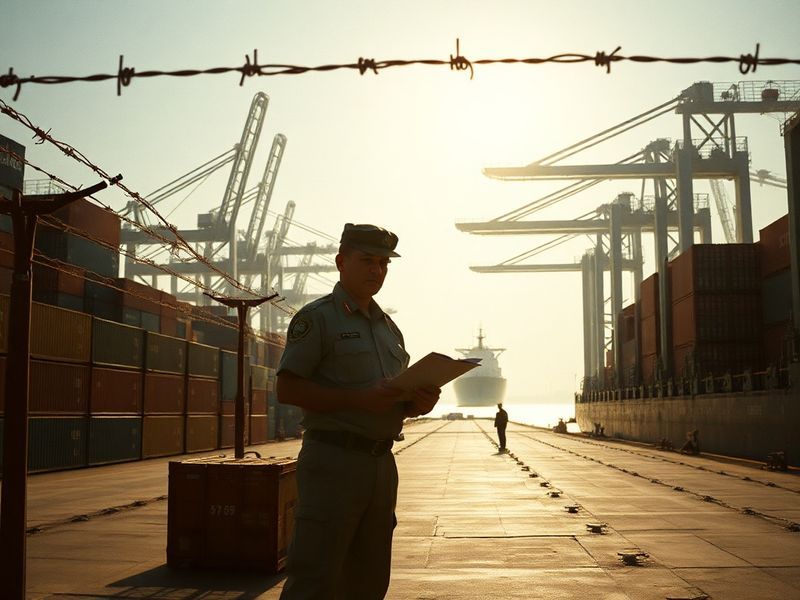
The blockade of the Gaza Strip, imposed by Israel and Egypt in 2007 after Hamas took control of the territory, offers a stark example of a modern blockade’s complexities. Officially framed as a security measure to prevent arms smuggling, the blockade has severely restricted the movement of people and goods, leading to widespread poverty and unemployment in Gaza.
Human rights organizations argue that the blockade violates international law by imposing collective punishment on Gaza’s 2 million residents. The UN has repeatedly called for its easing, citing the severe humanitarian impact. Yet Israel contends that the blockade is necessary to prevent attacks from Hamas, highlighting the tension between security imperatives and humanitarian concerns.
Efforts to circumvent the blockade have included underground tunnels (used for smuggling goods and weapons) and maritime aid flotillas, such as the 2010 Gaza Freedom Flotilla, which was raided by Israeli commandos. The incident sparked global outrage and underscored the blockade’s contentious nature, as well as the risks of humanitarian aid being politicized.
The Future of Blockades in an Interconnected World
As globalization deepens economic and digital interdependence, blockades may become either more potent or more obsolete. On one hand, the interconnectedness of supply chains and financial systems creates vulnerabilities that blockades can exploit. A single nation cutting off semiconductor exports, for example, could disrupt global industries from smartphones to automobiles.
On the other hand, globalization also provides tools to resist blockades. Nations and non-state actors can diversify trade partners, develop local industries, and leverage cyber capabilities to bypass traditional choke points. The rise of cryptocurrencies, for instance, has enabled some sanctioned nations to circumvent financial blockades, though at the cost of economic instability and regulatory crackdowns.
Technological advancements may also redefine blockades. Hypothetically, a nation could impose a “quantum blockade,” disrupting encryption standards or satellite communications to cripple an adversary’s digital infrastructure. While such scenarios remain speculative, they underscore how blockades are evolving beyond physical and economic realms into the digital and even cognitive spheres.
Ultimately, the future of blockades will depend on the balance between coercion and cooperation in international relations. As nations seek to assert dominance, blockades will remain a tool of last resort—but their effectiveness will hinge on adaptability, ethical considerations, and the resilience of those they target. For observers and policymakers alike, understanding this centuries-old strategy is key to navigating an increasingly complex global landscape.
For further reading on historical conflicts involving blockades, visit our History section. To explore how modern sanctions shape global politics, check out our Politics category.