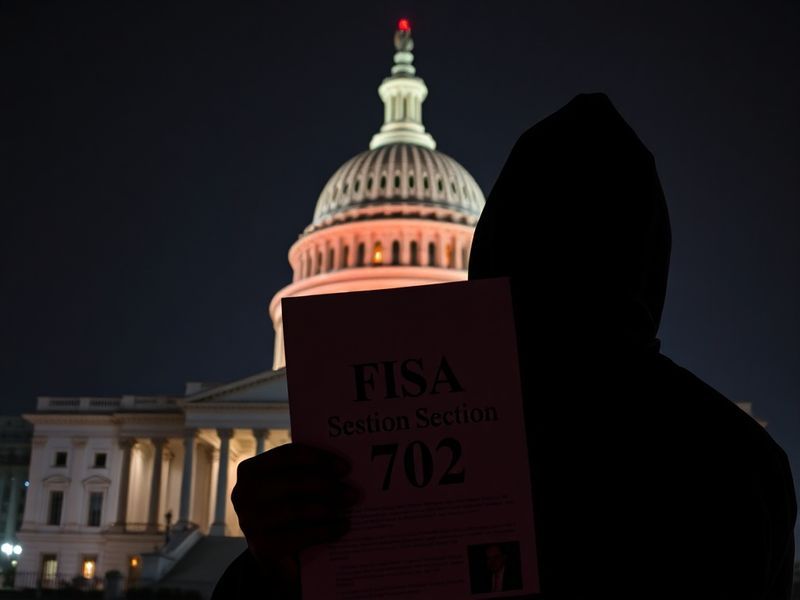
The House Judiciary Committee recently advanced a bill to reauthorize FISA Section 702, the controversial surveillance authority that allows U.S. intelligence agencies to collect foreign intelligence by monitoring communications of non-Americans abroad. Republicans have structured the legislation to include stricter oversight measures and tighter restrictions on how collected data can be used, particularly concerning Americans whose communications are incidentally intercepted.
This push comes as the December 31 deadline for Section 702 expiration looms, creating a high-stakes debate over national security versus civil liberties. While intelligence officials argue that the program is vital for tracking foreign threats, critics—including some House Republicans—contend that reforms are long overdue to prevent abuse of surveillance powers.
The Origins and Purpose of FISA Section 702
Enacted in 2008 as part of the Foreign Intelligence Surveillance Act Amendments, Section 702 was designed to close gaps in intelligence gathering exposed by the 9/11 attacks. Unlike traditional wiretapping, which requires a warrant for each target, Section 702 allows the government to collect the communications of non-U.S. persons located outside the country without individualized court orders.
This authority applies to major tech platforms like Google, Facebook, and Microsoft, which are compelled to provide access to communications under the law. The program operates under oversight from the Foreign Intelligence Surveillance Court (FISC), though critics argue that the court’s role is largely perfunctory, with minimal public accountability.
How Section 702 Works in Practice
When intelligence agencies intercept communications under Section 702, they often gather data involving Americans—either through direct contact with a foreign target or via third-party communications. This “incidental collection” has raised concerns about warrantless surveillance of U.S. citizens, though the law prohibits targeting Americans without a separate warrant.
However, the data collected can still be queried by federal agencies, including the FBI, for domestic criminal investigations—a practice that has drawn sharp criticism from privacy advocates. The FBI has admitted to thousands of improper searches of Section 702 data, including queries related to George Floyd protesters and January 6 suspects, without clear justification.
House GOP’s Reform Proposals: What’s on the Table
The House Judiciary Committee’s bill, titled the FISA Reform and Reauthorization Act, seeks to address these concerns by implementing several key changes:
- Stricter Query Restrictions: The bill would require a warrant before querying Section 702 data for information on U.S. persons, aligning with longstanding Fourth Amendment protections.
- Enhanced Transparency: Intelligence agencies would be required to report annually on the number of times Section 702 data is used in criminal prosecutions and how often U.S. person data is involved.
- Sunset Provision: The reforms would expire in four years unless reauthorized, forcing Congress to revisit the issue rather than allowing indefinite extension.
- Judicial Review: The FISC would gain greater authority to oversee compliance with the law, including the power to appoint an independent amicus to challenge government arguments.
Supporters of the bill, led by House Judiciary Chairman Jim Jordan, argue that these measures strike a balance between national security and civil liberties. “The American people deserve to know their government isn’t snooping through their private communications without a warrant,” Jordan stated in a recent hearing.
Opponents, including House Intelligence Committee Republicans, counter that the warrant requirement for queries could hinder counterterrorism and cybersecurity efforts. They point to past cases where Section 702 data helped thwart attacks, such as the 2015 San Bernardino shooting investigation.
Broader Implications: Privacy, Politics, and the Future of Surveillance
The debate over Section 702 is about more than just surveillance—it reflects deeper tensions in American governance. On one side, the intelligence community and some lawmakers argue that weakening Section 702 would leave the U.S. vulnerable to foreign threats, from state-sponsored hacking to terrorism. On the other, civil liberties groups and reform advocates warn that unchecked surveillance erodes public trust and sets a dangerous precedent for government overreach.
This divide has split even the GOP, with traditional national security hawks like Senate Majority Leader Mitch McConnell opposing the House’s reforms. Meanwhile, progressive Democrats and libertarian Republicans find rare common ground in pushing for stricter oversight. The outcome of this battle could reshape how surveillance powers are wielded in the digital age.
What’s Next for Section 702?
With the December deadline approaching, Congress faces a tight timeline to either reauthorize Section 702 with reforms or allow it to lapse—a scenario intelligence officials warn could blind U.S. agencies to critical threats. The House Judiciary Committee’s bill is just one of several proposals circulating, including a competing bill from the House Intelligence Committee that preserves more of the status quo.
Beyond Capitol Hill, tech companies like Apple and Google have lobbied for reforms that limit their legal exposure while preserving their ability to operate globally. Privacy advocates, meanwhile, are gearing up for legal challenges if the reforms don’t go far enough.
The stakes are high, and the debate shows no signs of cooling. As lawmakers negotiate behind closed doors, the public remains largely in the dark about how Section 702 is used—and how its reforms might impact their own privacy.
Conclusion: A Crossroads for Surveillance Policy
The House GOP’s push to reform FISA Section 702 represents a rare moment of bipartisan alignment on an issue often dominated by partisan divides. Whether these reforms will survive the legislative gauntlet—and whether they go far enough to address civil liberties concerns—remains to be seen. What is clear is that the stakes couldn’t be higher: the balance between security and privacy in the digital age hangs in the balance.
As Congress debates the future of Section 702, one thing is certain: the outcome will shape not just intelligence operations, but the very nature of government surveillance in the 21st century.
For now, the clock is ticking—and the world is watching.
Dave’s Locker Staff
Follow our Politics and National Security coverage for updates on this developing story.