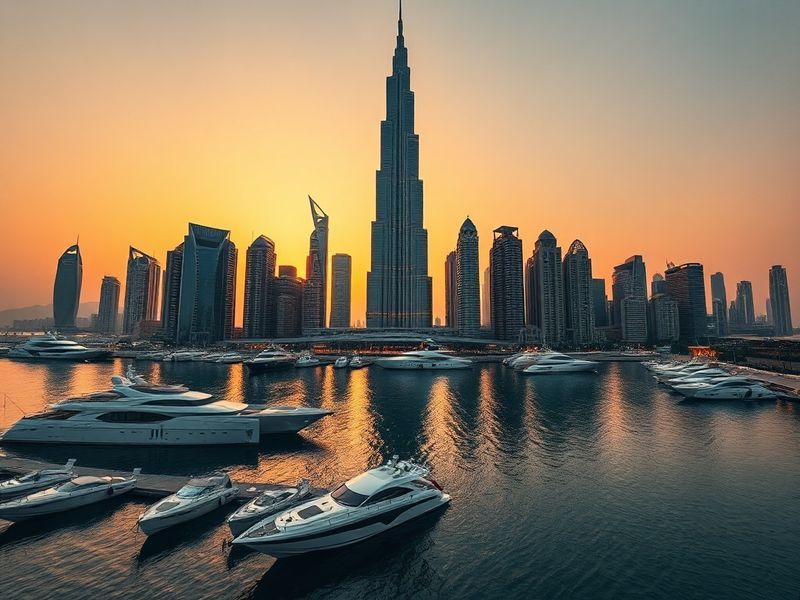
The United Arab Emirates (UAE) stands as a testament to how visionary leadership can transform a desert landscape into a global hub of commerce, technology, and culture. Since its formation in 1971, the UAE has evolved from a collection of modest fishing villages into one of the most dynamic economies in the world. Its cities, particularly Dubai and Abu Dhabi, have become synonymous with ambition, futuristic architecture, and rapid development. Yet beneath the gleaming skyscrapers and luxury shopping malls lies a deep respect for heritage, carefully preserved amid the march of progress.
The Economic Engine: Diversification Beyond Oil
For decades, the UAE’s economy relied heavily on oil exports, with Abu Dhabi serving as the primary contributor. However, recognizing the need for long-term sustainability, the government has aggressively pursued economic diversification. Today, non-oil sectors account for over 70% of the country’s GDP, a remarkable shift driven by tourism, finance, real estate, and technology.
The UAE’s strategic location between Europe, Asia, and Africa has made it a natural crossroads for trade. Free zones like Dubai Internet City and Abu Dhabi’s Masdar City attract multinational corporations and startups alike, offering tax incentives and state-of-the-art infrastructure. The country’s push into renewable energy is also noteworthy, with the Mohammed bin Rashid Al Maktoum Solar Park in Dubai aiming to produce 5,000 megawatts by 2030, cementing the UAE’s role in the global green energy transition.
Tourism remains a cornerstone of diversification. Dubai’s annual visitor numbers exceed 16 million, thanks to iconic landmarks like the Burj Khalifa and Palm Jumeirah. Meanwhile, Abu Dhabi’s cultural attractions, including the Louvre Abu Dhabi and the upcoming Guggenheim, position the emirate as a center for arts and education. The UAE’s ability to blend economic pragmatism with cultural ambition has set a global standard for post-oil development.
Architectural Marvels: Where Futurism Meets Tradition
The UAE’s skyline is a visual manifesto of its aspirations. Dubai’s Burj Khalifa, the world’s tallest building, pierces the sky at 828 meters, while the twisting Cayan Tower and the sail-shaped Burj Al Arab redefine architectural possibility. These structures are not merely for show; they symbolize the UAE’s commitment to innovation, often incorporating cutting-edge sustainability features like solar panels and energy-efficient designs.
Yet the country’s architectural identity is not solely defined by glass and steel. Traditional elements endure in projects like the Al Fahidi Historical Neighbourhood in Dubai, where wind-tower houses and narrow alleyways offer a glimpse into the pre-oil era. The Sheikh Zayed Grand Mosque in Abu Dhabi, with its white domes and intricate floral motifs, merges traditional Islamic design with modern grandeur. These contrasts highlight the UAE’s unique ability to honor its past while embracing the future.
The UAE’s urban planning also reflects a forward-thinking ethos. Projects like Masdar City in Abu Dhabi aim to be carbon-neutral, powered entirely by renewable energy. Meanwhile, Dubai’s smart city initiatives integrate AI and IoT into urban management, from traffic systems to public services. These efforts underscore the country’s role as a living laboratory for the cities of tomorrow.
Cultural Renaissance: Balancing Globalization and Heritage
The UAE’s cosmopolitan society is a tapestry of over 200 nationalities, creating a cultural landscape that is both diverse and harmonious. Expatriates make up nearly 90% of the population, contributing to a dynamic blend of traditions, cuisines, and festivals. Yet the government has also prioritized the preservation of Emirati identity through initiatives like the UAE Cultural Heritage Law, which protects historic sites and promotes traditional arts.
Cultural institutions are flourishing. The Louvre Abu Dhabi, an unprecedented collaboration between France and the UAE, houses artifacts spanning human history, from ancient Mesopotamia to contemporary works. The Dubai Opera, with its dhow-inspired design, hosts world-class performances, while the Sharjah Biennial has emerged as a leading platform for contemporary art in the Middle East. These institutions reflect the UAE’s ambition to become a global cultural capital.
Traditional practices also thrive. Falconry, a UNESCO-recognized heritage, remains a cherished pastime, while camel racing, now enhanced with robotic jockeys, continues to captivate audiences. The UAE’s commitment to cultural preservation is evident in its support for festivals like the Dubai Shopping Festival and the Abu Dhabi Grand Prix, which blend commerce with entertainment and tradition.
Key Cultural Initiatives in the UAE
- Year of Tolerance (2019): A national campaign promoting inclusivity and dialogue among different faiths and cultures.
- UAE Heritage Month: Celebrates Emirati traditions through workshops, exhibitions, and performances.
- Zayed National Museum: A planned museum in Abu Dhabi dedicated to the life of the UAE’s founding father, Sheikh Zayed bin Sultan Al Nahyan.
- Al Ain Oasis: A UNESCO World Heritage Site showcasing ancient irrigation systems and date palm cultivation.
Challenges and Criticisms: Navigating Growth Responsibly
Despite its achievements, the UAE faces challenges that demand careful navigation. Rapid urbanization has strained resources, particularly water, which is sourced primarily through energy-intensive desalination plants. The country is investing in innovative solutions, such as the Dubai Electricity and Water Authority’s (DEWA) green hydrogen project, to address these issues sustainably.
Labor rights and worker welfare have also drawn international scrutiny. The UAE’s reliance on migrant workers, particularly in construction, has led to concerns about living conditions and fair wages. In response, the government has introduced reforms like the Wage Protection System and the Green Visa, which offers long-term residency to skilled professionals. These steps signal a commitment to improving labor standards while maintaining economic growth.
Geopolitical tensions in the region pose another challenge. The UAE has positioned itself as a mediator in conflicts, balancing relationships with global powers like the US, China, and Russia. Its foreign policy emphasizes stability and economic cooperation, as seen in its role in the Abraham Accords, which normalized relations between Israel and several Arab states. The UAE’s diplomatic agility will be crucial in maintaining its influence on the world stage.
A Model of Progress with Lessons for the World
The UAE’s journey from a modest desert society to a global powerhouse offers valuable lessons in resilience, innovation, and adaptability. Its success lies not just in its economic diversification or architectural feats, but in its ability to foster a society that is both forward-looking and deeply rooted in its values.
As the country continues to evolve, it faces the dual task of sustaining its growth while addressing the ethical and environmental implications of rapid development. The UAE’s proactive stance on climate change, exemplified by its Net Zero by 2050 pledge, demonstrates a recognition that progress must be sustainable. Meanwhile, its investments in education, such as the NYU Abu Dhabi and the Mohammed bin Zayed University of Artificial Intelligence, ensure that future generations will be equipped to lead in an increasingly complex world.
For observers and investors alike, the UAE remains a compelling case study in transformation. It challenges the notion that tradition and modernity are mutually exclusive, proving instead that one can fuel the other. As the world looks for models of sustainable development, the UAE stands out—not just as a destination for luxury and leisure, but as a blueprint for building a future that honors the past.
Whether through its economic strategies, cultural initiatives, or architectural innovations, the UAE continues to redefine what is possible. In doing so, it invites the world to imagine a future where ambition and heritage coexist, where progress is measured not just in skyscrapers, but in the well-being of its people and the preservation of its identity. The UAE’s story is far from over, but its legacy as a pioneer of change is already assured.