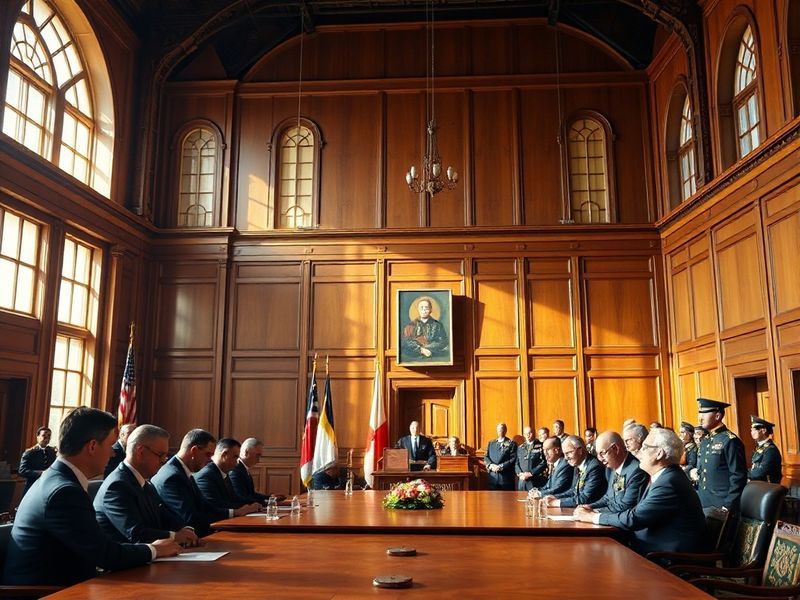
The concept of a peace treaty has shaped the course of human history for millennia. These formal agreements serve as the legal conclusion to armed conflicts, establishing terms that aim to prevent future hostilities. Unlike temporary ceasefires, peace treaties are designed to be enduring, addressing underlying grievances while outlining frameworks for coexistence. Their effectiveness, however, often depends on the willingness of former adversaries to honor commitments made under duress or international pressure.
The Historical Evolution of Peace Treaties
Peace treaties date back to ancient civilizations. One of the earliest recorded examples is the Treaty of Kadesh, signed around 1258 BCE between Egypt’s Ramses II and the Hittites after decades of warfare. This agreement not only ended hostilities but also established a defensive alliance and marriage diplomacy—elements that would become staples in later treaties.
During the medieval period, peace treaties often reflected the power dynamics of the time. The Peace of Westphalia (1648), which ended the Thirty Years’ War in Europe, is widely regarded as a turning point. It introduced the principles of state sovereignty and non-interference in domestic affairs, concepts that continue to influence international law today. These agreements were not merely about ending wars; they were about redefining the political order of nations.
The 20th century saw a dramatic increase in the number and complexity of peace treaties. The Treaty of Versailles (1919), which concluded World War I, imposed harsh reparations on Germany. Many historians argue that its punitive measures contributed to the economic instability and resentment that fueled World War II. This lesson underscored the importance of balanced agreements that address the root causes of conflict rather than exacerbating them.
Key Components of Modern Peace Treaties
Contemporary peace treaties are comprehensive documents that go beyond ceasefire declarations. They typically include several critical elements:
- Ceasefire Terms: Immediate cessation of hostilities, often with monitored demilitarized zones.
- Territorial Adjustments: Agreements on borders, refugee returns, and the status of occupied territories.
- Disarmament and Demobilization: Plans for surrendering weapons and reintegrating combatants into civilian life.
- Political Reforms: Provisions for power-sharing, constitutional changes, or transitional justice mechanisms.
- Economic and Social Provisions: Commitments to reconstruction, aid distribution, and long-term development.
For example, the Good Friday Agreement (1998), which ended decades of conflict in Northern Ireland, included detailed provisions for decommissioning paramilitary weapons, establishing power-sharing institutions, and addressing the legacy of violence. Its success demonstrated how inclusive negotiations and mutual concessions could pave the way for lasting peace.
The Role of International Mediators
Peace treaties rarely emerge from bilateral negotiations alone. Third-party mediators—such as the United Nations, regional organizations, or individual states—often play a crucial role in brokering agreements. Mediators provide neutral ground for dialogue, leverage diplomatic pressure, and offer technical expertise in drafting complex legal frameworks.
The Dayton Accords (1995), which ended the Bosnian War, were negotiated under intense international pressure. The United States hosted talks in Dayton, Ohio, where a combination of military threats and economic incentives pushed warring factions to compromise. The resulting treaty established a fragile but functioning federal republic, though it required continued international oversight to maintain stability.
However, mediation is not without its challenges. Mediators must balance impartiality with the need to incentivize cooperation. In some cases, their involvement can be perceived as biased, particularly if they are perceived to favor one side over another. The Israeli-Palestinian conflict offers a poignant example, where multiple mediation attempts have failed to produce a lasting treaty due to deep-seated mistrust and conflicting national narratives.
Challenges to Enforcing Peace Treaties
Even the most meticulously crafted peace treaties face significant hurdles in implementation. One of the most common challenges is the lack of trust between former enemies. Without confidence in the other party’s commitment to the agreement, compliance can quickly unravel. The 2016 Colombian peace accord with the FARC guerrilla group is a case in point. While the treaty was hailed as a victory for peace, opposition factions and skepticism among the public threatened its long-term viability. The government’s subsequent efforts to address concerns through public referendums and legislative reforms highlight the delicate balance required to sustain peace.
Another obstacle is the presence of spoilers—individuals or groups who actively seek to undermine the peace process. These spoilers may include hardline factions within the warring parties, external state sponsors of conflict, or criminal networks profiting from instability. In Syria, the failure of the 2012 Geneva Communiqué to end the civil war can be attributed in part to the involvement of regional powers and extremist groups that had no stake in the peace process.
Economic factors also play a critical role. Post-conflict reconstruction requires significant resources, and without adequate funding, the grievances that fueled the conflict may persist. The peace treaty that ended the civil war in Sierra Leone (2002) included provisions for disarmament, justice, and political reforms. However, the lack of economic opportunities for former combatants contributed to a resurgence of violence in some regions, demonstrating how fragile peace can be without addressing underlying socioeconomic disparities.
Case Studies: Successes and Failures
Examining specific peace treaties reveals the factors that contribute to their success or failure. The Treaty of Paris (1783), which ended the American Revolutionary War, is often cited as a model of effective diplomacy. The agreement recognized American independence, established borders, and facilitated prisoner exchanges. Its relative simplicity and clear terms facilitated smooth implementation, though tensions lingered in some areas.
Conversely, the Treaty of Sèvres (1920), which sought to dismantle the Ottoman Empire after World War I, is a cautionary tale. The treaty imposed harsh territorial losses on Turkey and was widely rejected by the Turkish nationalist movement led by Mustafa Kemal Atatürk. The subsequent Turkish War of Independence and the Treaty of Lausanne (1923) effectively nullified the provisions of Sèvres, underscoring the dangers of imposing peace terms without buy-in from the affected population.
More recently, the Comprehensive Peace Agreement (CPA) between Sudan and South Sudan (2005) initially appeared promising. It granted South Sudan autonomy and outlined a path to independence, which was realized in 2011. However, disputes over oil revenues, border demarcations, and internal political divisions in both countries have repeatedly threatened stability. The CPA’s legacy is a reminder that peace treaties must address not only the immediate conflict but also the structural issues that could reignite hostilities.
Lessons for the Future
The study of peace treaties offers valuable insights for contemporary conflict resolution. One key lesson is the importance of inclusivity. Treaties that marginalize significant segments of the population are unlikely to endure. The peace process in Colombia, for instance, faced criticism for insufficient consultation with rural communities and indigenous groups. Subsequent efforts to incorporate these voices have been critical in building broader support for the agreement.
Another lesson is the need for flexibility. Rigid adherence to predetermined outcomes can backfire when circumstances change. The Good Friday Agreement’s success can be partly attributed to its ability to evolve in response to political shifts, such as the devolution of powers to Northern Ireland and the eventual power-sharing government.
Finally, the international community must recognize that peace treaties are not static documents. They require ongoing commitment, investment, and adaptation. The United Nations’ peacekeeping missions, for example, often extend far beyond the signing of a treaty, providing security and governance support as nations transition from war to peace.
For those interested in exploring the broader context of diplomatic efforts, our News section offers in-depth coverage of current geopolitical developments. Additionally, the Analysis category provides critical perspectives on the long-term implications of international agreements.
Conclusion
Peace treaties stand as both the culmination of conflict and the foundation for future stability. Their history reveals a pattern of trial and error, where the most effective agreements balance firmness with flexibility, justice with pragmatism. The challenges they face—spoilers, economic instability, and deep-seated mistrust—demand innovative solutions and sustained international engagement.
As the world grapples with new and protracted conflicts, the lessons of past peace treaties remain as relevant as ever. They remind us that peace is not merely the absence of war but the presence of justice, cooperation, and a shared commitment to building a better future. In an era where geopolitical tensions continue to escalate, the principles embedded in these treaties offer a roadmap for navigating the complexities of conflict resolution and reconciliation.