Trump Iran Talks: How Pressure and Diplomacy Shaped U.S.-Iran Relations
“`html
Trump Iran Talks: A Delicate Balance of Pressure and Diplomacy
The relationship between the United States and Iran has been one of the most complex geopolitical dynamics of the 21st century. Under the Trump administration, negotiations with Iran took on a distinctly different tone compared to previous diplomatic efforts. The approach combined aggressive sanctions with sporadic attempts at dialogue, creating a volatile environment that continues to shape Middle Eastern politics and global energy markets.
The Evolution of Trump’s Iran Policy
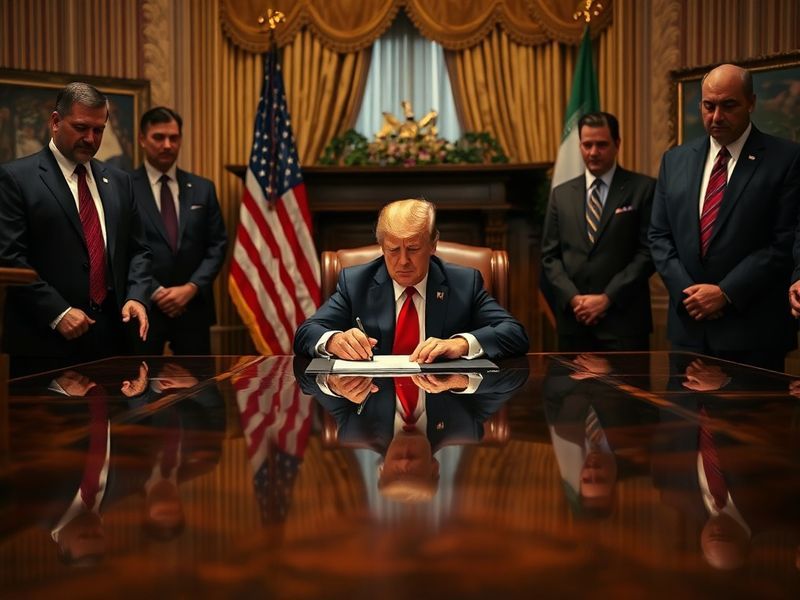
Donald Trump’s presidency marked a sharp departure from the Obama-era nuclear deal, known as the Joint Comprehensive Plan of Action (JCPOA). Signed in 2015, the JCPOA lifted economic sanctions on Iran in exchange for strict limits on its nuclear program. However, Trump withdrew from the agreement in May 2018, calling it “the worst deal ever negotiated.” His administration then reimposed sanctions, aiming to cripple Iran’s economy and force it back to the negotiating table under stricter terms.
The withdrawal was not just a policy shift—it reflected a broader ideological stance within the Trump administration. Officials argued that the JCPOA failed to address Iran’s ballistic missile program, its support for regional proxies, and its human rights record. Meanwhile, critics warned that abandoning the deal would isolate the U.S., alienate allies, and push Iran closer to Russia and China.
Despite the hardline rhetoric, moments of potential dialogue emerged. In 2019, after a series of escalating tensions—including attacks on oil tankers and the shooting down of a U.S. drone—Iran and the U.S. came close to military confrontation. A last-minute decision by Trump to abort a retaliatory strike reportedly included a consideration of a diplomatic off-ramp, though no formal talks materialized at the time.
Key Moments in Trump’s Iran Strategy
- May 2018: Trump announces U.S. withdrawal from the JCPOA and begins reimposing sanctions.
- November 2018: Full sanctions on Iran’s oil exports take effect, crippling its economy.
- June 2019: Attacks on two oil tankers in the Gulf of Oman raise fears of war.
- September 2019: Saudi oil facilities are attacked, blamed on Iranian-backed Houthi rebels.
- January 2020: U.S. drone strike kills Iranian General Qasem Soleimani, escalating tensions further.
Global Reactions: Allies, Rivals, and Regional Powers
The Trump administration’s Iran policy had ripple effects far beyond Washington and Tehran. European allies, including France, Germany, and the UK, remained committed to the JCPOA despite U.S. withdrawal. They established a special financial mechanism, INSTEX, to facilitate trade with Iran and bypass American sanctions. However, the system struggled to gain traction due to its limited scope and U.S. pressure on third-party nations.
Meanwhile, Russia and China seized the opportunity to deepen ties with Iran. Both countries condemned U.S. sanctions and continued trade, particularly in oil and infrastructure projects. This realignment underscored a growing divide between the U.S. and its traditional allies on one side, and a rising axis of resistance led by Iran, Russia, and China on the other.
In the Middle East, reactions were mixed. Israel, a key U.S. ally, welcomed the hardline stance, seeing it as a deterrent against Iranian influence in Syria and Lebanon. Saudi Arabia and the UAE, facing their own security concerns, also supported Trump’s approach, though they avoided direct confrontation. Meanwhile, Iraq and Lebanon—caught in the crossfire—struggled with the economic fallout of reduced Iranian trade and U.S. sanctions.
“The Trump administration’s ‘maximum pressure’ campaign did not bring Iran to its knees, but it did reshape the power dynamics in the region. Iran’s resilience in the face of sanctions forced both adversaries and allies to rethink their strategies.” — Middle East analyst at the International Crisis Group
Cultural and Economic Consequences
The impact of Trump’s Iran policy extended into cultural and economic spheres. In Iran, the reimposed sanctions led to hyperinflation, currency devaluation, and widespread protests. The Iranian rial lost over 60% of its value between 2018 and 2020, making basic goods unaffordable for many citizens. Despite government crackdowns on dissent, public frustration grew, culminating in nationwide protests in November 2019 over fuel price hikes.
Culturally, the U.S.-Iran standoff fueled a narrative of resistance in Iran. State media and hardline factions framed the sanctions as part of a broader “economic war” against the Islamic Republic. This rhetoric resonated with segments of the population, particularly among the youth, who had no memory of the pre-revolutionary era and viewed the U.S. as an eternal adversary.
On the global stage, the economic consequences were equally stark. Oil prices fluctuated wildly as markets reacted to geopolitical tensions. The loss of Iranian oil exports created supply gaps that were partially filled by Saudi Arabia and the U.S., but the uncertainty contributed to volatility in energy markets. For countries like India and China, which had relied on Iranian oil, the sanctions forced costly adjustments in supply chains and trade routes.
The Humanitarian Toll
Beyond the geopolitical and economic dimensions, the sanctions had a profound humanitarian impact. The U.S. government maintained exemptions for humanitarian goods, such as medicine and food, but in practice, financial restrictions made it difficult for Iranian banks to process transactions. Hospitals reported shortages of critical drugs, and international aid organizations struggled to deliver supplies. The U.S. Treasury Department insisted that humanitarian trade was not targeted, but the reality on the ground told a different story.
This humanitarian crisis was not confined to Iran. Neighboring countries, including Iraq and Afghanistan, also felt the ripple effects. Reduced Iranian trade disrupted supply chains, and economic instability in Iran led to a surge in migration flows, straining resources in host nations.
Legacy and Lessons for Future Diplomacy
As the Trump administration left office in January 2021, the future of U.S.-Iran relations remained uncertain. President Joe Biden signaled a willingness to rejoin the JCPOA, provided Iran returned to full compliance. However, Iran’s hardliners, emboldened by years of resistance, demanded sanctions relief before any negotiations. The stalemate highlighted the challenges of reversing course after years of escalation.
The Trump era’s Iran policy offers several lessons for future administrations. First, economic pressure alone is unlikely to force a regime change or alter a nation’s strategic calculus. Second, unilateral sanctions are more effective when backed by international consensus, which was absent in this case. Third, the humanitarian consequences of sanctions must be carefully weighed against political objectives.
Looking ahead, the Biden administration’s approach—combining diplomacy with targeted pressure—may offer a more sustainable path. Yet the U.S. must also reckon with the broader geopolitical shifts that Trump’s policies accelerated. The rise of China and Russia as counterweights to U.S. influence in the Middle East suggests that the region’s future will be shaped by a multipolar dynamic, where traditional alliances are increasingly fluid.
For now, the legacy of Trump’s Iran talks—or lack thereof—serves as a cautionary tale. It underscores the need for nuanced diplomacy, the limits of coercive tactics, and the enduring power of regional resistance in the face of external pressure.
As the world watches, the question remains: Can diplomacy break the cycle of escalation, or will the region continue to be trapped in a cycle of mistrust and confrontation?