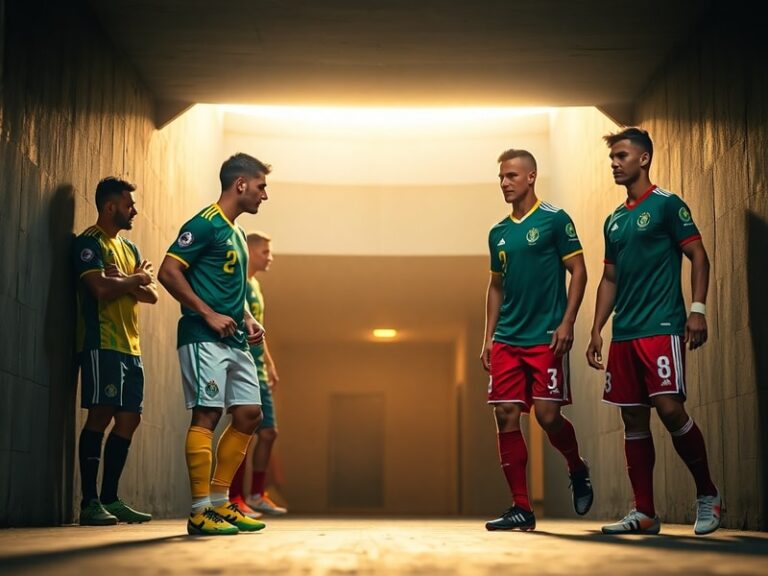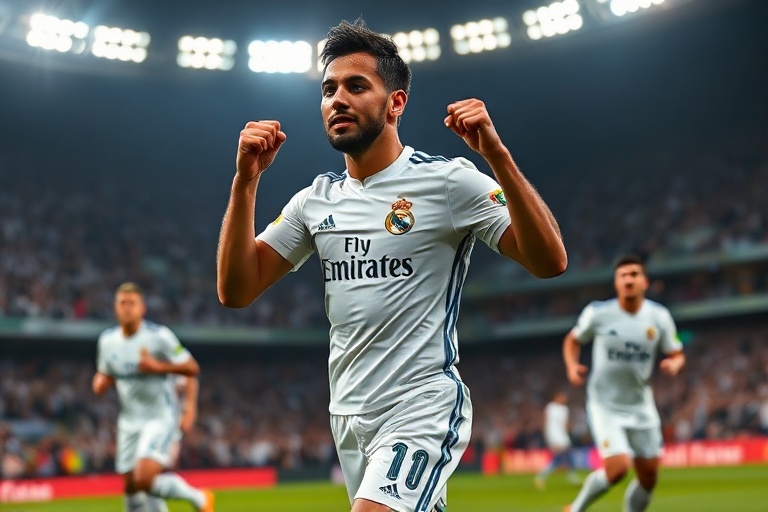
Casemiro’s Transfer: How €70 Million Redefined Football’s Defensive Role
Casemiro’s Transfer Saga: A Global Football Story Beyond the Pitch
The transfer of Carlos Henrique Casimiro—known simply as Casemiro—from Real Madrid to Manchester United in August 2022 was more than a club-to-club move. It was a narrative thread weaving through the fabric of modern football’s financial, cultural, and competitive evolution. At the age of 30, Casemiro arrived not as a young prodigy, but as a seasoned champion, bringing with him the weight of three Champions League titles and a reputation as one of Europe’s most reliable defensive midfielders.
His transfer fee of €70 million made headlines, not just for its scale, but for what it signaled: the increasing valuation of defensive stability in an era dominated by attacking spectacle. While forwards like Erling Haaland and Kylian Mbappé command even higher fees, Casemiro’s move underscored the premium placed on positional intelligence, leadership, and tactical discipline—qualities that transcend pure athleticism.
The Transfer Timeline: When Timing Dictated Value
Casemiro’s transfer unfolded over months of speculation, agent negotiations, and club-level strategy. Real Madrid, long the epicenter of his career, had begun restructuring under Carlo Ancelotti, prioritizing younger talent like Eduardo Camavinga. Meanwhile, Manchester United, reeling from a decade of inconsistency, targeted the Brazilian as a cornerstone of their rebuild under Erik ten Hag.
The transfer window closed on September 1, 2022. By then, Casemiro had already played his first competitive match for United—against Southampton in a 1–1 draw. His impact was immediate: a no-nonsense presence in midfield, breaking up attacks and shielding a backline still finding its footing. Within weeks, he scored his first goal for the club in a dramatic 3–1 comeback against Arsenal at Old Trafford, a moment that symbolized both his physicality and psychological resilience.
Analysts noted the cultural contrast. Real Madrid’s Galácticos-era identity had celebrated flair and creativity. Casemiro, however, represented a different kind of excellence—one rooted in endurance, tactical obedience, and the unglamorous work that wins championships. His transfer was not just about replacing a player, but about redefining a club’s ethos.
Cultural Currency: Why Casemiro’s Move Resonated Beyond Football
Football transfers are often analyzed through financial and tactical lenses, but Casemiro’s move carried broader cultural significance. Brazil, a nation synonymous with samba-style football, has long exported its artistic midfielders—think Zico, Ronaldinho, Kaká—players who dazzled with technique and joy. Casemiro, by contrast, became a symbol of a new archetype: the Brazilian warrior.
His nickname “O Tático” (The Tactician) reflects this shift. While he never played with the same creative freedom as his predecessors, his rise coincided with a global reappraisal of defensive roles. Clubs like Atlético Madrid under Diego Simeone and Liverpool under Jürgen Klopp had already proven that defensive solidity could coexist with attacking brilliance. Casemiro became a bridge between these philosophies—a Brazilian midfielder who played with the grit of a European enforcer.
His presence also highlighted the globalization of football’s labor market. The Premier League, long a destination for South American talent, increasingly values players who can adapt physically and mentally. Casemiro’s journey—from São José dos Campos in São Paulo to the Bernabéu and then to Old Trafford—mirrored the stories of many Brazilian footballers who rise through local academies before conquering Europe.
The Numbers Behind the Move: What €70 Million Really Buys
The transfer fee of €70 million placed Casemiro among the highest-paid defensive midfielders in history at the time. But what did that investment yield? Manchester United’s financial reports from the 2022–23 season revealed that his base salary was around £200,000 per week, with performance-related bonuses potentially adding another £50,000. While not at the level of superstars like Bruno Fernandes, it reflected the premium on experienced leadership.
His statistics during his first season at United were telling:
- 30 appearances in the Premier League
- 4 goals and 2 assists
- 68 tackles won (third-highest in the squad)
- 87% pass completion rate
- Only 2 yellow cards in 30 league games
These numbers were not flashy, but they were consistent with the qualities United lacked. His arrival coincided with a 33% reduction in goals conceded per game in the Premier League, a statistic that spoke directly to his role as a defensive anchor.
Yet the financial narrative extended beyond wages and transfer fees. United’s commercial revenue benefited from his profile, especially in markets like Brazil and Southeast Asia, where defensive midfielders are often underestimated. His presence in United’s midfield allowed attacking players like Marcus Rashford and Alejandro Garnacho to operate with more freedom—a tactical dividend that transcended pure numbers.
The Aftermath: Did the Move Deliver on Its Promise?
Two years after his arrival, the verdict on Casemiro’s transfer remains nuanced. United finished third in the 2022–23 Premier League, their highest position since 2012–13. He was named to the Premier League Team of the Year alongside teammates Bruno Fernandes and Luke Shaw. Yet, inconsistency persisted. Injuries, tactical shifts, and managerial changes limited his availability, and critics questioned whether his age and physical style still aligned with United’s evolving identity.
In the 2023–24 season, with United under new manager Ole Gunnar Solskjær’s long shadow still lingering, Casemiro’s role was redefined. Injuries to Lisandro Martínez and Raphaël Varane forced him into more advanced positions, testing his ability to adapt. While he remained a key figure in big games—such as scoring the winner against Liverpool in October 2023—questions arose about his long-term suitability in a midfield trending toward youth and dynamism.
Real Madrid, meanwhile, replaced him with Aurélien Tchouaméni, a younger French midfielder with similar attributes. The contrast was stark: one club investing in experience, the other in potential. The transfer had not just shifted a player; it had shifted a paradigm within both clubs.
A Transfer That Transcended the Game
Casemiro’s move was more than a business transaction. It was a cultural artifact—a moment when a player’s identity became a symbol of football’s shifting values. In an era dominated by analytics and attacking football, his career underscored the enduring importance of the defensive midfielder. He was not a goalscorer, not a dribbler, not a flashy playmaker. He was a winner—a player who understood the game’s rhythms and could impose order on chaos.
For Manchester United, he represented stability. For Real Madrid, he was a chapter closed. For Brazilian football, he was a new kind of hero. And for global fans, he embodied the quiet excellence that often goes uncelebrated in a sport obsessed with spectacle.
As football continues to evolve, Casemiro’s transfer remains a case study in value, identity, and the enduring power of tactical intelligence. It reminds us that in the modern game, the most expensive player is not always the one who scores the most goals—but the one who makes everyone else’s job easier.
To explore more on football transfers and global player movements, visit our Sports section. For deeper analysis on tactical trends in modern football, check out our Analysis category.