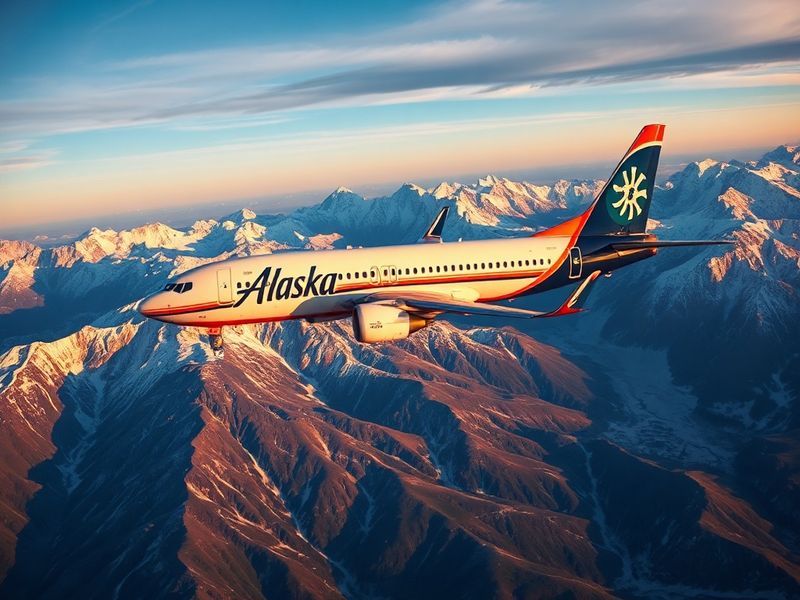
Alaska Airlines Expands Beyond Northwest with Strategic Growth
“`html
From Seattle Roots to Global Routes
Alaska Airlines began in 1932 as McGee Airways, a small airline operating out of Anchorage, Alaska. Over the decades, it evolved into a regional powerhouse, known for its reliability and customer service in a challenging operating environment. Today, the airline operates over 120 aircraft serving more than 120 destinations across the United States, Mexico, Canada, and Costa Rica. Its expansion reflects a broader trend in aviation: airlines from smaller markets increasingly compete on a global stage.
What sets Alaska Airlines apart is its commitment to maintaining a strong identity rooted in the Pacific Northwest. The airline’s headquarters remain in Seattle, where its distinctive logo—a stylized mountain peak—has become a familiar sight. This regional pride extends to its partnerships, including a long-standing relationship with Seattle’s sports teams and cultural institutions. Yet, the airline’s ambitions have grown far beyond its original service area.
The Fleet and Innovation Strategy
Alaska Airlines operates one of the youngest fleets in the United States, with an average aircraft age of just 8.4 years. This modern fleet includes Boeing 737s and Embraer E175s, optimized for efficiency and passenger comfort. The airline was an early adopter of Boeing’s 737 MAX, placing orders for 68 aircraft before the model’s temporary grounding in 2019. Its willingness to invest in new technology demonstrates a forward-thinking approach to aviation.
A key innovation is the airline’s use of satellite-based navigation systems, which allow for more direct flight paths and reduced fuel consumption. This not only lowers operational costs but also aligns with growing industry and consumer pressure to reduce carbon emissions. Alaska Airlines has also partnered with sustainable aviation fuel (SAF) providers, though supply remains a challenge. These efforts reflect a global shift in the industry toward environmental responsibility.
Customer Experience and Loyalty Programs
Alaska Airlines has built a reputation for customer service, consistently ranking among the top airlines in North America for on-time performance and baggage handling. Its loyalty program, Mileage Plan, is particularly noteworthy. Unlike many airline programs that rely on co-branded credit cards with banks, Mileage Plan operates independently, offering flexibility and generous redemption options. Members can earn miles not only through flights but also by shopping with business partners and using partner hotels and car rental services.
The airline’s focus on customer experience extends to its in-flight offerings. While it does not operate a first-class cabin, Alaska Airlines provides complimentary meals and non-alcoholic beverages on most flights, a rarity among U.S. carriers. Its partnership with Westin Hotels to offer premium sleep kits on select routes further enhances its appeal to business travelers. These small but meaningful touches contribute to a loyal customer base that values consistency over luxury.
Strategic Acquisitions and Market Expansion
Alaska Airlines’ growth has been marked by strategic acquisitions. The most significant was its merger with Virgin America in 2016, a deal that expanded its reach to major cities like Los Angeles, San Francisco, and New York. The integration of Virgin America’s fleet and routes was a complex process, but Alaska Airlines managed it with minimal disruption to service. This acquisition also brought a younger, urban demographic to its customer base, diversifying its appeal.
More recently, the airline announced plans to acquire Hawaiian Airlines, subject to regulatory approval. If completed, this deal would create a stronger West Coast hub, connecting Alaska’s Pacific Northwest operations with Hawaiian’s extensive network in the Pacific. The merger would also introduce new international routes, particularly in Asia, where both airlines have limited but growing presence. This move underscores a broader trend in aviation: consolidation as airlines seek to compete with global giants like Delta and United.
Challenges and Competitive Pressures
Despite its strengths, Alaska Airlines faces challenges. Fuel costs remain a significant expense, and labor shortages have disrupted operations at times. The airline has also had to navigate the complexities of integrating different corporate cultures, particularly after the Virgin America merger. Competition is fierce, especially from low-cost carriers like Spirit and Frontier, which pressure legacy airlines to reduce fares while maintaining service quality.
Another challenge is the airline’s geographic concentration. While Alaska Airlines dominates in the Pacific Northwest, it lacks a strong foothold in the Midwest and East Coast, where major competitors operate hubs. Expanding in these regions would require significant investment and strategic partnerships, which may be difficult given the current economic climate. However, the Hawaiian Airlines acquisition could provide a foothold in the central Pacific, bridging the gap between its existing routes.
The Cultural Impact of a Regional Airline
Alaska Airlines is more than a transportation provider; it is a cultural institution in the Pacific Northwest. The airline’s marketing often highlights the region’s outdoor lifestyle, featuring images of mountains, forests, and wildlife. This branding resonates with locals and tourists alike, reinforcing a sense of identity. The airline’s “Day of Service” initiative, where employees volunteer in local communities, further strengthens its ties to the region.
Globally, Alaska Airlines serves as an example of how regional airlines can compete on a larger scale without losing their local identity. Its success story contrasts with the challenges faced by legacy carriers that have struggled to maintain relevance in a changing market. By focusing on customer service, innovation, and strategic growth, Alaska Airlines has carved out a unique position in the industry.
Looking Ahead: What’s Next for Alaska Airlines?
The future of Alaska Airlines will likely be shaped by three key factors: sustainability, technology, and consolidation. As the aviation industry grapples with climate change, the airline’s investments in SAF and fuel-efficient aircraft will be critical. Technological advancements, such as AI-driven customer service and automated baggage handling, could further enhance efficiency. And with the potential Hawaiian Airlines merger, the airline may continue to expand its footprint, though regulatory hurdles remain.
One thing is certain: Alaska Airlines will continue to prioritize its core values—reliability, customer service, and regional pride—while adapting to a rapidly changing industry. In an era where air travel is increasingly commoditized, the airline’s ability to differentiate itself will be its greatest asset. Whether it remains an independent entity or becomes part of a larger network, Alaska Airlines will likely remain a model for how regional airlines can thrive on the global stage.
For travelers, this means more options, better service, and a connection to the spirit of the Pacific Northwest, no matter where they’re headed.