Lyrid Meteor Showers: Your Guide to April’s Celestial Show
“`html
Lyrid Meteor Showers: A Global Guide to April’s Celestial Display
The Lyrid meteor shower, one of the oldest known meteor showers, graces the night sky every April. Documented as early as 687 BCE by Chinese astronomers, this annual event offers stargazers a chance to witness up to 20 meteors per hour during its peak. Unlike more intense meteor showers like the Perseids or Geminids, the Lyrids provide a subtle yet consistent spectacle that has captivated cultures across centuries.
What sets the Lyrids apart is their unpredictability. While typically mild, they occasionally produce dazzling outbursts of up to 100 meteors per hour—a phenomenon known as a “Lyrid meteor storm.” These rare events have historically sparked wonder and even fear, embedding the shower in global folklore and scientific curiosity alike.
The Science Behind the Lyrids
The Lyrid meteor shower originates from the debris trail of Comet Thatcher (C/1861 G1), a long-period comet that orbits the sun once every 415 years. As Earth passes through this debris field each April, particles—often no larger than a grain of sand—enter our atmosphere at speeds up to 110,000 mph. The intense friction causes these particles to burn up, creating the streaks of light we recognize as meteors.
Meteor showers are named after the constellation from which they appear to radiate. In the case of the Lyrids, the radiant point lies near Vega, the brightest star in the constellation Lyra. This positioning makes the shower easier to observe in the Northern Hemisphere, though it remains visible from many southern latitudes as well.
Scientists monitor the Lyrids closely for signs of heightened activity. The last significant outburst occurred in 1982, when observers in the U.S. reported rates of nearly 100 meteors per hour. While such events are rare, they underscore the dynamic nature of meteor showers and their connection to the solar system’s ancient history.
A Global Phenomenon with Cultural Roots
The Lyrid meteor shower has left its mark on human history across continents. In ancient China, records from the Han Dynasty describe “stars falling like rain,” a poetic reference to the shower’s intensity during recorded outbursts. Meanwhile, the Zuni people of North America traditionally associated the Lyrids with the return of the “Corn Moon,” a time for planting and renewal.
In Greek mythology, the Lyrids were sometimes linked to Orpheus, the musician whose lyre was placed in the sky as the constellation Lyra. The shower’s appearance in April aligned with spring festivals celebrating rebirth—a theme echoed in many cultures’ interpretations of the event.
Even today, the Lyrids inspire gatherings worldwide. From organized stargazing events in national parks to amateur astronomy clubs hosting public viewings, communities come together to share in the wonder of the night sky. In Japan, for example, the shower coincides with the Hanami season, blending celestial observation with cherry blossom celebrations.
How to Observe the Lyrids in 2024
Viewing the Lyrid meteor shower requires minimal equipment—just a dark sky, patience, and clear weather. The 2024 peak is expected on the night of April 21-22, though meteors may be visible from April 16-25. The best time to observe is after midnight, when the radiant point is highest in the sky.
For optimal viewing, follow these steps:
- Find a dark location: Light pollution from cities can obscure meteors. Seek out rural areas or designated dark-sky preserves.
- Allow time for your eyes to adjust: It takes about 30 minutes for night vision to fully develop.
- Look toward the radiant point: While meteors can appear anywhere, focusing on Lyra increases your chances of spotting them.
- Avoid screens: Bright phone or camera screens can disrupt night vision.
- Dress warmly: April nights can be chilly, especially in higher elevations.
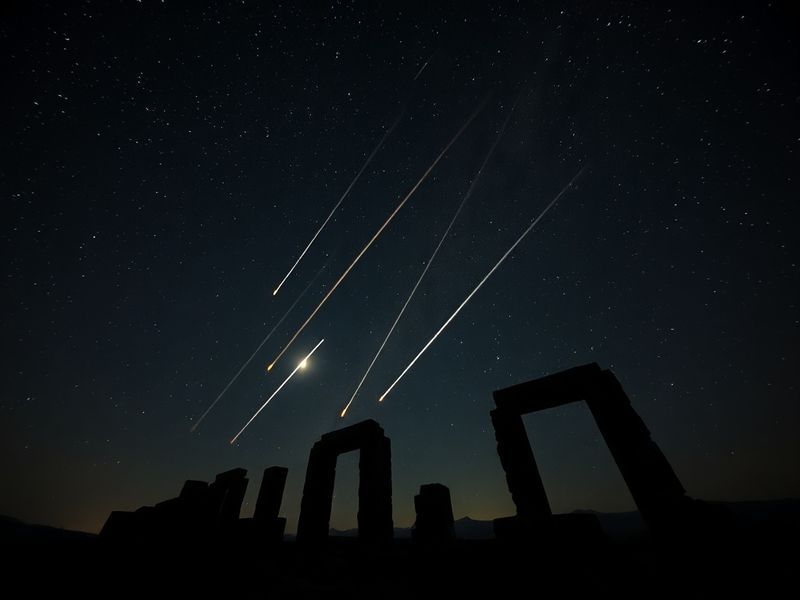
Photographers can capture the Lyrids with a tripod-mounted camera and a wide-angle lens. Long exposures (10-30 seconds) will reveal meteor trails, though patience is key—dedicated astrophotographers often spend hours waiting for the perfect shot.
The Lyrids in the Modern Era
In an age dominated by digital distractions, the Lyrids offer a rare opportunity to disconnect and reconnect with the cosmos. Organizations like the International Dark-Sky Association advocate for preserving night skies, highlighting events like the Lyrids as reminders of our place in the universe.
Citizen science projects, such as NASA’s Meteor Counter app, allow enthusiasts to contribute data to ongoing research. These efforts help astronomers track the Lyrids’ activity and predict future outbursts, blending ancient wonder with modern technology.
The Lyrids also serve as a gateway for new astronomers. Their accessibility—no specialized equipment required—makes them an ideal introduction to meteor observation. Schools and science educators often use the shower to teach about astronomy, orbital mechanics, and the history of human observation.
As we look to the future, the Lyrids remind us that the universe is not static. Each year, the same particles that once inspired ancient poets continue to streak across our skies, offering a fleeting but profound connection to the past and the mysteries yet to be uncovered.