Brian Hooker: The Scientist Turned Controversial Vaccine Advocate
“`html
Brian Hooker: Controversial Figure in Science and Advocacy
Brian S. Hooker has emerged as a polarizing figure in public health debates, particularly regarding vaccination and autism research. His career spans academia, advocacy, and activism, often placing him at the center of intense scrutiny. While some view him as a champion of parental rights and scientific integrity, others dismiss his claims as fringe or misleading. This complexity makes his story worth examining beyond the headlines.
Early Career and Academic Background
Hooker holds a Ph.D. in biochemical engineering from the University of California, Davis, where he focused on metabolic engineering and microbial biotechnology. His early work in academia involved research on metabolic pathways in microorganisms, publishing in peer-reviewed journals. For over a decade, he balanced teaching and research at universities, including California State University.
By the mid-2000s, Hooker’s research trajectory shifted toward public health controversies. His interest in autism and vaccines began to dominate his professional narrative, a pivot that would later define his public identity. Colleagues from this period describe him as methodical and passionate, though not yet a figure of public contention.
The Autism-Vaccine Controversy and Public Role
Hooker gained widespread attention in 2014 when he published a controversial study in the journal Translational Neurodegeneration, suggesting a link between the MMR vaccine and autism in African American boys. The study was later retracted due to serious methodological flaws and ethical concerns. Despite this, the paper fueled ongoing debates about vaccine safety and government transparency.
His role in the 2014 controversy was not isolated. Hooker had previously worked with Andrew Wakefield, the discredited British doctor whose 1998 study in The Lancet falsely linked the MMR vaccine to autism. While Hooker distanced himself from Wakefield in later years, their collaboration cemented his reputation in anti-vaccine circles.
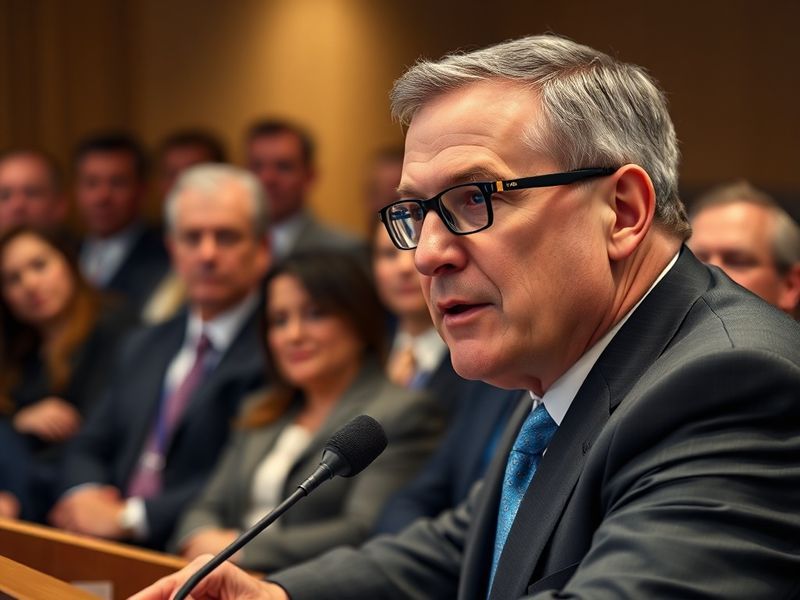
Hooker’s advocacy expanded beyond research. He became a vocal speaker at conferences and in media appearances, often criticizing the Centers for Disease Control and Prevention (CDC) for alleged cover-ups. His claims, though widely disputed by the scientific community, resonated with parents seeking answers about autism diagnoses.
Global Reach and Cultural Impact
Hooker’s influence extends beyond the United States. In Europe, where vaccine skepticism has deep historical roots, his arguments found receptive audiences. Countries like France and Italy have seen rising vaccine hesitancy, partly fueled by misinformation spread through social media and alternative health communities.
In Africa, where vaccine-preventable diseases remain a major public health threat, Hooker’s claims have been met with skepticism. Health officials in nations like Nigeria and Kenya have emphasized the life-saving role of vaccines, citing decades of successful immunization programs. Yet, the spread of misinformation—amplified by global platforms—has complicated these efforts.
This cultural divide highlights a broader tension: the clash between scientific consensus and individual narratives. Hooker’s story reflects how personal anecdotes and distrust in institutions can overshadow empirical evidence, especially in an era of digital echo chambers.
Legal and Professional Consequences
Hooker’s career has faced significant repercussions. In 2019, he was barred from serving as an expert witness in vaccine-related litigation due to his lack of credibility in the scientific community. Courts have repeatedly rejected his testimony, citing conflicts of interest and unreliable methodology.
His academic affiliations also suffered. Universities where he once taught distanced themselves from his public statements. While he retained his Ph.D., the erosion of professional trust limited his opportunities in formal research settings.
Despite these setbacks, Hooker has continued to publish through alternative channels. He operates a website and YouTube channel where he critiques vaccine policies and interviews other critics. These platforms provide him with a direct line to supporters, bypassing traditional gatekeepers of scientific discourse.
Broader Implications for Science Communication
Hooker’s career raises critical questions about the responsibility of scientists in public debates. While academic freedom allows researchers to explore controversial topics, the line between skepticism and misinformation can blur quickly. Hooker’s case demonstrates how advocacy can overshadow evidence-based inquiry, particularly when it aligns with preexisting beliefs.
Social media has amplified his reach. Platforms like Facebook and Twitter have struggled to balance free speech with the spread of harmful falsehoods. Hooker’s followers often share his content widely, creating viral misinformation that public health officials must counter.
This dynamic is not unique to vaccines. Similar patterns have emerged around climate change, GMOs, and COVID-19. Hooker’s story is a microcosm of a larger challenge: how to engage with contentious issues without amplifying disinformation.
Lessons from the Hooker Case
For journalists and readers alike, Hooker’s trajectory offers several lessons. First, the importance of source verification cannot be overstated. His retracted study serves as a cautionary tale about the dangers of prioritizing narrative over rigor.
Second, public figures in science advocacy must be held accountable. While scientists should engage with the public, they must also adhere to ethical standards and transparency. Hooker’s failure to do so has had real-world consequences, including reduced vaccination rates in some communities.
Finally, the case underscores the need for better science communication. Researchers, journalists, and educators must work together to bridge gaps between complex science and public understanding. Initiatives like science literacy programs play a vital role in countering misinformation.
Conclusion
Brian Hooker’s career is a study in contradiction: a trained scientist turned controversial advocate, a researcher whose work was discredited yet whose influence persists. His story is not just about vaccines or autism—it is about the power of narrative in shaping public perception. In an age where trust in institutions is fragile, figures like Hooker remind us of the delicate balance between free speech and factual integrity.
As debates over public health continue, Hooker’s legacy will likely endure in the shadows of the internet, cited by those who reject mainstream science. For the rest of us, his case is a call to remain vigilant, to question claims rigorously, and to prioritize evidence over emotion. The stakes—lives saved or lost—are too high to do otherwise.