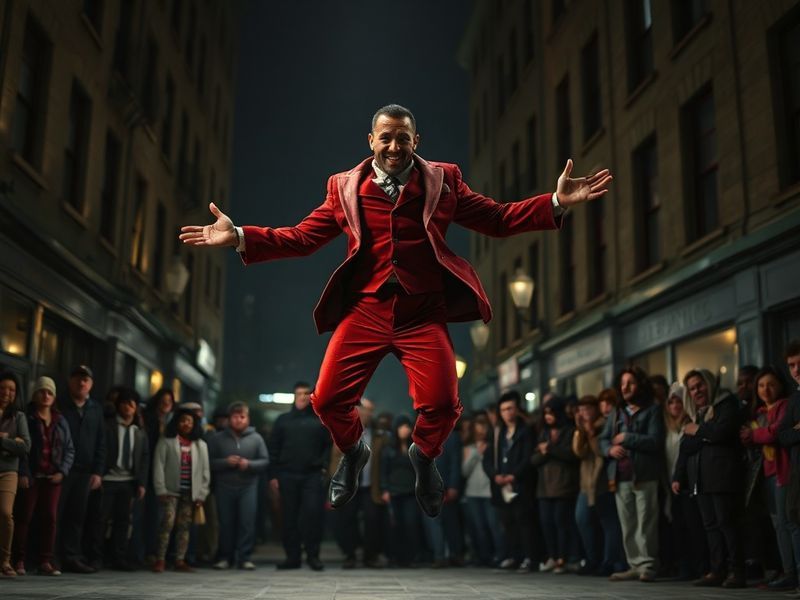
The Audacity Show: How Global Performers Are Redefining Boldness on Stage
The Audacity Show has become a cultural touchstone for performers who refuse to play it safe. Originating as a niche underground event, it has evolved into a global phenomenon where artists, comedians, and musicians push boundaries in front of live audiences. The show’s defining feature isn’t just its edgy content—it’s the unapologetic confidence of its participants, who treat audacity as an art form.
What started as a small-scale production in New York has since spread to London, Tokyo, and Berlin, each iteration adapting to local tastes while retaining its core ethos. Performers on The Audacity Show aren’t just entertaining; they’re provoking, challenging norms, and often leaving audiences divided. This isn’t a show for the faint of heart—it’s a celebration of unfiltered expression.
The Origins of a Provocative Format
The Audacity Show began in 2018 as an experiment in raw performance art. Its creator, a former theater director named Elena Vasquez, wanted to create a platform where artists could showcase work that defied conventional storytelling. The initial concept was simple: no topic was off-limits, no joke too offensive, no idea too radical—so long as it was executed with conviction.
Early performances featured a mix of spoken-word poets, avant-garde musicians, and stand-up comedians who thrived on controversy. One of the show’s first viral moments came when a comedian roasted a seated politician in the audience, leading to both applause and walkouts. This duality—simultaneous admiration and backlash—became a hallmark of The Audacity Show’s appeal.
Global Adaptations: When Audacity Translates Across Cultures
The show’s international expansion has revealed fascinating cultural differences in what audiences consider “audacious.” In Tokyo, performers blend traditional storytelling with surreal, often unsettling visuals, drawing from Japan’s deep history of avant-garde theater. Meanwhile, in Berlin, the show leans into political satire, reflecting the city’s long-standing tradition of artistic rebellion.
Not all adaptations have been smooth. In Dubai, a planned run of The Audacity Show was canceled after local authorities deemed certain acts “inappropriate.” The incident sparked debates about artistic freedom in regions where censorship remains strict. Conversely, in Buenos Aires, the show became a symbol of resistance during economic turmoil, with performers using the platform to critique government policies.
Despite these challenges, the show’s adaptability has been key to its survival. Performers often tailor their acts to local sensitivities, ensuring the message lands without crossing invisible lines. This flexibility has allowed The Audacity Show to thrive in markets where other edgy productions might struggle.
Why Audiences Can’t Look Away
The allure of The Audacity Show lies in its unpredictability. Unlike scripted performances, many acts are improvised, leaving both performers and audiences on edge. This spontaneity creates a sense of danger, as if anything could happen at any moment. Social media has amplified this effect, with clips of the most outrageous moments spreading rapidly across platforms.
Psychologists suggest that audiences are drawn to audacity because it satisfies a primal curiosity about the forbidden. There’s a thrill in witnessing someone say or do what we’ve only dared to imagine. The show’s producers lean into this psychology, often curating lineups that balance shock value with artistic merit.
Yet, the show isn’t without its critics. Some argue that audacity for its own sake lacks substance, reducing performance to mere shock tactics. Others claim the show exploits controversy for attention, blurring the line between art and spectacle. These critiques aren’t unfounded—The Audacity Show has had its share of misfires, where performers crossed from bold to simply offensive.
What’s Next for The Audacity Show?
The future of the show may lie in its ability to evolve. As audiences grow more desensitized to shock value, performers are experimenting with new forms of audacity—subtle subversion, meta-commentary, and interactive experiences that blur the line between performer and spectator. Some speculate that The Audacity Show could eventually transition into a digital format, allowing for even more boundary-pushing content.
One thing is certain: the show’s legacy will be defined by its willingness to take risks. In an era where much of entertainment is sanitized for mass appeal, The Audacity Show stands as a reminder that art doesn’t always have to be comfortable. Sometimes, it just has to be unforgettable.
For those eager to experience the show firsthand, upcoming dates are available on the official Entertainment page. Whether you’re a fan of bold performances or simply curious about the phenomenon, one thing is guaranteed—you won’t leave unchanged.