Tornado Near Me: Safety Tips and What to Do When One Strikes
“`html
Tornado Near Me: How to Stay Safe and Prepared
When a tornado warning blares on your phone or a weather alert interrupts your evening, the words “tornado near me” can spark immediate concern. These natural events, while rare in many regions, pose serious risks where they occur. Understanding the science behind tornadoes, knowing how to respond, and staying informed can make all the difference between safety and danger.
What Exactly Is a Tornado and How Does It Form?
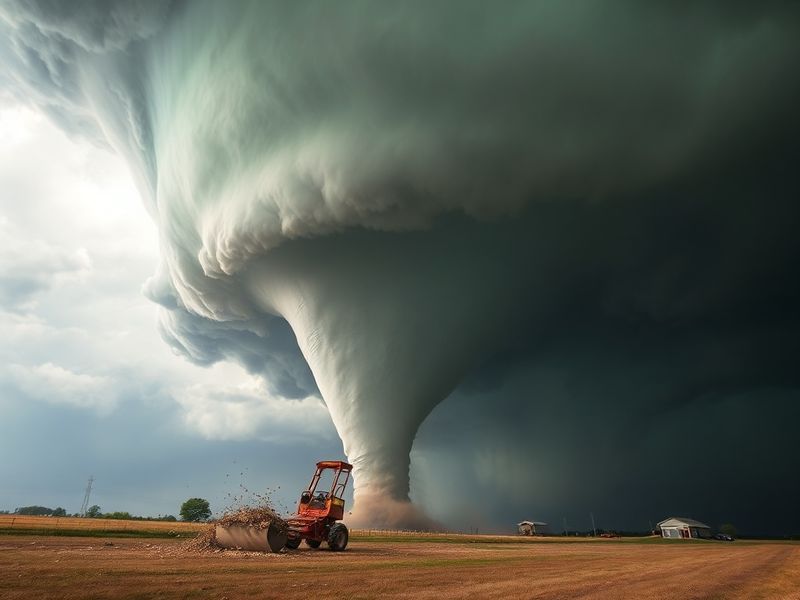
A tornado is a violently rotating column of air extending from a thunderstorm to the ground. These storms develop under specific atmospheric conditions, typically where warm, moist air collides with cooler, dry air. The result? A funnel cloud that becomes a tornado when it touches down.
Most tornadoes form from supercell thunderstorms—intense, long-lasting storms with a rotating updraft known as a mesocyclone. While the average tornado lasts only a few minutes and travels less than a mile, some can persist for over an hour and cover distances exceeding 50 miles. The Enhanced Fujita Scale (EF-Scale) ranks tornadoes from EF0 (weak, 65–85 mph winds) to EF5 (violent, over 200 mph), with the latter capable of devastating entire neighborhoods.
Not all regions are equally vulnerable. Tornado Alley in the central U.S. remains the most active zone, but tornadoes have been recorded in every state. Climate change may be altering patterns, with some research suggesting an eastward shift in tornado activity toward the Mississippi River Valley and Southeast.
What to Do When a Tornado Is Near You
Reaction time is critical. The National Weather Service issues warnings only when a tornado has been sighted or detected by radar. If you receive a tornado warning, take action immediately. Here’s what to do:
- Seek Shelter Below Ground: A basement or storm shelter is the safest place. Get under a sturdy table or cover yourself with a mattress or heavy blankets to protect against flying debris.
- No Basement? Go to an Interior Room: Choose a small, windowless room on the lowest floor—like a bathroom, closet, or interior hallway. Put as many walls between you and the outside as possible.
- Stay Away from Windows: Glass can shatter from high winds or flying objects. Even if you see the tornado, do not attempt to watch it approach.
- Cover Your Head and Neck: Use your arms, a helmet, or heavy clothing to shield against injury.
- Mobile Homes Are Not Safe: If you live in a mobile home, evacuate immediately to a designated storm shelter or sturdy building. Mobile homes can be flipped or destroyed even by weak tornadoes.
- In a Vehicle? Do Not Try to Outrun It: If possible, drive to the nearest sturdy building. If escape isn’t an option, park safely, buckle up, and cover your head. Avoid seeking shelter under highway overpasses—they can act as wind tunnels and increase danger.
Preparation before a storm is just as important. Create an emergency kit with water, non-perishable food, a flashlight, batteries, a first-aid kit, and a portable phone charger. Keep important documents in a waterproof container. Practice your tornado drill with family members, including pets, so everyone knows where to go and what to do.
How Technology Is Changing Tornado Detection and Response
Advances in meteorology are improving warning times and accuracy. Doppler radar systems, like those used by the National Weather Service, detect rotation within storms, giving forecasters critical minutes to issue warnings. Dual-polarization radar, now standard across the U.S., helps distinguish between rain, hail, and debris, reducing false alarms.
Emerging tools include machine learning models that analyze atmospheric data to predict tornado likelihood up to an hour in advance. While not yet operational for public use, these systems could revolutionize early warning by identifying subtle storm characteristics that human forecasters might miss.
On the ground, apps like the NWS’s Wireless Emergency Alerts (WEA) and private services like Dave’s Locker News deliver real-time warnings based on your location. Social media also plays a role, with local officials and storm spotters sharing live updates during severe weather. However, misinformation can spread quickly—always verify alerts through official sources like the NWS or local emergency management.
Broader Implications: Climate Change and Tornado Patterns
The relationship between climate change and tornado frequency remains an active area of research. While no single event can be directly attributed to global warming, scientists have observed shifts in tornado behavior. Studies published in Nature Communications and the American Meteorological Society’s Journal of Climate suggest that tornado outbreaks—clusters of multiple tornadoes—are becoming more common in the Southeast and Mid-Atlantic regions, areas historically less prone to such storms.
This eastward shift may increase risks in highly populated areas with older infrastructure and less experience in tornado preparedness. Urban sprawl also means that when a tornado does strike, it’s more likely to impact homes, businesses, and critical services.
Another concern is the increasing difficulty in forecasting. Warmer temperatures can intensify thunderstorms, but they can also create environments where tornadoes form rapidly with little warning. This “nowcasting” challenge demands better radar technology, improved modeling, and community education.
Community Resilience: Building a Tornado-Ready Society
Tornadoes don’t just threaten individuals—they test entire communities. After a major tornado, recovery can take years. Local governments and organizations play a vital role in resilience. That includes designating and publicizing storm shelters, enforcing stronger building codes in high-risk areas, and funding early warning systems in vulnerable neighborhoods.
Public awareness campaigns have proven effective. For example, after devastating tornadoes in Moore, Oklahoma, in 2013 and 2015, the city invested in underground shelters for schools and community centers. The result? Zero tornado-related fatalities in those facilities during subsequent storms.
Individual preparedness complements these efforts. Neighbors checking on elderly or disabled residents during warnings, schools holding regular tornado drills, and businesses backing up critical data off-site—all these actions build a culture of safety.
Final Thoughts: Stay Informed, Stay Prepared
When you search “tornado near me,” the outcome depends on preparation, not luck. While we can’t control the weather, we can control how we respond. Staying informed through reliable sources, having a plan, and practicing it regularly are the best defenses against one of nature’s most unpredictable forces.
Tornadoes remind us of nature’s power, but they also show the strength of human resilience. In the face of danger, communities that prepare, communicate, and act together are the ones that recover fastest and safest.
For more insights on weather-related safety and emergency preparedness, visit Dave’s Locker News and explore our in-depth coverage of severe weather trends and survival strategies.