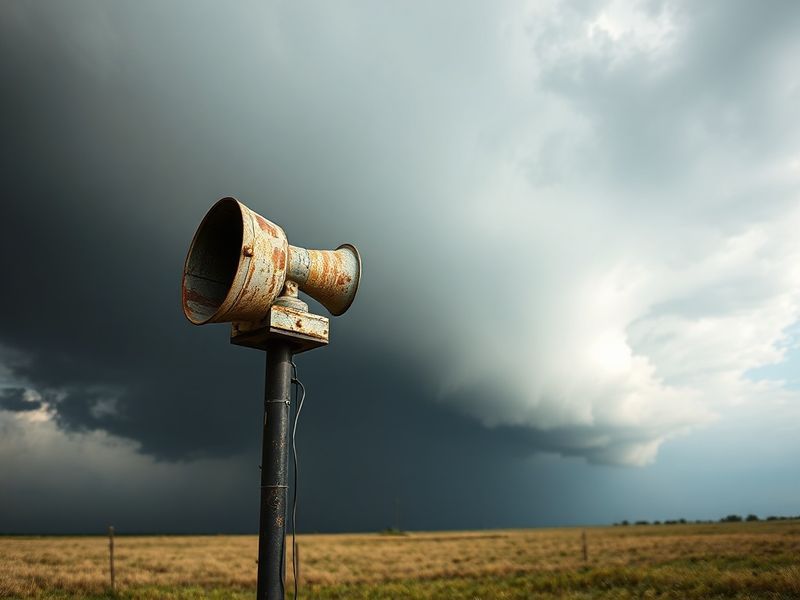
The tornado siren stands as one of the most recognizable emergency alert systems in the United States, designed to warn communities of imminent severe weather. Its wailing sound has become synonymous with danger and urgency, cutting through the quiet of a neighborhood in seconds. But beyond its immediate purpose, the tornado siren represents a blend of technology, public safety policy, and community preparedness.
While modern communication has expanded with smartphones and emergency alerts, the physical siren remains a critical component of disaster readiness. Its existence reflects a long-standing commitment to protecting lives through audible warnings, even as digital alternatives evolve. To understand its significance, it’s essential to explore its origins, functionality, and the broader implications of its use in today’s world.
The Origins and Evolution of Tornado Sirens
The first tornado sirens were introduced in the mid-20th century, a response to the increasing frequency and destructiveness of tornadoes in the American Midwest. Before their development, communities relied on word-of-mouth, church bells, or even train whistles to signal danger. The need for a standardized, far-reaching alert system became evident after devastating tornado outbreaks, such as the 1925 Tri-State Tornado, which claimed over 600 lives.
By the 1950s and 1960s, cities began installing outdoor warning sirens, often mounted on tall poles or water towers. These early models were electromechanical, producing a loud, pulsating wail that could be heard for miles. Over time, advancements in technology led to electronic sirens, which offered greater reliability and the ability to broadcast voice messages. Today, many sirens are integrated with automated systems that activate based on weather data from the National Weather Service.
The transition from manual activation to automated systems marked a significant shift. In the past, sirens were often sounded by local officials or police officers, who had to make split-second decisions based on limited information. Now, with real-time meteorological data, sirens can be triggered with greater accuracy, reducing false alarms and increasing public trust in the system.
How Tornado Sirens Function Today
Modern tornado sirens are designed to be heard outdoors, where people may be working, exercising, or otherwise away from indoor alert systems like televisions or smartphones. Their primary purpose is to prompt individuals to seek shelter and tune into further instructions via radio or other media. A typical siren cycle lasts between three and five minutes, though some systems allow for longer durations in extended emergencies.
There are two main types of tornado sirens:
- Electromechanical sirens: These use a rotating drum or blade to produce sound, often resulting in a distinctive “chopping” effect. They are durable and can operate for extended periods on backup power.
- Electronic sirens: These rely on recorded tones or synthesized voices to broadcast alerts. They are more versatile, allowing for different warning messages and tones for various emergencies, such as severe thunderstorms or hazardous materials spills.
Activation protocols vary by region. In some areas, sirens sound only when a tornado warning is issued by the National Weather Service, while others activate for high winds, large hail, or other life-threatening conditions. The decision to sound a siren often involves coordination between local emergency management agencies, meteorologists, and law enforcement.
Despite their effectiveness, tornado sirens are not without limitations. Their outdoor focus means they may not be heard indoors, especially in noisy environments or buildings with poor sound insulation. Additionally, their audibility can be affected by terrain, buildings, and weather conditions, such as heavy rain or wind.
The Role of Tornado Sirens in Public Safety and Preparedness
Tornado sirens play a crucial role in public safety by providing a last-line alert system for communities. While smartphones and emergency alert systems (like Wireless Emergency Alerts) have become more prevalent, sirens remain a vital tool for reaching individuals who may not have access to digital devices or who are outdoors when a warning is issued.
The psychological impact of a siren should not be underestimated. The sudden, loud noise triggers an immediate response, cutting through distractions and prompting action. This is particularly important in areas prone to tornadoes, where seconds can mean the difference between life and death. Studies have shown that communities with well-established siren systems experience higher rates of compliance with sheltering instructions during severe weather events.
However, the effectiveness of tornado sirens depends on public awareness and education. Many people, especially newcomers to tornado-prone regions, may not know what to do when they hear a siren. Emergency management agencies often conduct drills and outreach programs to ensure residents understand the difference between a “test” siren and a real warning, as well as the appropriate actions to take, such as moving to an interior room on the lowest floor of a building.
Another consideration is the balance between caution and complacency. Frequent false alarms or overuse of sirens can lead to “warning fatigue,” where people become desensitized to the sound and may ignore it. Emergency managers must carefully calibrate when and how sirens are used to maintain their credibility and urgency.
Challenges and the Future of Tornado Sirens
As technology advances, the future of tornado sirens is likely to involve greater integration with digital alert systems. Some communities are already testing sirens that can be activated remotely via smartphone apps or automated weather systems, reducing the need for human intervention. Others are exploring the use of sirens with directional speakers, which can focus sound in specific areas to minimize noise pollution and reduce false alarms.
Yet, challenges remain. Funding for siren maintenance and upgrades can be inconsistent, particularly in rural or economically disadvantaged areas. Additionally, the rise of social media and instant communication has led some to question the necessity of sirens, arguing that digital alerts are faster and more precise. However, sirens still serve a critical role in reaching people who may not have access to or be monitoring digital channels.
Another challenge is ensuring that tornado sirens are inclusive. People with hearing impairments or those who are asleep may not hear the siren, highlighting the need for multiple layers of alerting. Many communities are now supplementing sirens with text alerts, flashing lights, and other methods to ensure no one is left uninformed during an emergency.
Ultimately, the tornado siren remains a symbol of resilience and preparedness. It represents a community’s commitment to protecting its residents, even in the face of unpredictable and destructive forces of nature. As technology evolves, so too will the systems designed to keep people safe, but the core purpose of the siren—to provide a clear, immediate warning—will endure.
For those interested in learning more about emergency preparedness or severe weather, resources are available from organizations like the National Weather Service and local emergency management agencies. Additionally, understanding the specific risks in your area can help you stay informed and ready when severe weather strikes.