Since its debut in 1957, the Nissan Skyline has evolved from a humble coupe into one of the most revered performance cars in automotive history. More than just a vehicle, it represents Japan’s engineering prowess and the global rise of JDM culture. The Skyline’s journey—marked by innovation, motorsport dominance, and cinematic fame—has cemented its place in the pantheon of automotive legends.
The Skyline’s Humble Origins and Early Evolution
Introduced as the Prince Skyline in 1957, this compact sedan was originally developed by Prince Motor Company before Nissan’s acquisition in 1966. The early models prioritized practicality and reliability, featuring a 1.5-liter inline-four engine and a focus on durability. These first-generation Skylines, with their boxy designs and simple mechanics, were built to withstand Japan’s challenging post-war roads.
By the late 1960s, the Skyline began shifting toward performance. The introduction of the S57 Skyline 1500 Sprint in 1967 marked a turning point, offering a twin-carbureted version that delivered 70 horsepower—modest by today’s standards but revolutionary for its time. The S57 GT, released in 1968, became the first Skyline to feature a four-door body while retaining sporty ambitions. These early adaptations laid the groundwork for what would eventually become the GT-R.
The transition from Prince to Nissan brought significant changes. The C10 Skyline debuted in 1972 under Nissan’s banner, featuring a more refined design and improved engineering. This generation introduced the iconic “Kenmeri” Skyline, named after a famous advertising campaign featuring a young couple (Ken and Mary). While still primarily a family car, the C10 planted the seeds for the Skyline’s performance future.
The Birth of the GT-R and Motorsport Dominance
The GT-R badge first appeared in 1969 with the introduction of the PGC10 Skyline GT-R. Powered by a 2.0-liter DOHC inline-six engine producing 160 horsepower, this car was designed for one purpose: to dominate on the racetrack. The GT-R’s nickname, “Hakosuka” (from “hako,” meaning box, and “suka” from Skyline), reflected its boxy, unassuming appearance hiding incredible performance.
The GT-R’s racing pedigree began almost immediately. In its first year, it claimed victory in the Japanese Grand Prix at the Fuji Speedway, defeating more established European competitors. This success continued throughout the 1970s, with the GT-R winning 50 races in its first three years—a record that remains unmatched in Japanese motorsport history. The car’s racing dominance wasn’t just about raw speed; its robust engineering and driver-focused design made it a formidable competitor.
The B210 GT-R, introduced in 1973, represented the second generation of the legendary lineage. While facing stricter emissions regulations, it continued the GT-R’s winning tradition, securing numerous victories in domestic racing series. These early GT-R models established a reputation for reliability and performance that would define the Skyline brand for decades to come.
The R32 GT-R and the Rise of JDM Culture
The fourth-generation R32 Skyline GT-R, introduced in 1989, represents the pinnacle of the car’s evolution. Often called the “God of Thunder,” the R32 GT-R featured Nissan’s legendary RB26DETT engine—a 2.6-liter twin-turbo inline-six producing 280 horsepower (though Japanese tuners quickly discovered ways to extract significantly more). Combined with Nissan’s ATTESA E-TS all-wheel-drive system and Super HICAS four-wheel steering, the R32 GT-R became nearly unbeatable in motorsport.
On the track, the R32 GT-R dominated Japanese Touring Car Racing (JTCC) and Group A competitions. It won every race in the 1991 Japanese Touring Car Championship, a feat unmatched in motorsport history. The car’s success extended overseas, where it competed in the Australian Touring Car Championship and even challenged for overall victories in endurance races.
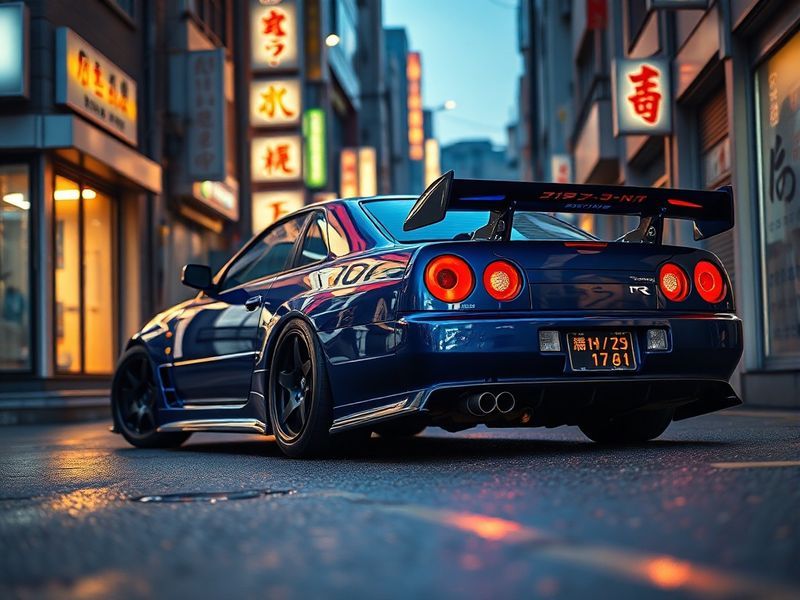
The R32 GT-R’s influence extended far beyond racing. It became a cultural icon, featured prominently in video games like Gran Turismo and movies such as The Fast and the Furious. The car’s distinctive styling—with its wide fender flares, aggressive rear spoiler, and signature “GT-R” badging—made it instantly recognizable. This generation cemented the Skyline’s status as a JDM legend and helped propel Japanese performance cars into the global spotlight.
Key Features of the R32 GT-R
- RB26DETT Engine: A 2.6-liter twin-turbo inline-six producing 280 horsepower (unrestricted versions reached 500+ hp)
- ATTESA E-TS: Nissan’s advanced all-wheel-drive system with torque split capabilities
- Super HICAS: Four-wheel steering system for enhanced handling precision
- Group A Homologation: Built to meet international racing regulations, ensuring competition readiness
- Timeless Design: Distinctive wide-body styling that remains influential today
Modern Skylines: Evolution and Legacy
The Skyline’s journey continued through several generations, each adapting to changing automotive landscapes while retaining its core identity. The R33 GT-R (1995-1998) refined the formula with improved aerodynamics and chassis rigidity, though it faced stiffer competition from rivals like the Toyota Supra and Mazda RX-7. The R34 GT-R (1999-2002), often considered the pinnacle of Skyline evolution, featured enhanced engine management, a six-speed manual transmission, and a more aggressive design.
Nissan’s decision to discontinue the GT-R badge after the R34 raised concerns among enthusiasts, but the Skyline name continued in various forms. The V35 Skyline (2001-2006), developed in partnership with Infiniti, marked a shift toward luxury and performance without the GT-R designation. This generation introduced the VQ35DE and VQ35HR engines, emphasizing smooth power delivery and refined handling.
The Skyline returned to its performance roots with the V36 (2007-2014) and V37 (2014-present) generations, though these models prioritized comfort and technology over raw track capability. However, the GT-R name found new life in the R35 GT-R (2007-present), a standalone model that carried the Skyline’s performance legacy into the modern era. With a 3.8-liter twin-turbo V6 producing over 500 horsepower and advanced aerodynamics, the R35 represented a bold departure from the Skyline’s roots while maintaining its performance heritage.
Today, the Skyline remains a symbol of Japanese automotive excellence. While the R34 has achieved legendary status among collectors, newer generations continue to push boundaries in technology and performance. The Skyline’s influence can be seen in everything from modern JDM tuning culture to the design philosophies of contemporary sports cars.
The Cultural Impact of the Nissan Skyline
The Nissan Skyline’s influence extends far beyond automotive engineering. Its appearance in films, video games, and popular culture has cemented its status as an icon of Japanese ingenuity and cool. The R32 GT-R’s role in The Fast and the Furious (2001) introduced the car to millions of international viewers, sparking a global fascination with JDM performance cars. This cinematic exposure helped fuel the import scene and inspired countless enthusiasts worldwide.
Video games have played an equally important role in preserving the Skyline’s legacy. The Gran Turismo series, starting with Gran Turismo in 1997, featured the R32, R33, and R34 GT-R in meticulous detail. These games allowed players to experience the Skyline’s driving dynamics without owning one, introducing a new generation to its charms. The car’s inclusion in Forza Horizon and Need for Speed further solidified its place in gaming history.
The Skyline’s cultural impact also reflects broader trends in automotive enthusiasm. The rise of JDM culture in the 1990s and 2000s created a community centered around Japanese performance cars, with Skyline owners at its heart. Car meets, track days, and online forums dedicated to Skyline preservation and modification demonstrate how the car has transcended its original purpose to become a cultural touchstone.
Conclusion: A Legacy That Endures
The Nissan Skyline’s story is one of evolution, innovation, and cultural significance. From its origins as a practical family car to its transformation into a motorsport legend and global icon, the Skyline has consistently pushed boundaries. Its racing pedigree, engineering excellence, and enduring appeal make it one of the most important cars in automotive history.
While modern Skylines have adapted to contemporary demands, they retain the spirit of their predecessors. The Skyline isn’t just a car; it’s a symbol of what happens when passion, engineering, and cultural relevance converge. As long as enthusiasts continue to celebrate its legacy, the Nissan Skyline will remain a defining chapter in automotive history.
For those interested in exploring more about JDM culture and performance cars, visit our Automotive and Culture sections for in-depth coverage of similar topics.