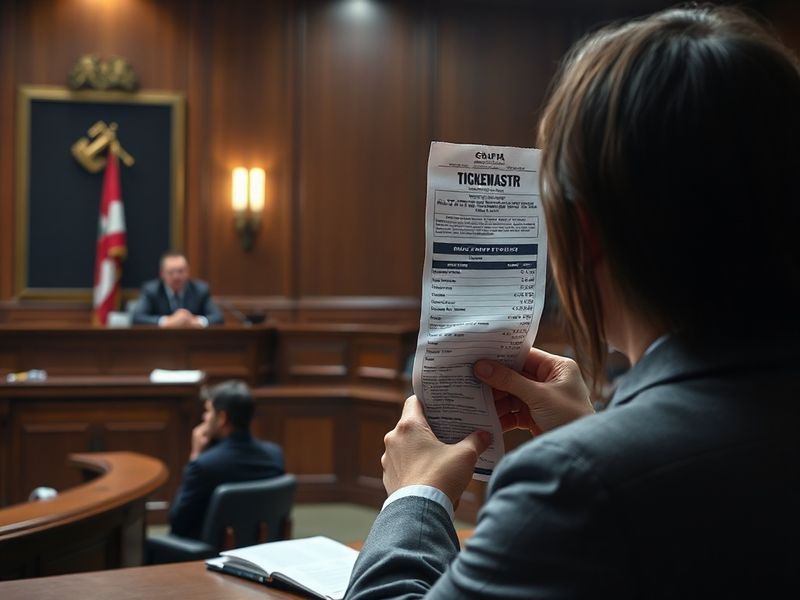
The Ticketmaster lawsuit has become one of the most closely watched legal battles in the live entertainment industry. At its core, the case challenges the company’s market dominance and alleged anti-competitive practices, raising critical questions about consumer choice and pricing in the ticketing industry. With millions of fans relying on Ticketmaster for concert and event access, the outcome of this litigation could reshape how tickets are sold in the United States and beyond.
The lawsuit, filed by the U.S. Department of Justice (DOJ) and several state attorneys general in May 2024, accuses Ticketmaster’s parent company, Live Nation Entertainment, of monopolistic behavior. The complaint argues that the 2010 merger between Live Nation and Ticketmaster created an unchecked monopoly, stifling competition and harming consumers through inflated fees and limited alternatives. The case has drawn bipartisan support, with lawmakers and regulators signaling a rare alignment in addressing corporate consolidation in the live events sector.
The Origins of the Legal Challenge
The roots of the Ticketmaster lawsuit trace back to the controversial 2010 merger between Live Nation and Ticketmaster. At the time, regulators approved the deal with concessions, including a ten-year agreement to cap service fees and prevent retaliation against venues that used competing ticketing platforms. However, critics argue that Ticketmaster has systematically undermined these restrictions, pressuring venues into exclusive contracts and penalizing those that explore alternatives.
Complaints about Ticketmaster’s practices have persisted for years. In 2022, the company faced backlash after its presale system crashed during Taylor Swift’s Eras Tour, leaving millions of fans unable to purchase tickets. The incident highlighted the vulnerabilities of a single-platform system and intensified scrutiny of Ticketmaster’s market control. Lawmakers, including Representative Alexandria Ocasio-Cortez, publicly questioned whether the company’s dominance had grown unchecked.
The breaking point came in 2023 when the DOJ launched a formal investigation into Live Nation’s business practices. The lawsuit filed in May 2024 consolidates earlier concerns, alleging that Ticketmaster has used its market power to:
- Force venues into exclusive ticketing agreements.
- Engage in predatory pricing to eliminate competitors.
- Implement opaque fee structures that mislead consumers.
- Retaliate against venues that consider alternative ticketing platforms.
These allegations mirror those raised in a 2009 case against Ticketmaster, which was settled when the company agreed to behavioral restrictions. The current lawsuit argues that those restrictions have been violated, and the merger’s long-term effects now warrant a breakup of Live Nation and Ticketmaster.
Key Players and Legal Arguments
The lawsuit is a landmark effort led by the DOJ’s Antitrust Division, joined by attorneys general from states including California, New York, and Tennessee. The coalition argues that Live Nation’s control over ticketing, promotion, and venue management creates a conflict of interest, allowing the company to prioritize its own interests over those of artists, venues, and fans.
Live Nation has vehemently denied the allegations, framing the lawsuit as an attempt to impose unnecessary government intervention in a thriving industry. The company contends that its integrated model—offering ticketing, artist management, and venue operations—creates efficiencies that benefit the live entertainment ecosystem. In a statement following the lawsuit, Live Nation argued that breaking up the company would disrupt operations and harm the careers of artists who rely on its services.
The legal battle hinges on several key arguments. The DOJ claims that Live Nation’s practices violate Section 2 of the Sherman Antitrust Act, which prohibits monopolization. The lawsuit seeks structural relief, including a potential breakup of Live Nation and Ticketmaster, as well as financial penalties. Live Nation, meanwhile, is expected to argue that the merger’s benefits—such as improved ticketing technology and streamlined event logistics—outweigh any anti-competitive concerns.
Legal experts note that the case could set a precedent for how antitrust laws are applied to tech and service industries. Unlike traditional monopolies in manufacturing or retail, Live Nation’s dominance is rooted in digital platforms and contractual relationships, making the case a modern test of antitrust enforcement.
Impact on Fans, Artists, and the Industry
The Ticketmaster lawsuit has far-reaching implications for every stakeholder in the live entertainment ecosystem. For fans, the most immediate concern is the cost and accessibility of tickets. Ticketmaster’s service fees, which often exceed 30% of the ticket price, have long been a source of frustration. If the lawsuit leads to increased competition, fans could see lower fees and more transparent pricing models.
Artists, too, stand to gain from a more competitive ticketing landscape. Many performers have criticized Ticketmaster’s dominance, arguing that it limits their bargaining power and forces them to accept unfavorable terms. A breakup or increased competition could give artists more control over ticket pricing and distribution, potentially leading to better deals for fans.
The broader live entertainment industry could also see significant changes. Venues, which have complained about being locked into exclusive contracts with Ticketmaster, may gain the freedom to choose alternative ticketing platforms. This could spur innovation in ticketing technology, leading to better tools for both venues and consumers. However, the transition could be disruptive, particularly for smaller venues that rely on Ticketmaster’s infrastructure.
Some industry analysts caution that a forced breakup of Live Nation could create unintended consequences. Ticketmaster’s integration with Live Nation’s artist management and venue businesses has created a seamless ecosystem that some argue enhances the live event experience. Disrupting this model could lead to fragmentation, with different companies handling ticketing, promotion, and venue operations separately.
What’s Next in the Legal Battle
The Ticketmaster lawsuit is expected to be a lengthy and contentious process. The first phase will likely focus on discovery, where both sides gather evidence to support their claims. The DOJ has requested extensive documentation from Live Nation, including internal communications, financial records, and contracts with venues and artists.
Legal experts predict that the case could take several years to resolve, with appeals likely to follow any initial ruling. If the DOJ prevails, the court could order a breakup of Live Nation and Ticketmaster, impose fines, or mandate changes to their business practices. Alternatively, a settlement could be reached, requiring Live Nation to make concessions such as divesting certain assets or opening its platform to competitors.
In the meantime, the lawsuit has already sparked a broader conversation about antitrust enforcement in the digital age. Lawmakers have called for reforms to address the growing power of tech giants and platform monopolies, and the Ticketmaster case could serve as a model for future actions. For now, the live entertainment industry remains in a state of uncertainty, with fans, artists, and venues watching closely as the legal battle unfolds.
Regardless of the outcome, the Ticketmaster lawsuit underscores the challenges of regulating a rapidly evolving industry. As digital platforms continue to reshape how we access entertainment, the case highlights the need for policies that balance innovation with fair competition.
For those interested in exploring the intersection of technology and antitrust, Dave’s Locker Technology section offers deeper analysis on similar legal and ethical dilemmas shaping the digital economy. To understand how these issues impact the music industry specifically, visit our Music category, where we track trends in live events, artist rights, and industry consolidation.
The Ticketmaster lawsuit is more than a legal dispute; it is a defining moment for the future of live entertainment. Whether it leads to a breakup, a settlement, or a new era of competition, the case will leave a lasting mark on an industry that millions of people rely on for joy, connection, and shared experiences.