Bhoot Bangla: The Haunted House Tradition of Bengali Horror
“`html
Bhoot Bangla: The Haunted House Phenomenon That Defines Bengali Horror
Bhoot Bangla, translating literally to “ghost house,” is more than just a subgenre of Bengali horror—it’s a cultural institution. These stories, rooted in folklore and superstition, have evolved from oral traditions into a thriving literary and cinematic movement that continues to captivate audiences across West Bengal and Bangladesh. The genre’s enduring appeal lies in its ability to blend terror with social commentary, making it uniquely Bengali.
The origins of Bhoot Bangla can be traced back to 19th-century Bengal, where British colonial rule and rapid modernization clashed with traditional beliefs. This cultural tension created fertile ground for ghost stories that reflected societal anxieties. Early practitioners like Dakshinaranjan Mitra Majumder codified these tales in collections such as Thakurmar Jhuli (“Grandmother’s Tales”), which became foundational texts for the genre. These stories weren’t merely about scares—they served as cautionary tales about greed, betrayal, and the consequences of straying from moral paths.
The Literary Foundations of Bhoot Bangla
Bengali horror literature reached its golden age in the mid-20th century, with writers like Satyajit Ray venturing into supernatural territory. Ray’s Barin Babur Bandhu (“Barin’s Friend”) and Monihara (“The Lost Jewel”) remain benchmarks of the form, combining psychological depth with genuine terror. These stories often featured protagonists confronting their pasts through ghostly encounters, a theme that resonates deeply in Bengali culture where ancestral veneration is strong.
The literary tradition expanded with authors like Shirshendu Mukhopadhyay and Sunil Gangopadhyay, who introduced modern sensibilities while maintaining the genre’s folkloric roots. Mukhopadhyay’s Kakababu series frequently featured supernatural elements, while Gangopadhyay’s Sei Somoy (“Those Days”) explored historical hauntings. What unites these works is their refusal to provide easy explanations—ghosts in Bhoot Bangla stories often remain ambiguous, neither purely evil nor benevolent.
Modern practitioners continue to innovate within the form. Contemporary authors like Anirban Bhattacharya blend traditional ghost stories with contemporary urban settings, creating stories like Bhoot Fera (“Ghost Return”) that reflect modern Bengali anxieties about technology and isolation. The genre’s flexibility has allowed it to survive multiple cultural shifts while maintaining its core identity.
Cinematic Evolution: From Celluloid Scares to Streaming Specters
Bhoot Bangla entered cinema in the 1960s with Tapan Sinha’s Kshudista Pashan (“Hungry Stone”), which adapted Rabindranath Tagore’s supernatural stories. However, it was the 1970s that truly cemented the genre’s cinematic identity, with directors like Tarun Majumdar and Prabhat Roy creating atmospheric films that relied more on suggestion than gore. Majumdar’s Balika Badhu (1975) featured a haunting sequence that became iconic in Bengali cinema.
The 1990s brought a new wave of Bhoot Bangla films that incorporated psychological horror elements. Buddhadeb Dasgupta’s Uttara (2000) used supernatural themes to explore existential questions, while Rituparno Ghosh’s Chokher Bali (2003) blended ghostly elements with a critique of early 20th-century Bengali society. These films demonstrated how Bhoot Bangla could transcend its pulp origins to become serious cinema.
Today, the genre has found new life on streaming platforms. Web series like Bhootpurva (2021) and Kahini Series have introduced Bhoot Bangla to younger audiences while maintaining the genre’s traditional elements. These series often feature anthology formats, allowing for experimentation within the supernatural framework. The visual medium has also allowed for more elaborate ghost designs, from the skeletal figures of rural tales to the more ambiguous apparitions of urban legends.
Notable recent films include Bhootchakra Pishachchakra (2021), which revisited classic ghost lore with modern filmmaking techniques, and Tushaar (2022), which used supernatural elements to explore environmental themes. The continued production of these films suggests that Bhoot Bangla remains commercially viable while maintaining artistic integrity.
Regional Variations and Cultural Significance
While Bhoot Bangla is primarily associated with West Bengal, similar traditions exist across the Bengali cultural sphere. In Bangladesh, authors like Humayun Ahmed have created their own interpretations of ghost stories, often with more overt social commentary. Ahmed’s Nondini series, for example, uses supernatural elements to critique political corruption and social inequality.
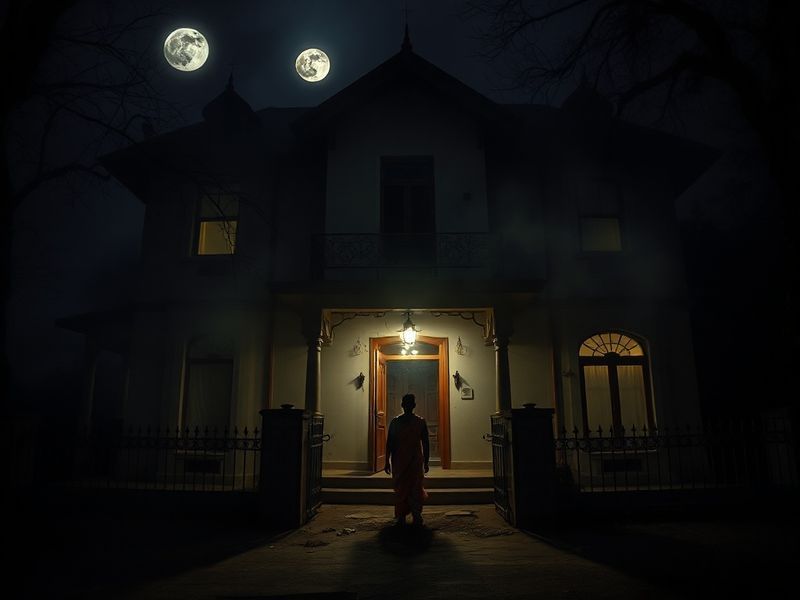
Within West Bengal itself, different regions have developed distinct ghost traditions. The Sundarbans region, with its dense mangrove forests and dangerous wildlife, has given rise to particularly terrifying legends. Stories like Bon Bibi (Forest Goddess) tales often blur the line between ghost stories and cautionary folklore about venturing into the wilderness. Meanwhile, urban Kolkata has developed its own corpus of ghost stories centered around abandoned buildings and colonial-era mansions.
The cultural significance of Bhoot Bangla extends beyond entertainment. These stories serve as a repository of Bengali fears and desires, from anxieties about colonialism to concerns about modernization. The ghosts themselves often embody specific social issues—landlords who exploit tenants, wives who died in childbirth, or children who perished in famines. By confronting these ghosts, Bengali audiences process historical traumas that might otherwise remain unaddressed.
Educators and cultural commentators have noted how Bhoot Bangla stories can serve as entry points for discussing complex historical periods. The Partition of Bengal, for instance, has inspired numerous ghost stories about souls unable to find peace due to the violence of 1947. These stories allow younger generations to engage with traumatic history through a medium that feels accessible rather than didactic.
The Future of Bhoot Bangla: Tradition Meets Innovation
As Bengali society continues to evolve, so too does Bhoot Bangla. The genre has proven remarkably adaptable, incorporating elements from global horror traditions while maintaining its distinct identity. Recent films have experimented with found-footage techniques, while web series have embraced serialized storytelling that rivals international horror productions.
One notable trend is the blending of Bhoot Bangla with other genres. Films like Eagoler Chhokh (2016) combine supernatural horror with detective fiction, while Bishorjon (2017) incorporates ghost stories into a romantic drama. This genre-mixing has helped attract audiences who might not typically engage with horror.
The future of Bhoot Bangla may also lie in international collaborations. Recent co-productions like Raktabeej (2022), which blends Bengali ghost lore with global horror elements, suggest new avenues for growth. As streaming platforms seek fresh content, Bengali horror may find audiences beyond traditional diaspora communities.
However, challenges remain. The commercialization of the genre risks diluting its cultural significance, while some purists worry that modern adaptations stray too far from traditional forms. Yet the continued production of both literary and cinematic works suggests that Bhoot Bangla retains a vital cultural function, serving as both entertainment and a means of cultural preservation.
Key Elements of Traditional Bhoot Bangla Stories
- Ambiguous ghosts: Unlike Western horror, Bengali ghosts often have unclear motivations, neither purely evil nor benevolent.
- Moral lessons: Most stories carry explicit or implicit warnings about greed, infidelity, or disrespecting elders.
- Regional specificity: Ghosts are often tied to particular locations, from Kolkata’s abandoned mansions to the Sundarbans’ mangrove forests.
- Historical resonance: Many tales reference specific historical events, particularly the Partition of Bengal in 1947.
- Oral tradition elements: The best stories maintain a folkloric quality, as if being told around a fire rather than read in a book.
For those new to Bhoot Bangla, our culture section offers additional context about Bengali literary traditions, while our entertainment coverage tracks recent developments in Bengali cinema and streaming content. Both sections provide deeper dives into the cultural ecosystem that sustains Bhoot Bangla.
Ultimately, Bhoot Bangla endures because it speaks to universal human experiences through a distinctly Bengali lens. Whether through the ghost of a wronged wife seeking justice or the spirit of a child who died too young, these stories allow audiences to confront their deepest fears while remaining grounded in their cultural identity. In an era of globalized entertainment, Bhoot Bangla stands as a testament to the power of regional storytelling traditions.