<!DOCTYPE html>
<html lang="en">
<head>
    <meta charset="UTF-8">
    <meta name="viewport" content="width=device-width, initial-scale=1.0">
    <title>Sue Bird: The Point Guard Who Redefined Women's Basketball</title>
</head>
<body>
    <article>
        <h1>Sue Bird: The Point Guard Who Redefined Women's Basketball</h1>

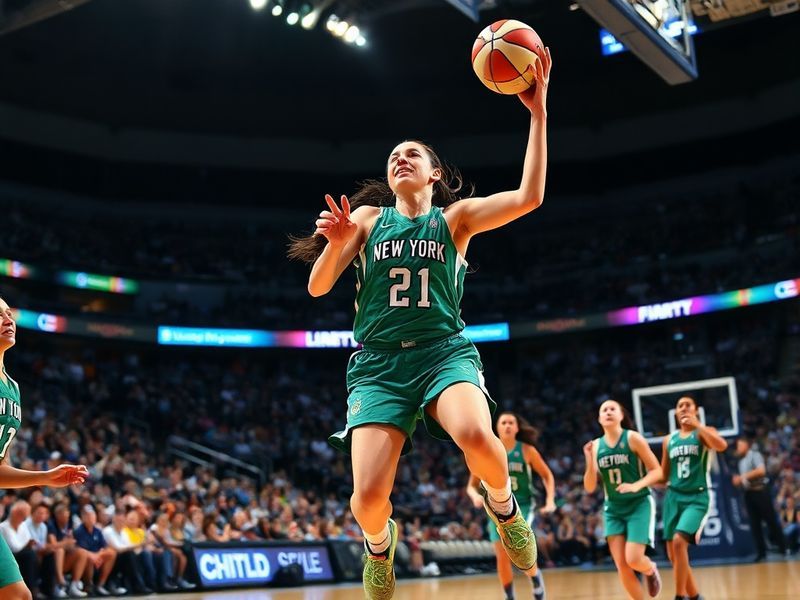
        <p>Sue Bird's retirement in 2022 wasn't just the end of a legendary WNBA career—it marked the close of an era where one player redefined what it meant to be a point guard in women's basketball. Standing at 5'9", Bird defied the physical stereotypes of her position, combining elite court vision with a clutch shooting touch that frustrated opponents for 21 seasons.</p>

        <p>Her impact extended beyond statistics. Bird became the face of a generation, bridging the gap between the WNBA's early struggles and its current status as a respected global league. The way she controlled games with her mind rather than just her athleticism offers lessons that extend into coaching and player development today.</p>

        <h2>From UConn to WNBA Stardom</h2>

        <p>Bird's journey began at the University of Connecticut, where she played under legendary coach Geno Auriemma. Those four years weren't just about championships—they were about perfecting a style of play that emphasized precision over athleticism. Her partnership with Diana Taurasi during their college years foreshadowed their professional synergy with the Phoenix Mercury.</p>

        <p>The 2002 WNBA Draft made Bird the first overall pick, a selection that carried expectations she met immediately. Rookies typically need time to adjust to the professional game, but Bird's basketball IQ translated seamlessly. Her rookie season averages of 11.3 points and 5.6 assists hinted at the floor general she would become.</p>

        <p>Her early years coincided with the league's formative period. The WNBA was still fighting for mainstream relevance when Bird arrived, and her consistency provided stability in an unpredictable environment. While other stars came and went, Bird remained a constant—through coaching changes, ownership shifts, and league expansions.</p>

        <h2>The Bird-Taurasi Era: A Blueprint for Modern Basketball</h2>

        <p>The dynamic between Bird and Diana Taurasi became the gold standard for point guard-shooting guard combinations. Their chemistry wasn't built on highlight plays but on an almost telepathic understanding of each other's movements. This relationship elevated both players and the league as a whole.</p>

        <p>Consider these key elements of their partnership:</p>

        <ul>
            <li><strong>Timing:</strong> Their off-ball movement created scoring opportunities without needing direct passes</li>
            <li><strong>Communication:</strong> They developed a language of glances and subtle gestures that opponents couldn't decipher</li>
            <li><strong>Sacrifice:</strong> Both willingly deferred shots when the other had better looks, a rarity in modern basketball</li>
        </ul>

        <p>This relationship also demonstrated how veteran players could extend their careers by surrounding themselves with the right talent. Bird's ability to elevate younger players became a model for how point guards could contribute beyond scoring.</p>

        <h2>Leadership Beyond the Court</h2>

        <p>Bird's influence extended far beyond Xs and Os. Her willingness to speak about social issues—from LGBTQ+ rights to gender pay equity—made her one of the most visible athlete-activists in sports. When she came out publicly in 2005, she became a role model for countless young athletes who felt isolated.</p>

        <p>Her advocacy wasn't performative. Bird's 2019 interview with <em>The Players' Tribune</em>, where she detailed the pay disparity between WNBA and NBA players, carried particular weight coming from a player of her stature. The league's subsequent CBA negotiations reflected some of her concerns, proving that athlete voices could shape institutional change.</p>

        <p>This leadership style also influenced how she mentored younger players. Bird's approach wasn't about demanding respect through authority but earning it through preparation and authenticity. Players like Breanna Stewart and Jewell Loyd have credited her with teaching them how to navigate professional basketball's mental challenges.</p>

        <h2>The Legacy of a Floor General</h2>

        <p>Bird's retirement leaves several gaps in the basketball landscape. The WNBA has struggled to produce point guards who combine her court vision with her clutch shooting. Players like Sabrina Ionescu and Chelsea Gray have shown flashes, but none have reached Bird's consistency.</p>

        <p>Her departure also highlights the league's need for more player-driven storytelling. While Bird wasn't a social media native like some current stars, her interviews and public appearances always carried substance. The WNBA's growth depends on finding new voices who can match her authenticity.</p>

        <p>For fans of the game, Bird's career offers several lessons:</p>

        <ol>
            <li><strong>Longevity requires adaptability:</strong> She evolved from a scoring point guard to a pure facilitator as her career progressed</li>
            <li><strong>Mental preparation matters as much as physical skills:</strong> Her free-throw shooting (90% career accuracy) reflected her disciplined routine</li>
            <li><strong>True leadership isn't about statistics:</strong> Her assist-to-turnover ratio (2.7 for her career) speaks to her care with the ball</li>
            <li><strong>Mentorship accelerates development:</strong> The players she mentored have won multiple championships since her retirement</li>
        </ol>

        <p>Bird's final season in 2022 was a masterclass in how to exit the game. She played limited minutes, deferred to younger players, and provided guidance when needed. This approach contrasted sharply with the dramatic exits common in sports, showing that excellence doesn't require a Hollywood ending.</p>

        <p>The WNBA's future looks bright with a new generation of stars, but the league will long for Bird's combination of skill, durability, and presence. Her career demonstrates that greatness isn't measured solely in championships or statistics, but in the way a player elevates everyone around her.</p>

        <blockquote>
            "Sue Bird didn't just play basketball—she taught us how to think about it. Her understanding of the game was so advanced that even coaches studied her decisions."
            <footer>— <cite>Diana Taurasi, Phoenix Mercury teammate</cite></footer>
        </blockquote>

        <p>For those looking to understand the evolution of women's basketball, Bird's career provides the perfect case study. From her UConn days to her final WNBA game, she represented the best of what the sport can offer—both on and off the court.</p>

        <p>As the league continues to grow, Bird's influence will remain visible in the way players conduct themselves, the respect they command from opponents, and their willingness to use their platform for change. In an era where athletes are often reduced to highlight reels, Sue Bird's career proves that substance will always matter more than style.</p>

        <p>Her jersey retirement in 2023 confirmed what fans already knew: Sue Bird wasn't just a great player. She was the standard by which all future point guards would be measured.</p>

        <p>For more on women's basketball and its impact on the sport, visit our <a href="https://daveslocker.net/category/sports">Sports</a> section.</p>
    </article>

    <!-- Metadata Section -->