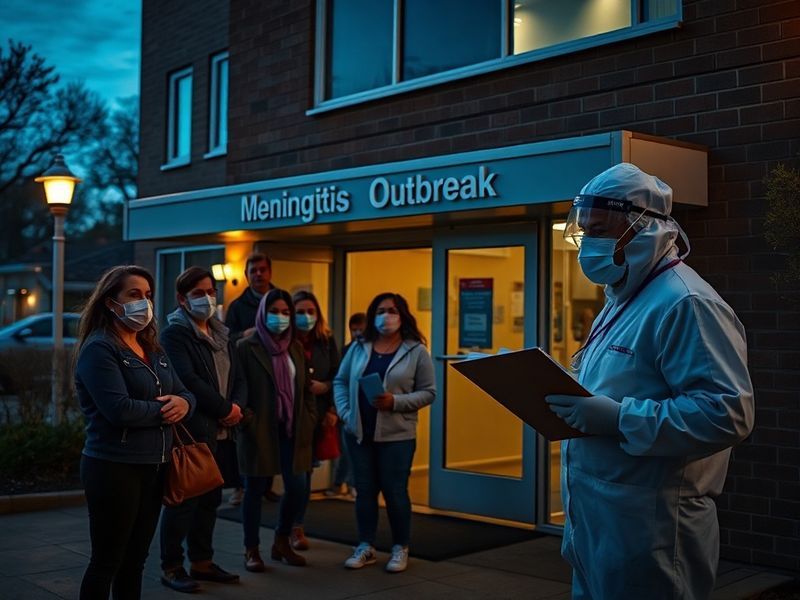
The town of Weymouth, Massachusetts, has recently faced an unsettling public health challenge with the emergence of a meningitis outbreak. Local health officials are working urgently to contain the situation as cases continue to be reported. Understanding the specifics of this outbreak—its causes, affected demographics, and response efforts—is critical for residents and neighboring communities.
Meningitis, an inflammation of the protective membranes covering the brain and spinal cord, can be caused by viruses, bacteria, or fungi. Public health experts are investigating whether this outbreak stems from a bacterial strain, which tends to be more severe and requires immediate medical attention. Early reports suggest at least six confirmed cases, with health authorities monitoring additional potential exposures.
Timeline of Events and Public Response
The outbreak was first identified in early March when local hospitals reported an unusual spike in meningitis-related admissions. The Weymouth Board of Health issued a public advisory on March 8, urging residents to be vigilant for symptoms such as high fever, stiff neck, severe headache, and confusion. Within days, the Massachusetts Department of Public Health (DPH) launched an investigation, collaborating with the Centers for Disease Control and Prevention (CDC).
A timeline of key events includes:
- March 5: First reported case admitted to South Shore Hospital in Weymouth.
- March 8: Weymouth Board of Health issues public health advisory.
- March 10: DPH confirms bacterial meningitis in two cases; warns of possible exposure at local community center.
- March 12: Weymouth High School temporarily closes for deep cleaning and contact tracing.
- March 15: CDC deploys rapid response team to assist local health officials.
The swift activation of containment measures reflects lessons learned from past outbreaks. Schools, public venues, and healthcare facilities have increased sanitation protocols, and health officials continue to conduct contact tracing to identify and monitor exposed individuals.
Symptoms, Transmission, and Prevention
Meningitis symptoms can develop rapidly and may resemble those of the flu, which can delay diagnosis. Early medical intervention is crucial, especially for bacterial meningitis, which can be life-threatening without prompt antibiotic treatment. Public health messaging has emphasized recognizing these warning signs:
- Sudden high fever
- Severe headache with neck stiffness
- Nausea and vomiting
- Confusion or altered mental state
- Sensitivity to light
- Purple skin rash (in meningococcal cases)
Transmission typically occurs through respiratory droplets or close contact with an infected person. While not all forms of meningitis are contagious, bacterial meningitis—particularly meningococcal disease—can spread quickly in crowded settings such as schools, dormitories, and community gatherings.
Preventive measures are being widely promoted:
- Vaccination: Health officials recommend checking vaccination status for meningococcal and pneumococcal vaccines, especially for adolescents and high-risk adults.
- Hygiene Practices: Frequent handwashing, avoiding shared drinks or utensils, and covering coughs and sneezes are strongly advised.
- Prophylactic Antibiotics: Close contacts of confirmed cases may receive preventive antibiotics as recommended by health authorities.
- Environmental Cleaning: Enhanced disinfection of public spaces, including buses, libraries, and recreational centers, is underway.
Health resources on Dave’s Locker provide updated guidance on meningitis prevention and vaccination schedules.
Community Impact and Public Sentiment
The outbreak has created ripple effects across Weymouth’s social fabric. Local businesses report a decline in foot traffic as residents opt to stay home, while parents express concern over school safety. Community meetings have been held to address fears and clarify facts. Some residents have turned to social media to share unverified information, prompting health officials to emphasize the importance of relying on credible sources.
“This is a stressful time for our community,” said Dr. Lisa Chen, Weymouth’s public health director, during a March 14 press briefing. “We are committed to transparency and rapid communication to prevent misinformation from spreading.”
Local faith leaders and civic organizations have organized support networks, offering childcare assistance and meal delivery to families under quarantine. Meanwhile, the Weymouth Police Department has increased patrols near affected areas to ensure public safety and deter potential panic-driven behaviors.
Long-Term Health and Policy Implications
Beyond the immediate health crisis, the Weymouth meningitis outbreak raises broader questions about public health infrastructure, preparedness, and equity. The rapid deployment of state and federal resources highlights the importance of coordinated response systems. However, challenges remain in ensuring equitable access to care, particularly for uninsured or underinsured residents who may delay seeking treatment due to cost concerns.
Public health experts are also calling for renewed attention to vaccination campaigns. Despite the availability of safe and effective vaccines, vaccination rates for meningococcal disease have fluctuated in recent years. A 2023 CDC report noted that only 75% of adolescents aged 13–17 had received the first dose of the meningococcal vaccine, falling short of the 90% target.
The outbreak may serve as a catalyst for policy changes, including expanded school-based vaccination programs and increased funding for local health departments. “We need to treat this not just as a response, but as an opportunity to strengthen our public health defenses,” said State Senator Susan Collins during a legislative hearing.
As the situation evolves, continued vigilance and community cooperation will be essential in curbing the spread and restoring public confidence. Health officials will maintain surveillance for at least several weeks to ensure no new cases emerge.
For now, Weymouth residents are encouraged to stay informed through official channels, adhere to public health guidelines, and support one another with patience and empathy. The town’s resilience will be tested, but history suggests that collective action can overcome even the most daunting challenges.
For ongoing updates, visit the News section on Dave’s Locker, where we continue to monitor developments in real time.