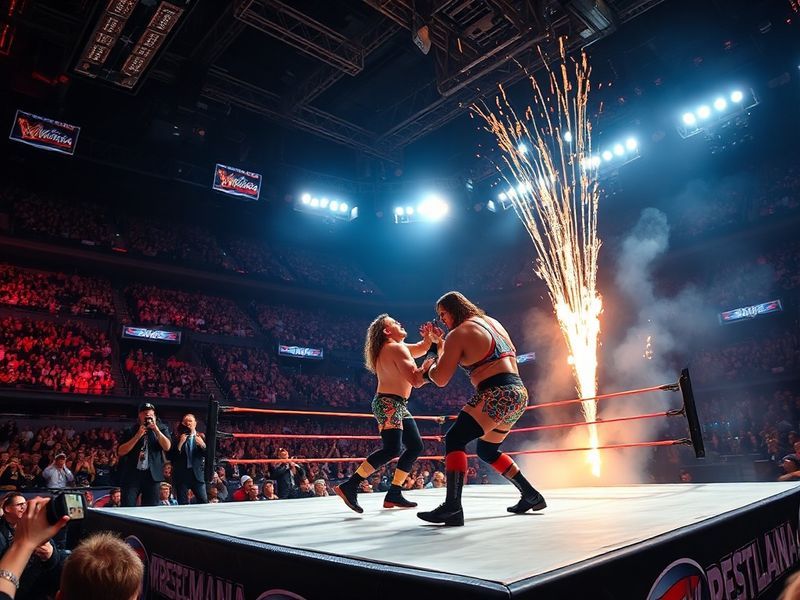
WrestleMania: How the Grandest Stage in Sports Entertainment Rose to the Top
“`html
WrestleMania: The Spectacle That Defined Sports Entertainment
Since its debut in 1985, WrestleMania has evolved from a single event into a cultural institution. More than just a wrestling pay-per-view, it represents the pinnacle of sports entertainment—a fusion of athletic competition, theatrical storytelling, and large-scale production. Over nearly four decades, WrestleMania has grown into a global phenomenon, drawing hundreds of thousands of fans to stadiums and millions more to their screens.
The event’s significance extends beyond the squared circle. WrestleMania has become a platform where wrestling’s biggest stars cement their legacies, where unexpected moments create lasting memories, and where the business of sports entertainment reaches its annual zenith. Its influence can be seen in how wrestling promotions operate, how fans engage with the product, and even in mainstream pop culture.
The Origins and Evolution of WrestleMania
WrestleMania was created by Vince McMahon as part of his vision to expand the World Wrestling Federation (WWF, now WWE) beyond its regional roots. The inaugural event took place at Madison Square Garden in New York City on March 31, 1985. It featured a mix of established stars like Hulk Hogan and André the Giant alongside celebrities such as Liberace and Cyndi Lauper, blending wrestling with mainstream entertainment.
The inaugural WrestleMania set the tone for what was to come. It wasn’t just a wrestling show; it was a spectacle designed to captivate audiences beyond traditional wrestling fans. The event’s success proved that wrestling could transcend its niche appeal and become a mainstream attraction. This paved the way for future WrestleManias to push boundaries in terms of production, star power, and storytelling.
Over the years, WrestleMania has expanded in scope and scale. Early events were held in arenas, but by the 1990s, WrestleMania began venturing into stadiums. WrestleMania III (1987) remains one of the most iconic events in wrestling history, drawing over 93,000 fans to the Pontiac Silverdome and setting an attendance record that stood for decades. The event’s main event—Hogan vs. André the Giant—was a cultural moment, further solidifying wrestling’s place in the public consciousness.
Key Moments That Shaped WrestleMania’s Legacy
WrestleMania is defined by its unforgettable moments, from shocking upsets to emotional reunions. Some of these moments have transcended wrestling, becoming part of broader sports and entertainment history. Below are a few that stand out:
- WrestleMania III (1987): Hulk Hogan’s body slam of André the Giant remains one of the most iconic images in wrestling. The event also featured Randy Savage’s victory over Ricky Steamboat in what is often cited as one of the greatest matches of all time.
- WrestleMania X-Seven (2001): The “Texas Chain Massacre” match between Triple H and The Undertaker, along with Stone Cold Steve Austin’s heel turn and victory over The Rock, is often regarded as one of the best WrestleManias ever.
- WrestleMania XX (2004): The induction of The Undertaker’s undefeated streak into WrestleMania lore, coupled with the return of The Rock and the shocking loss of Brock Lesnar to Goldberg, created a night that fans still discuss today.
- WrestleMania 32 (2016): The event drew over 100,000 fans to AT&T Stadium in Texas, setting a new attendance record. Roman Reigns’ victory over Triple H in the main event was met with a mix of cheers and boos, highlighting the complexities of fan engagement in modern wrestling.
- WrestleMania 35 (2019):
Becky Lynch’s victory over Ronda Rousey and Charlotte Flair to win the Raw and SmackDown Women’s Championships in the same night marked a historic moment for women’s wrestling, further cementing WrestleMania’s role in driving industry trends.
WrestleMania as a Cultural and Business Phenomenon
WrestleMania’s impact extends far beyond the wrestling ring. It has become a cultural touchstone, referenced in movies, TV shows, and even political discourse. The event’s blend of sports and entertainment has influenced how other sports leagues and entertainment companies approach live events. For example, the NFL’s Super Bowl and the NBA’s All-Star Weekend have borrowed elements from WrestleMania’s playbook, incorporating large-scale halftime shows, celebrity appearances, and high-production-value presentations.
The business of WrestleMania is equally significant. WWE’s annual revenue is heavily tied to WrestleMania, with the event generating millions in ticket sales, merchandise, and pay-per-view buys. The “Road to WrestleMania” build-up, which spans months, keeps fans engaged and drives interest in WWE’s weekly programming. This long-term storytelling approach has become a model for how wrestling promotions maintain fan interest throughout the year.
WrestleMania has also played a crucial role in WWE’s global expansion. Early events were primarily U.S.-based, but in recent decades, WrestleMania has traveled internationally. WrestleMania 29 (2013) was held in MetLife Stadium in New Jersey, while WrestleMania 32 (2016) took place in Dallas, and WrestleMania 33 (2017) was held in Orlando. The 2021 event, WrestleMania 37, marked WWE’s return to Tampa, Florida, after the COVID-19 pandemic, drawing a limited crowd but still drawing massive viewership.
WrestleMania’s global reach is further evidenced by its international fanbase. WWE has capitalized on this by hosting events in countries like Saudi Arabia (WrestleMania 36 in 2020 was held in the WWE ThunderDome due to pandemic restrictions, but the 2022 event, WrestleMania 38, took place in Dallas and Jeddah). These international events have not only expanded WWE’s revenue streams but have also introduced wrestling to new audiences.
The Future of WrestleMania in a Changing Landscape
As WWE navigates an evolving entertainment landscape, WrestleMania faces both challenges and opportunities. The rise of streaming services and on-demand content has changed how fans consume wrestling. While pay-per-view buys remain a significant revenue stream, WWE has adapted by offering WrestleMania on its WWE Network and, more recently, on Peacock in the U.S. This shift reflects broader trends in the entertainment industry, where traditional pay-per-view models are being supplemented—or even replaced—by digital platforms.
Another challenge is the increasing scrutiny over wrestling’s physical demands and long-term health impacts on performers. High-profile retirements and injuries have led to calls for better safety measures, and WrestleMania’s marquee matches often come under the microscope. WWE has responded by adjusting its approach to match scheduling and recovery protocols, but the balance between spectacle and safety remains a delicate one.
Despite these challenges, WrestleMania’s future looks bright. The event continues to draw massive audiences, both in-person and via broadcast. WWE’s acquisition by Endeavor in 2023 has opened new avenues for cross-promotion and global expansion, which could further elevate WrestleMania’s profile. Additionally, the growing popularity of women’s wrestling and the emergence of new stars ensure that WrestleMania will continue to evolve with its audience.
The event’s ability to reinvent itself while staying true to its roots is a testament to its enduring appeal. Whether it’s through nostalgic throwbacks, groundbreaking matches, or unexpected returns, WrestleMania remains a must-watch spectacle for wrestling fans and casual viewers alike.
Why WrestleMania Matters
WrestleMania is more than just a wrestling event; it’s a celebration of storytelling, athleticism, and spectacle. It has shaped the wrestling industry, influenced pop culture, and created moments that resonate far beyond the confines of the ring. For fans, WrestleMania is a rite of passage—a chance to witness history in the making. For WWE, it’s the crown jewel of its calendar, a week-long celebration that showcases the best of what the company has to offer.
The event’s legacy is built on the shoulders of the wrestlers, creators, and fans who have shaped it over the years. From its humble beginnings in Madison Square Garden to its current status as a global extravaganza, WrestleMania has continually pushed the boundaries of what a live entertainment event can achieve. As it moves forward, WrestleMania will undoubtedly continue to captivate audiences, proving that sports entertainment is more than just a show—it’s an experience.
For those looking to dive deeper into the world of wrestling and its cultural impact, check out our Sports and Entertainment category pages on Dave’s Locker. These sections feature in-depth analysis, news, and commentary on wrestling and its place in the broader entertainment landscape.