<h2>From Mogadishu to Multiple Olympic Golds: Mo Farah’s Remarkable Journey</h2>

<p>Mohamed Muktar Jama Farah, known globally as Mo Farah, is one of the most celebrated long-distance runners in history. His story transcends athletics, weaving together themes of resilience, identity, and triumph over adversity. Born in Mogadishu, Somalia, in 1983, Farah’s journey to becoming a four-time Olympic gold medalist and multiple world champion is marked by extraordinary personal and professional milestones.</p>

<p>Farah’s early life was shaped by conflict. At the age of eight, he was sent from Somalia to the United Kingdom under the guise of joining relatives, but his circumstances were far more complex. He arrived in London alone, speaking little English, and was later trafficked into domestic servitude. His escape from this situation and eventual rise to athletic prominence is a testament to his determination and the support he received from foster parents and teachers.</p>

<h3>A Career Defined by Dominance and Consistency</h3>

<p>Farah’s transition from a troubled past to athletic greatness began when he discovered running at Feltham Community College. His talent was undeniable, and by his late teens, he was competing at a high level. His breakthrough came in 2010 when he won the European Athletics Championships in the 5,000 meters and 10,000 meters, signaling his arrival as a distance-running force.</p>

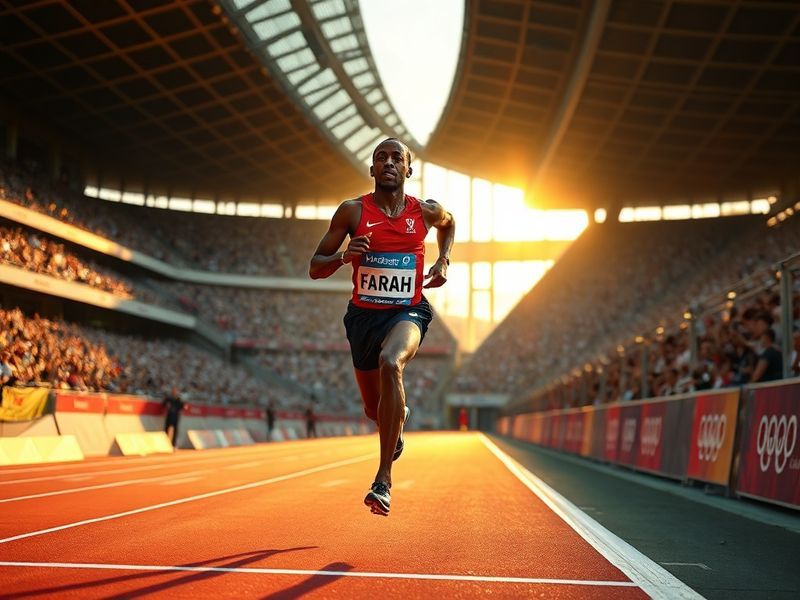
<p>His success on the track continued to escalate. At the 2012 London Olympics, Farah made history by becoming the first British athlete to win gold in both the 5,000 meters and 10,000 meters. Four years later in Rio de Janeiro, he defended both titles, cementing his legacy as one of the greatest distance runners of all time. His signature move—accelerating in the final lap while glancing back at competitors—became iconic, symbolizing both his strategic brilliance and mental toughness.</p>

<ul>
  <li>2010 European Athletics Championships: Gold in 5,000m and 10,000m</li>
  <li>2012 London Olympics: Gold in 5,000m and 10,000m</li>
  <li>2013 World Championships: Gold in 5,000m and 10,000m</li>
  <li>2016 Rio Olympics: Gold in 5,000m and 10,000m</li>
  <li>2017 World Championships: Gold in 10,000m</li>
</ul>

<p>Beyond his Olympic and World Championship successes, Farah has also excelled in road racing. He won the Chicago Marathon in 2018 and the London Marathon in 2019, demonstrating his versatility and enduring competitive spirit. His ability to dominate across different distances and surfaces highlights his adaptability and longevity in a sport where peak performance often comes early and declines rapidly.</p>

<h3>The Cultural Impact of a British-Somali Icon</h3>

<p>Farah’s influence extends far beyond the track. As a British-Somali athlete, he represents a bridge between cultures and communities. His success has inspired a generation of young people, particularly those from immigrant backgrounds, to pursue excellence in sports and beyond. In a country where racial and ethnic diversity is often a topic of debate, Farah’s achievements serve as a powerful counter-narrative to exclusion and stereotyping.</p>

<p>His visibility has also brought attention to Somali-British identity and the challenges faced by refugees. In 2022, Farah revealed details of his traumatic childhood, including being trafficked to the UK and forced into child labor. His openness about these experiences has humanized the refugee experience and highlighted the importance of safeguarding vulnerable children. Farah has since become a vocal advocate for refugees, working with organizations such as UNHCR and the International Organization for Migration to raise awareness and support.</p>

<p>In 2013, Farah was knighted in the Queen’s Birthday Honours for his services to athletics, becoming Sir Mohamed Farah. This honor not only recognized his athletic achievements but also his role as a cultural ambassador. His legacy is a blend of sporting excellence and humanitarian impact, making him a figure of admiration across multiple domains.</p>

<h3>The Business of an Athlete: Farah’s Brand and Endorsements</h3>

<p>Farah’s success has also translated into significant commercial opportunities. His marketability stems from his clean image, global appeal, and consistent performances. Over the years, he has secured lucrative endorsement deals with major brands such as Nike, Lucozade, and Jaguar Land Rover. These partnerships have allowed him to build a brand that extends beyond athletics, encompassing fitness, wellness, and lifestyle.</p>

<p>In 2016, Farah launched his own clothing line, “Farah Clothing,” in collaboration with British retailer JD Sports. The brand targets a younger audience and emphasizes inclusivity and diversity, aligning with Farah’s personal values. His business ventures reflect a strategic approach to leveraging his fame into sustainable opportunities while maintaining authenticity.</p>

<p>Farah has also ventured into media and entertainment. He has appeared on television shows, including a stint on the popular British series <em>Strictly Come Dancing</em>, where he showcased his charisma and versatility. His participation in such programs has helped broaden his appeal beyond the sports world, making him a familiar face to a diverse audience.</p>

<p>Despite his commercial success, Farah has managed to maintain a relatively low profile outside of his athletic and advocacy work. His ability to balance fame with humility has endeared him to fans worldwide and set a standard for athlete behavior in an era often dominated by controversy and scandal.</p>

<h3>Legacy and the Future of British Athletics</h3>

<p>As Farah enters the later stages of his career, his legacy is already secure. He has redefined what is possible for British distance runners and set a benchmark for future generations. His influence is evident in the rise of British middle- and long-distance talent, including athletes like Laura Muir and Jake Wightman, who have drawn inspiration from his achievements.</p>

<p>Farah’s retirement from competitive athletics is inevitable, but his impact will endure. He has established the Mo Farah Foundation, which supports education and health initiatives in Somalia and the UK. Through this foundation, he continues to give back to the communities that shaped him, ensuring that his legacy includes tangible contributions to society.</p>

<p>Looking ahead, British athletics faces the challenge of producing the next generation of champions capable of filling the void left by Farah. The infrastructure and inspiration he helped create will play a crucial role in sustaining the country’s success in the sport. Farah’s story serves as a reminder that greatness is not solely measured by medals but by the lives touched and the barriers broken along the way.</p>

<h3>A Global Perspective: Farah’s Role in Shaping Modern Athletics</h3>

<p>Farah’s career coincides with a period of significant transformation in athletics. The sport has become more globalized, with athletes from Africa and other regions dominating middle- and long-distance events. Farah’s success is part of this broader trend, which has seen a shift from traditional powerhouses like Kenya and Ethiopia to a more diverse field of competitors.</p>

<p>His ability to thrive in this competitive environment underscores the importance of adaptability and innovation in training and competition. Farah’s training regimen, often conducted in high-altitude conditions in Kenya and Ethiopia, reflects a global approach to preparation that has become a hallmark of modern distance running.</p>

<p>Farah’s story also highlights the role of migration and diaspora in shaping sports. Many of today’s top athletes are products of migration, either moving to countries with better training facilities or representing nations far from their birthplaces. Farah’s journey from Somalia to the UK and his subsequent success exemplify this trend, illustrating how sport can serve as a vehicle for integration and achievement.</p>

<p>In conclusion, Mo Farah’s life and career are a testament to the power of resilience, adaptability, and the pursuit of excellence. His achievements on the track have brought joy to millions, while his advocacy work has made a tangible difference in the lives of others. As a cultural icon, businessman, and philanthropist, Farah embodies the multifaceted role that modern athletes often play in society.</p>

<p>His legacy is not just one of medals and records but of inspiration and impact. For aspiring athletes and fans alike, Farah’s story is a reminder that greatness is achieved through perseverance, passion, and a willingness to give back. As British athletics looks to the future, Farah’s influence will continue to be felt, ensuring that his legacy endures for generations to come.</p>