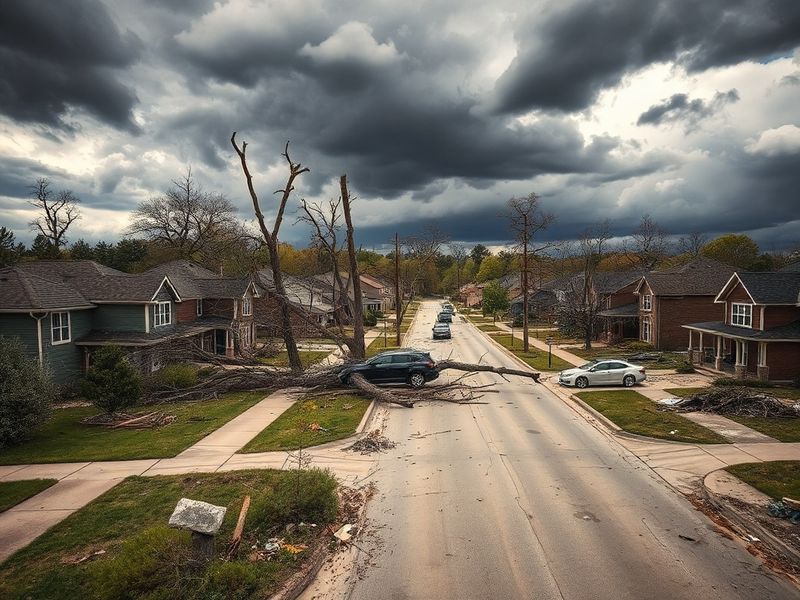
On a humid June evening, a powerful tornado tore through the heart of Madison, Wisconsin, leaving behind a trail of destruction and a community searching for answers. The twister touched down just before 7 PM, packing winds estimated at 120 miles per hour. Emergency responders scrambled to secure the area as the storm system moved unpredictably through residential neighborhoods and commercial districts alike.
Initial reports from the National Weather Service confirmed the tornado’s path length spanned nearly five miles, with a width reaching up to 300 yards at its peak. Local officials declared a state of emergency within hours, urging residents to avoid the affected zones due to downed power lines, gas leaks, and structural hazards. The storm’s sudden intensity caught many off guard, despite advance warnings from local meteorologists.
Immediate Impact on the Community
The tornado’s most severe damage was concentrated in the city’s west side, particularly around the Hilldale Shopping Center and the adjacent residential blocks. Businesses reported shattered windows, collapsed roofs, and merchandise scattered across parking lots. Residents described the surreal experience of watching roofs lift off homes before the storm surge passed in under two minutes.
Emergency services responded to over 200 calls within the first two hours. Local hospitals prepared for an influx of injuries, though fortunately, no fatalities were reported. Still, the physical and emotional toll was evident. The Madison Metropolitan School District announced the closure of three schools due to structural damage, leaving hundreds of families displaced.
In the days following the storm, volunteers organized donation drives and cleanup efforts. The outpouring of support highlighted Madison’s tight-knit community spirit, with neighbors helping neighbors clear debris and secure temporary shelters. Local restaurants provided free meals to first responders and displaced residents, turning tragedy into a moment of unity.
Understanding the Storm: Meteorological Context
Meteorologists from the University of Wisconsin-Madison’s Atmospheric and Oceanic Sciences department analyzed the storm’s formation. They attributed its intensity to a rare combination of atmospheric instability and strong wind shear, creating ideal conditions for a supercell thunderstorm to spawn a tornado. While tornadoes are not unheard of in southern Wisconsin, this event was notable for its strength and proximity to a major urban center.
Historical data from the Storm Prediction Center shows that Dane County experiences an average of two to three tornadoes per decade. However, the last EF-2 or stronger tornado to hit Madison was in 2018, which caused significant damage to the far east side. The June storm marked a stark reminder of the region’s vulnerability to severe weather, despite its inland location.
Climate researchers are monitoring whether rising global temperatures are increasing the frequency of such extreme weather events in the Midwest. While no single storm can be directly linked to climate change, the trend toward more intense and unpredictable weather patterns raises concerns for communities across the region.
Key Facts About the Tornado
- EF-Scale Rating: EF-2 (winds between 111–135 mph)
- Path Length: 4.8 miles
- Peak Width: 300 yards
- Duration: Approximately 8 minutes
- Injuries Reported: 17 (none life-threatening)
- Structures Damaged: Over 150 homes and businesses
Rebuilding and Recovery: What Comes Next?
City officials have launched a multi-phase recovery plan, prioritizing safety inspections and debris removal. The Federal Emergency Management Agency (FEMA) has approved preliminary assessments, though full funding for repairs may take months to finalize. Homeowners and business owners are navigating insurance claims, many of which are expected to fall short of covering total losses.
Community leaders are also focusing on long-term resilience. A town hall meeting scheduled for next week will address flood mitigation efforts and updates to the city’s emergency alert system. Local architects and engineers are advocating for stronger building codes in high-risk areas, drawing lessons from other tornado-prone regions.
For now, the city’s recovery hinges on both immediate aid and forward-thinking policies. The tornado may have disrupted lives temporarily, but Madison’s response underscores a collective determination to emerge stronger. As one resident put it, “We’ve weathered storms before. This time, we’ll build back better.”
Broader Implications for Tornado-Prone Regions
Madison’s experience reflects a growing challenge for communities nationwide. As severe weather events become more frequent, local governments face pressure to balance preparedness with economic constraints. The storm’s timing—during peak tourism season—also highlights the ripple effects on local economies, particularly for small businesses reliant on summer revenue.
Nationally, the Madison tornado could influence policy discussions around disaster funding and infrastructure investment. Advocates are calling for increased federal support for tornado-resistant construction in at-risk areas. Meanwhile, insurers are reevaluating risk models, which may lead to higher premiums for homeowners in tornado alley-adjacent regions.
For Madison, the path forward remains uncertain but hopeful. The city’s recovery will likely serve as a case study for other municipalities grappling with similar threats. As climate patterns shift, the lessons learned here could shape how communities across the country prepare for the next storm.
For more insights into severe weather preparedness, explore our News and Analysis sections for expert perspectives on disaster response and recovery.
Resources for Affected Residents
If you or someone you know was impacted by the Madison tornado, the following resources may provide assistance:
- City of Madison Official Website – Updates on recovery efforts and permits
- American Red Cross – Emergency shelter and financial aid
- FEMA Disaster Assistance – How to apply for federal aid
- Dane County Emergency Management – Local support and volunteer opportunities
Madison’s story is still unfolding, but its resilience offers a blueprint for recovery. The city’s ability to unite in the face of adversity serves as a reminder that even the most destructive forces can bring out the best in a community.